
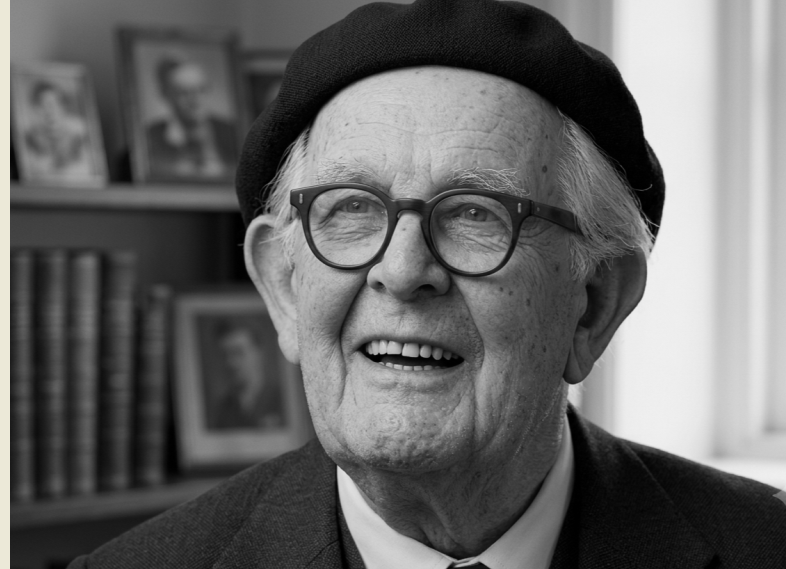
Continuing the Cognitive Science sub-series with the book that traced intelligence back to the infant’s first acts—and made the construction of knowledge an empirical problem.
A Simple Introduction
In 1952, Jean Piaget, a Swiss psychologist at the University of Geneva, published The Origins of Intelligence in Children—an English translation of La Naissance de l’intelligence chez l’enfant, first published in French in 1936. The book was not about computers, not about communication channels, and not about the mind in the abstract. It was about babies: how they suck, look, grasp, and eventually come to understand that objects exist when they are out of sight, that space extends beyond the reach of their hands, and that their own actions can be distinguished from the world they act upon.
Piaget’s book does not mention cognitive science. The field did not yet exist under that name. It treats intelligence as a biological phenomenon: how does a living organism, starting from reflexes and simple habits, come to construct a world of permanent objects, causal relations, and spatial structures? What is the mechanism by which the infant’s actions become thought?
But this developmental, observational approach had a profound effect on how psychologists, educators, and later cognitive scientists came to think about knowledge. If intelligence is not given at birth but constructed through action, if concepts are built out of sensorimotor schemata, if understanding emerges from the infant’s own activity rather than from passive reception—then cognition could be studied as a developmental process, not as a fixed architecture. The vocabulary of Piaget’s theory—assimilation, accommodation, schema, circular reaction, object permanence—became the vocabulary of developmental psychology and, later, of constructivist approaches to learning. The book is not cognitive science, but it made cognitive science possible.
10 Key Takeaways for Cognitive Science and Learning
- Intelligence is constructed, not given. Piaget argued that intelligence develops through a sequence of stages, from reflexes to symbolic thought. It is not present at birth in finished form, nor is it simply impressed by the environment; it is built by the child’s own activity.
- Knowledge begins with action. The infant’s first knowledge is sensorimotor: sucking, looking, grasping, hitting. Concepts are not abstract representations imposed on action; they are abstracted from action. To understand the origins of intelligence, one must study the origins of behavior.
- Assimilation and accommodation are the twin engines of development. Assimilation is the process of incorporating new experiences into existing schemata. Accommodation is the process of modifying schemata to fit new experiences. Development is the progressive equilibration of these two processes.
- Schemas are the building blocks of cognition. A schema is an organized pattern of action or thought. The infant’s sucking schema, grasping schema, and visual schema are the precursors of later concepts. Schemas are not static structures but dynamic, self-organizing systems.
- The circular reaction is the mechanism of learning. The infant discovers an interesting result by chance, then tries to reproduce it. This “circular reaction” is the prototype of all learning: repetition, recognition, and generalization. Primary circular reactions focus on the body; secondary on the external world; tertiary on experimentation.
- Object permanence is a developmental achievement. The infant does not begin with the concept of a permanent object. The object exists only when perceived; when it disappears, it ceases to exist. Understanding that objects persist through time and space is a gradual construction, achieved through the coordination of schemas.
- Space, causality, and time are constructed, not given. The infant’s world is initially egocentric: space is defined by the body, causality by the will, time by the immediate present. The coordination of schemas leads to the objectification of space, causality, and time as independent dimensions of reality.
- Imitation and representation emerge from action. The infant’s ability to imitate, to represent absent objects, and to use symbols develops from sensorimotor activity. The image is not a passive copy of perception; it is the internalization of action.
- Development proceeds through stages. Piaget distinguished six stages of sensorimotor development: reflexes, primary circular reactions, secondary circular reactions, coordination of secondary schemas, tertiary circular reactions, and invention through mental combination. Each stage builds on the previous one, but the sequence is not merely additive—it involves qualitative transformations.
- The theory is a framework, not a psychology. Piaget explicitly excluded language and social context from his account of sensorimotor development. Cognitive science had to add these back—but it did so using Piaget’s framework. The tension between individual construction and social transmission remains a central issue in learning science.
To him, “Intelligence is an adaptation. In order to grasp its relation to life in general it is therefore necessary to state precisely the relations that exist between the organism and the environment.”
The Biological Problem: Piaget’s goal was to explain how intelligence emerges from biological organization. Intelligence is not a separate faculty; it is a particular case of adaptation, continuous with the organism’s interaction with its environment. To understand intelligence, one must understand assimilation and accommodation—the two invariant functions of all living organization.
Knowledge as Construction: In Piaget’s theory, “knowledge” does not mean “copying reality.” It is the construction of structures that allow the organism to act effectively in its environment. The infant’s knowledge of the object is not a passive impression but an active construction, built out of the coordination of actions.
From Development to Mind: How Piaget Shaped Cognitive Science
Piaget’s book was not about cognitive science, but it became a cornerstone of cognitive science for several reasons.
The constructivist foundation. Piaget’s central insight—that knowledge is constructed through action, not passively received—became the foundation of constructivist approaches to learning and cognition. The idea that schemas are built up through assimilation and accommodation is a precursor of modern connectionist and embodied approaches to cognition.
The developmental method. Piaget’s method—observing children over time, tracing the emergence of concepts from actions—became a model for developmental cognitive science. His emphasis on qualitative stages of development, rather than quantitative increases in ability, influenced later work on cognitive development.
The problem of object permanence. Piaget’s claim that object permanence is a developmental achievement provoked decades of research. The debate over when and how infants come to understand that objects persist is still central to developmental psychology.
The role of action in cognition. Piaget’s emphasis on action as the basis of knowledge anticipated embodied cognition and enactive approaches to mind. The idea that cognition is not a passive representation of the world but an active construction through interaction with the world is now a central theme in cognitive science.
The challenge of social and cultural context. Piaget’s theory was criticized for neglecting social and cultural factors in development. This criticism led to the development of sociocultural approaches, most notably Vygotsky’s, which emphasized the role of language, culture, and social interaction in cognitive development.
Piaget and Learning Science
Piaget’s theory has several implications for the science of learning, some direct and some indirect.
Learning as construction. If knowledge is constructed, then teaching is not the transmission of information but the facilitation of construction. The learner must actively engage with the material, assimilating it to existing schemas and accommodating those schemas to the new experience.
The importance of developmental readiness. Piaget’s stage theory suggests that learning is constrained by the learner’s developmental level. Certain concepts cannot be taught before the learner has the schemas to assimilate them. This has implications for curriculum design and educational sequencing.
The role of action and experience. If knowledge begins with action, then learning must involve active engagement with the world. Hands-on activities, manipulatives, and interactive experiences are not mere illustrations of concepts but the means by which concepts are constructed.
The limits of the analogy. Piaget’s theory is about the construction of knowledge through individual action, not about the social transmission of knowledge. Learning is not just individual construction; it is also enculturation into a community of practice. The tension between individual construction and social transmission remains one of the central problems in learning science.
Conclusion
Piaget’s 1952 book is not a cognitive science paper. It is a developmental psychology book about how babies come to understand the world. But it is one of the founding documents of cognitive science because it made the construction of knowledge an empirical problem—and in doing so, it made it possible to study the mind as a developing system.
The book’s legacy is everywhere in modern cognitive science. The concepts of assimilation and accommodation underlie research on schema theory and conceptual change. The idea of developmental stages underlies research on cognitive development. The claim that knowledge begins with action underlies embodied and enactive approaches to cognition. The focus on object permanence underlies research on infant cognition.
Piaget himself was not interested in computers. He was interested in children. But his theory of children became a theory of mind—or at least, the framework within which a theory of mind became possible. The book is a reminder that the most important advances in one field often come from another. And it is a reminder that intelligence, once made developmental, becomes a tool for understanding everything—including learning.
This post is part of the Cognitive Science Seminal Papers series. The previous entry covered Turing’s “Computing Machinery and Intelligence” (1950).
About the Author
