
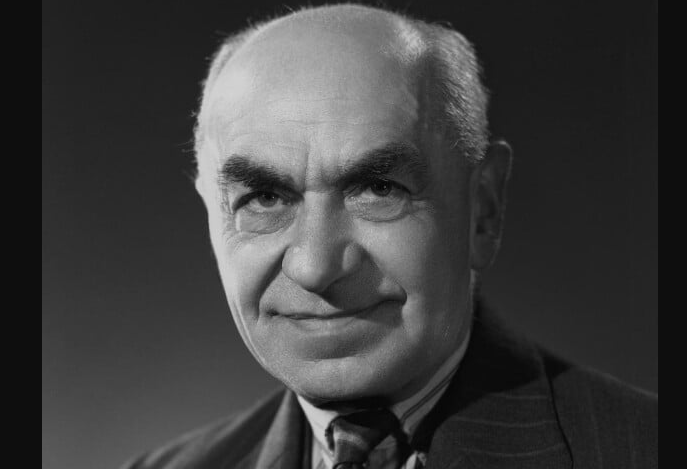
Continuing the Cognitive Science sub-series
10 Key Insights for Learning
- Remembering is reconstruction, not reproduction. Recall is an active, constructive process in which the subject builds a version of the past out of present attitudes and past experience—not a replay of fixed traces. This is a direct repudiation of Ebbinghaus’s assumption that memory is the re-excitation of stored impressions, and it remains the central claim of modern constructivist theories of memory.
- Ebbinghaus’s nonsense syllables were the wrong material. Ebbinghaus stripped meaning from his stimuli to control them, but Bartlett argued that stimuli cannot be rid of meaning, that the effort to do so creates an artificial atmosphere, and that nonsense-syllable experiments study the establishment of repetition habits rather than remembering as it occurs in life. This critique shaped the subsequent turn toward realistic, meaningful material in memory research.
- The “effort after meaning” is the master process. Every cognitive reaction—perceiving, imaging, remembering, thinking—is an attempt to connect what is given with something else, to fit it into a scheme or setting. Meaning is not a contaminant to be eliminated but the medium in which remembering occurs.
- Schemas organize perception and memory. A schema is an active organization of past reactions or experiences that sets the ground against which new material is interpreted and remembered. It is a disposition, not a store of content, and it actively shapes what is recalled.
- The doctrine of fixed, changeless traces is false. Bartlett explicitly discards the view that treats recall as the re-excitement of fixed and changeless traces. Memory is not a storehouse but a process of imaginative reconstruction built out of the relation of attitude to organized past experience and to a little outstanding detail.
- Accuracy is the exception, not the rule. Literal recall is an artificial construction of the armchair or the laboratory. In ordinary life, transformation is normal: stories are shortened, names vanish, details are levelled, and the unusual is either rationalised or, if it stands out, preserved.
- Rationalisation transforms memory. Material is unwittingly changed to make it coherent, familiar, and acceptable—unfamiliar details are dropped, familiar ones imported, and the whole made to march to its end. Rationalisation renders material acceptable, understandable, comfortable, and straightforward, robbing it of all puzzling elements.
- Attitudes and affect shape what is remembered. Dominant affective attitudes can construct detail, conventionalise faces, and produce stereotyped reproductions that serve normal needs while being unfaithful to their originals. Feelings and interests are not distractions from memory but constitutive of it.
- Social factors are constitutive of remembering. Memory is shaped by group conventions; stories, rumours, and art forms change systematically as they pass from person to person and group to group. The conventionalised product varies from group to group and may come to be the very characteristic used to differentiate one social group from another.
- The method must fit the material. Nonsense syllables create an artificial atmosphere and study repetition habits, not memory; realistic material—folk-tales, newspaper reports, picture-signs, ink-blots, faces—is necessary to study remembering as it actually occurs. The method must fit the material, not the other way round.
The Book That Broke with Ebbinghaus
In May 1913, a young Cambridge psychologist sat in a darkened room exposing geometrical forms and optical illusions to a long string of visitors at the opening of the Cambridge Psychological Laboratory. That was the beginning of the present book. The visitors’ interpretations of the figures were as various as they were attractive, and it was clear that the course of normal visual perception may be determined by a very large number of different factors. From that observation grew a research program that would, two decades later, produce one of the most influential books in the history of the science of learning.
Remembering: A Study in Experimental and Social Psychology (1932) is not a book about memory in the narrow sense. It is a book about how the mind makes sense of the world—and about why the dominant laboratory methods of the day were badly suited to studying it. Bartlett’s target was Ebbinghaus. He had, as in duty bound, followed Ebbinghaus’s lead and worked for some time with nonsense syllables. The result was disappointment and a growing dissatisfaction. The reasons for that disappointment are laid out in the first chapter, and they are devastating.
Ebbinghaus had assumed that by stripping material of meaning, he could control the stimulus and isolate the response. Bartlett argues that this is a mistake on both counts. It is impossible to rid stimuli of meaning so long as they remain capable of arousing any human response. The effort to do so creates an atmosphere of artificiality for all memory experiments, making them rather a study of the establishment and maintenance of repetition habits. And the assumption that simplification of the stimulus secures simplification of the response is false: uniformity and simplicity of structure of stimuli are no guarantee whatever of uniformity and simplicity of structure in organic response, particularly at the human level. His illustration is memorable: the landscape artist, the naturalist, and the geologist walk in the country together, and each notices and recalls something different—not because the stimuli differ, but because their determining conditions differ. Uniformity of the external stimulating conditions is perfectly consistent with variability of determining conditions, and stability of determinants may be found together with variability of stimuli.
Bartlett’s alternative was to use material which he hoped would prove interesting in itself, and would be of the type which every normal individual deals with constantly in his daily activities—folk-tales, newspaper reports, picture-signs, ink-blots, and faces. And he insisted on a strictly functional point of view: all considerations of the descriptive characteristics of what is perceived, imaged or remembered were kept in a secondary position; the central problems were concerned with the conditions, and the variety of conditions, under which perceiving, imaging and remembering take place.
The Effort After Meaning
The central concept of the book is introduced early, in the experiments on perceiving. When a subject is shown a simple design and asked to reproduce it, the first reaction is often the assignment of a name: a square with one side missing becomes a square with one side gone; a zigzag becomes Z upside down; a figure becomes N. The name is given immediately and unreflectingly, for the presented visual pattern seems at once to fit into, or to match, some preformed scheme or setting. The connecting of the given pattern with a setting is obviously an active process, but though it is active it is not conscious, for the observer is not aware of a search and a subsequent match. Bartlett names this process: the effort after meaning.
The effort after meaning is not confined to perceiving. It is, Bartlett argues, the general form of every human cognitive reaction. Because this task factor is always present, it is fitting to speak of every human cognitive reaction—perceiving, imaging, remembering, thinking and reasoning—as an effort after meaning. In perceiving, the immediate data are at once fitted to, or matched with, a perceptual pattern which appears to be pre-existent so far as the particular perceptual act is concerned. In remembering, the task is made more specific: that with which the immediate stimuli of the reactions have to be connected is more narrowly defined, and must now be some specific thing or event which was presented before at some specific time. But the general character of the problems is not radically altered.
This is the seed of the schema concept. Bartlett uses the terms scheme, setting, ground, and pattern interchangeably in the early chapters, and only later settles on schema as the technical term. The schema is not a static store of content but an active organization of past reactions and experiences—a disposition to respond to new material in terms of what has gone before. The famous formulation comes in the theoretical chapter: remembering is not the re-excitation of innumerable fixed, lifeless and fragmentary traces; it is an imaginative reconstruction, or construction, built out of the relation of our attitude towards a whole active mass of organised past reactions or experience, and to a little outstanding detail which commonly appears in image or in language form. The schema, in this sense, is the organised mass against which the little outstanding detail is set. It is what makes the detail meaningful—and what makes it subject to transformation.
The Experimental Program: Five Methods
Bartlett’s book is organized around a series of experimental methods, each designed to probe a different aspect of remembering.
The Method of Description. Subjects were shown five picture post-cards of military and naval faces, given ten seconds per card, and asked to describe them after intervals ranging from thirty minutes to several months. The results showed that accurate recall is the exception and not the rule. The transforming agencies fell into two groups: methods of recall adopted, and individual or common interests and feelings. Visualisers tended to confuse the order of presentation, to import extraneous material, and to be confident in their errors; vocalisers tended to classify material according to a rule or guiding idea, to be uncertain, and to be more accurate about order. The affective attitude toward a face—a smiling look, good-humoured, a grave expression—actively affected the detail of representation, tending to make features more conventional. One subject, describing the Captain, insisted on his seriousness and decision until, shown the card again, she was amazed and thought at first that a new card had been substituted.
The Method of Repeated Reproduction. Subjects read a story or passage, reproduced it after fifteen minutes, and then again at increasing intervals. The material was The War of the Ghosts, a North American folk-tale adapted from Boas. The results are among the most famous in the book. The story was progressively shortened, modernised in phraseology, and made more coherent. The supernatural element—the ghosts—was either omitted or rationalised. One subject, an anthropology student, decided that Ghosts must be a clan name, and the whole difficulty disappeared. Another transformed something black came out of his mouth into his soul fled black from his mouth, then into his spirit fled, and finally into he died. The changes come gradually, but the end is foreshadowed from the beginning. Bartlett’s summary: accuracy of reproduction, in a literal sense, is the rare exception and not the rule.
The Method of Picture Writing. Subjects learned to associate arbitrary signs with words, then wrote the signs when the words were dictated in a short story. The results showed that signs not readily related to other material were omitted; signs grouped together tended to blend; signs not given a distinctive name were omitted; and determination to remember was constantly correlated with actual forgetting. Reversals of direction were common but followed no definite law. The method also revealed the difference between visualisers, who relied on direct memorisation and were rapid and confident, and vocalisers, who used description, names, and secondary associations, and were hesitating and less confident.
The Method of Serial Reproduction. This is the method for which the book is best known. A’s reproduction is reproduced by B, whose version is reproduced by C, and so on—a laboratory analogue of the transmission of stories, rumours, and art forms through a social group. The results were dramatic. In the War of the Ghosts series, the ghosts disappeared in the first reproduction, and that in spite of the fact that special attention was called to the title. The story became a perfectly straightforward story of a fight and a death. In the Son who tried to Outwit his Father series, the peanut became an acorn, a peasant with three kernels appeared, the boy’s motive changed from devilry to fear of punishment, and a moral was tacked on at the end. In the cricket report series, almost every possible error was made: proper names vanished, the sides were transposed, and the score was changed. In the Art of Lawn Tennis series, the initial apothegm was turned completely round, and the final versions were less connected, and less rational, than the original forms. In the Deaf Moochi series, the deaf man became dumb for several reproductions, and the whole point of the joke was left out. In the Air-Raid series, the story degenerated into sheer nonsense, and the Bothams ceased to be regarded as people, and became merely a name for some unknown objects. In the argument series from Wallace’s Darwinism, the only one of the steps that survived in a recognisable form, even as far as the third reproduction, was the first, and even that had accomplished a double reversal. There was, in fact, from the beginning, no appreciation whatever of the course of the argument, and that in spite of the fact that the subjects all appeared to read with understanding.
The picture-material series showed the same principles in visual form. A drawing of a Portrait d’homme became, over nine reproductions, a conventional face labeled L’homme Égyptien. A drawing of the Egyptian mulak, an owl, became, over eighteen reproductions, a cat. Sooner or later all such material tends to assume the form of accepted conventional representations, or decorative designs, current in the group of subjects concerned. Elaboration and simplification alternated: unfamiliar material was elaborated into a recognisable form, then simplified into a conventional one, and if simplification went too far, elaboration began again.
Rationalisation, Conventionalisation, and the Social
The unifying principle behind these transformations is rationalisation. There is a marked and well-known distinction, both in perceiving and in remembering, between direct reaction to what is literally present and reaction under the guidance of some tendency which gives to what is presented a setting and an explanation. Rationalisation is to render material acceptable, understandable, comfortable, straightforward; to rob it of all puzzling elements. It takes three main forms: the witting connection of material with something else, often with a definitely formulated explanation (symbolisation); the unwitting transformation of material in line with individual interests and temperament; and the immediate change of names, phrases, and events into forms current in the social group.
The social dimension is not an afterthought in Bartlett’s system; it is constitutive. In the actual remembering of daily life the importance of these social factors is greatly intensified. The form which a rumour, or a story, or a decorative design, finally assumes within a given social group is the work of many different successive social reactions. The serial reproduction method is designed precisely to study this: whether we deal with an institution, a mode of conduct, a story, or an art-form, the conventionalised product varies from group to group, so that it may come to be the very characteristic we use when we wish most sharply to differentiate one social group from another. The comparison between English and Indian series of the same story showed that the general principles of transposition remained constant, so far as these two groups were concerned, but there was a greater proneness to elaboration in the Indian group, and the details and the points of emphasis differed.
Bartlett’s theoretical chapter brings the strands together. The theory is functional and constructive. Memory is not a storehouse but a process of imaginative reconstruction, or construction, built out of the relation of our attitude towards a whole active mass of organised past reactions or experience, and to a little outstanding detail which commonly appears in image or in language form. The schema is the organised mass; the little outstanding detail is the concrete anchor. The attitude is the orienting factor that determines what is selected, how it is set, and what is constructed around it. It is thus legitimate to say that the remembering of a story, or an event, or a scene, is a constructive process, and that it is the attitude which is the chief determinant of the construction.
Why This Book Matters for the Science of Learning
Bartlett’s Remembering is a turning point in the cognitive science of learning for three reasons.
First, it shifted the object of study from traces to schemas. Ebbinghaus had made memory measurable by treating it as a store of associations. Bartlett argued that the store metaphor was wrong: what persists is not a fixed content but an organized disposition—a schema—that actively shapes what is remembered. This is the direct ancestor of the schema concept in modern cognitive psychology, taken up by Piaget, by the information-processing psychologists of the 1970s, and by contemporary research on prior knowledge and expertise. It is also the ancestor of the constructivist view of learning: knowledge is not transmitted but constructed, and what the learner already knows determines what the learner will learn.
Second, it made meaning central. Ebbinghaus had stripped meaning out of his material in order to control it. Bartlett showed that this was a mistake: meaning is not a contaminant to be eliminated but the very medium in which remembering occurs. The effort after meaning is the master process, and the transformations of memory are the price the organism pays for making sense of the world. This insight underwrites the modern emphasis on deep processing, elaboration, and the role of prior knowledge in learning.
Third, it made the social dimension of memory visible. Ebbinghaus studied a single subject in a laboratory. Bartlett studied the transmission of stories, rumours, and art forms through groups. The serial reproduction method is a laboratory model of cultural transmission, and its findings—conventionalisation, levelling, sharpening, rationalisation—are the foundation of modern research on rumour, cultural evolution, and social learning. For a science of learning, this is a reminder that learning is not only an individual cognitive process but also a social and cultural one.
The book’s influence on the cognitive revolution was direct and acknowledged. Neisser’s Cognitive Psychology cites Bartlett; the schema-based theories of reading and memory in the 1970s and 1980s build on him; and the constructivist tradition in education—from Piaget to Vygotsky to contemporary research on conceptual change—is in his debt. His insistence that memory is constructive, that meaning is central, and that the laboratory must study realistic material remains a standing challenge to any science of learning that would trade ecological validity for experimental control.
Conclusion
Remembering is not a perfect book. Its methods are informal by modern standards, its statistics are absent, and its theoretical vocabulary is sometimes loose (the shift from setting to schema is not fully worked out). But it is a book that changed the questions. Ebbinghaus asked how much is retained; Bartlett asked how what is retained is transformed, and why. The answer—that remembering is an effort after meaning, a construction built out of schemas and attitudes, shaped by social conventions—is one of the foundational insights of the cognitive science of learning. The ghost in Bartlett’s machine is not a trace but a schema; and the machine is not a storehouse but a storyteller.
About the Author
