
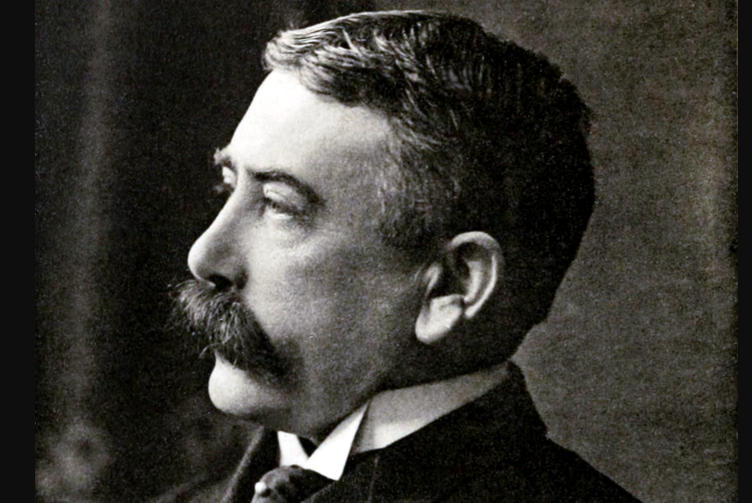
Continuing the Cognitive Science sub-series
The Book That Was Never Written
Ferdinand de Saussure (1857–1913) spent most of his career as a historical linguist, working on Indo-European vowel systems and anagrams. His fame rests on a book he did not write. Between 1906 and 1911, at the University of Geneva, he delivered three courses in general linguistics. After his death, two colleagues, Charles Bally and Albert Sechehaye, assembled their notes and those of students into the Cours de linguistique générale, published in 1916 .
The result is a strange, composite text: a foundational work of modern thought whose author never saw it, whose argument is sometimes contradictory, and whose influence has been felt far beyond linguistics—in anthropology, literary theory, psychoanalysis, and, crucially for this series, in the prehistory of cognitive science. Saussure’s Course did not study learning or memory directly. But it posed a question that any cognitive science of learning must eventually confront: what is the unit of meaning, and how is it represented in the mind?
The Problem: Language as a System, Not a List
Saussure’s target was the historical, philological linguistics in which he himself had been trained. That tradition treated language as a collection of words with histories, each tracing back to some earlier form. Saussure argued that this missed the essential fact about language: it is a system, and the elements of that system have no meaning in isolation. Their meaning comes from their relations to one another.
To make this claim precise, Saussure introduced a series of distinctions that would become the vocabulary of structuralism—and, later, of cognitive science’s debates about representation.
Langue and parole. Langue is the shared system of a language—the rules, contrasts, and units that exist in the collective mind of a speech community. Parole is the individual act of speaking, the concrete utterance . Saussure insisted that linguistics should study langue, the underlying system, rather than parole, the fleeting performance. This is, in effect, a claim about levels of analysis: the observable behavior (parole) is generated by an underlying competence (langue) that cannot be directly observed but must be inferred.
Signifier and signified. The linguistic sign, for Saussure, is not a word and a thing. It is a two-sided entity: a signifier (the sound-image, the phonological form) and a signified (the concept) . The sign unites them, but the relation between them is arbitrary. There is nothing in the sound tree that resembles the concept of a tree; the Latin arbor and the French arbre designate the same concept with entirely different sound patterns . Meaning is not reference; it is a conventional association within a system.
Synchronic and diachronic. Saussure distinguished the study of a language at a given moment (synchronic) from the study of its evolution over time (diachronic). He argued that synchronic analysis is logically prior: to understand how a system changes, you must first understand what the system is .
Value and difference. The most radical and most cognitive of Saussure’s claims is that linguistic units have no positive content. Their identity is purely differential. “In language there are only differences without positive terms” . The phoneme /b/ is not defined by any acoustic property in itself, but by the fact that it contrasts with /p/, /d/, and so on. Meaning is a product of the system of differences, not of any intrinsic property of the sign.
The Cognitive Implications: What Saussure Gave (and Did Not Give) to the Science of Mind
Saussure was not a psychologist. He explicitly bracketed the psychological question of how langue is stored in the brain. But his system had profound implications for how cognitive science would later think about representation.
Language as a constitutive condition of thought. One strand of Saussure’s reception, developed in the notes for his unfinished La double essence, argues that signs are not merely vehicles for pre-existing thoughts but the very material that makes organized thought possible. Thought, in its chaotic state, is “forced to take shape because it is taken apart, divided up by language into units” . This is a position that would later be developed, in different vocabularies, by Vygotsky (who argued that the internalization of language reorganizes the child’s mental functions) and by Whorfian linguistic relativity . The Saussurean sign, on this reading, is not a label attached to a concept; it is the condition of the concept’s determinacy.
The sign as a negative, relational entity. Saussure’s insistence that signs are “negative” and “correlative”—defined only by their differences from other signs—anticipates a central theme in cognitive science: that mental representations are not copies of the world but elements in a structured system. Connectionist models of semantic representation, in which meaning is distributed across patterns of activation rather than localized in individual nodes, are a distant descendant of this idea. The Saussurean sign is, in a sense, the first formal model of a representation whose content is exhausted by its position in a network .
Langue as a competence. The distinction between langue and parole is the direct ancestor of Chomsky’s distinction between competence and performance . Chomsky’s transformational-generative grammar, whatever its differences from Saussure (and they are considerable—Chomsky rejected the arbitrariness of the sign and the priority of system over innate structure), inherited the fundamental move: the object of linguistic science is not the corpus of utterances but the underlying system that generates them. Cognitive science would extend this move beyond language: the object of cognitive psychology is not behavior but the mental representations and processes that produce it.
The autonomy of the linguistic system. Saussure’s claim that langue is a system with its own internal laws—that it cannot be reduced to psychology, physiology, or history—was the founding gesture of structuralism as a method . Lévi-Strauss would apply it to kinship and myth; Barthes to fashion and advertising; Lacan to the unconscious. The structuralist method is, in essence, the search for the underlying system of differences that generates the observable phenomena. Cognitive science, in its classical form, is structuralist in this sense: it seeks the grammar of thought.
10 Key Points from Saussure
- Language is a system, not a collection of words. The meaning of a sign is determined by its relations to other signs, not by its reference to an external object .
- The sign is arbitrary. There is no natural or necessary connection between signifier and signified; the association is conventional and varies across languages .
- Langue vs. parole separates system from performance. The proper object of study is the shared underlying system (langue), not the individual utterance (parole)—a distinction that anticipates competence vs. performance in cognitive science .
- Synchronic analysis is prior to diachronic. To understand how a system changes, you must first understand the system as it exists at a given moment .
- Meaning is differential. Linguistic units have no positive content; they are defined by their contrasts with other units. “In language there are only differences without positive terms” .
- Signs may constitute thought, not merely express it. The Saussurean analysis suggests that language provides the units through which thought acquires determinacy—a thesis later developed by Vygotsky and linguistic relativity .
- The sign is a relational, not a substantial, entity. It exists only within a system of differences—a precursor to network models of representation .
- Linguistics is part of a general science of signs (semiology). Saussure envisioned a broader discipline studying signs in social life, of which linguistics would be a part—the origin of modern semiotics .
- The system has its own laws, irreducible to psychology or history. This autonomy claim founded structuralism as a method and influenced the development of cognitive science’s computational approach .
- The sign is social. Its value is sanctioned by the speech community; the social is internal to the system, not external to it .
About the Author
