
Opening the Cognitive Science sub-series
The Book That Invented the Learning Curve
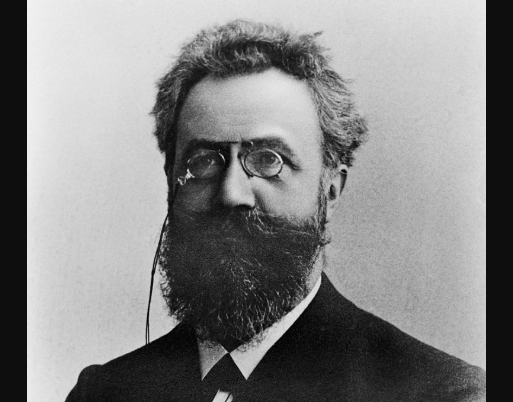
In 1885, Hermann Ebbinghaus, a Privatdozent at the University of Berlin, published Über das Gedächtnis—translated in 1913 by Henry A. Ruger and Clara E. Bussenius as Memory: A Contribution to Experimental Psychology. It is a short book, and by modern standards a strange one: it reports experiments conducted almost entirely on a single subject (Ebbinghaus himself), over two periods (1879–80 and 1883–84), using materials he invented for the purpose. Yet it is the founding document of the experimental psychology of learning.
Its motto, printed on the title page, is a small manifesto: “De subjecto vetustissimo novissimam promovemus scientiam”—”from the oldest subject we advance the newest science.” The subject is memory; the new science is the quantitative study of the mind. Before Ebbinghaus, memory was a topic for philosophers and anecdotalists. After him, it was a variable to be measured.
The Problem: Memory Was Unmeasurable
Ebbinghaus’s opening chapters are a diagnosis of a field that could not become a science. Our knowledge of memory, he argues, consists almost entirely of vague, comparative propositions: “he who learns quickly also forgets quickly,” “old people forget most quickly the things they learned last,” “long series are retained better than short ones.” These are not false, but they are “indefinite, general, and comparative.” They come from “the observation of extreme and especially striking cases.” And when we ask the questions that would make a science possible—”How does forgetfulness depend upon the length of time during which no repetitions have taken place? What proportion does the increase in certainty of reproduction bear to the number of repetitions?”—”our answer is silence.”
The silence, Ebbinghaus insists, is not due to neglect. It is “inherent in the nature of the questions themselves.” The mental states we want to measure are private, fleeting, and not directly observable. The introspective method gives us only the extremes; it gives us no units, no scales, no way to interpolate between the extremes. “We form certain conceptions during striking experiences, but we cannot find any realisation of them in the similar but less striking experiences of everyday life.”
The metaphors psychology uses for memory—”stored up ideas, engraved images, well-beaten paths”—are, he says, “not suitable.” There is “only one thing certain about these figures of speech and that is that they are not suitable.”
The Method: Nonsense Syllables and the Savings Score
Ebbinghaus’s solution to the measurement problem is the most famous methodological innovation in the history of learning science.
The material. He constructed about 2,300 nonsense syllables—consonant-vowel-consonant combinations like bap, dut, miv—chosen so that they would be “relatively simple and relatively homogeneous.” The point was to eliminate meaning: poetry and prose bring “a multiplicity of influences which change without regularity and are therefore disturbing”—associations, interest, rhythm, beauty. Nonsense syllables strip all that away, leaving material that can be learned “solely by the influence of the mere repetitions upon the natural memory.”
The material was not perfect. Ebbinghaus notes that “the homogeneity of the series of syllables falls considerably short of what might be expected of it”—some syllables are harder than others, partly because of “the influence of the mother tongue.” But it was homogeneous enough to permit quantitative comparison, and it had the crucial advantage of being “an inexhaustible amount of new combinations of quite homogeneous character.”
The procedure. The experiments were conducted under carefully controlled conditions: a constant rate of reading (150 strokes per minute, regulated by a metronome or a watch), a constant rhythm of accent, 15-second pauses between series, and a rule against mnemonic devices. Ebbinghaus read each series aloud until he could reproduce it once without error—the “first possible reproduction.”
The measure. The crucial innovation is the method of savings. Ebbinghaus did not simply measure how much he could remember after a delay, because that measure is all-or-none: a series is either reproducible or it is not. Instead, he measured how much work was saved in relearning a previously learned series compared with learning a new one of the same length. If a series takes 1,000 seconds to learn the first time and 600 seconds to relearn after a delay, the savings is 400 seconds—40 per cent of the original work. This “savings score” is a continuous, quantitative measure of retention, and it can detect memory even when the subject cannot consciously recall anything.
“It is evident,” Ebbinghaus writes, “that in this difference in time and number of repetitions we have evidently obtained a certain measure for that inner energy which a half year after the first learning still dwells in that orderly complex of ideas which make up the poem.” The savings method is, in effect, a way of making the unconscious measurable.
The statistics. Ebbinghaus was also a pioneer in applying the method of least squares and the probable error to psychological data. He checked that his measurements were distributed according to the “law of errors”—that is, that they behaved like the constants of physics rather than like the statistical regularities of suicide rates. His conclusion, after extensive analysis, was that the mean values he obtained were “genuine constants of natural science,” not mere statistical aggregates. This was a crucial methodological claim: it meant that the mental could be measured with the same precision as the physical.
The Findings
The empirical results of the book are remarkable, and many of them remain part of the standard curriculum.
The learning curve (Chapter V). The number of repetitions required to learn a series increases very rapidly with the length of the series. Ebbinghaus could reproduce about seven syllables after a single reading. To learn 12 syllables required about 17 repetitions; 16 syllables, about 30; 24 syllables, about 44; 36 syllables, about 55. The curve of repetitions against length is steeply rising—”the number of repetitions necessary for the memorisation of series in which the number of syllables progressively increased, itself increases with extraordinary rapidity.” But the increase is not linear; the curve flattens as length increases, suggesting that longer series are learned with relatively more repetitions per syllable.
The effect of repetition (Chapter VI). Using the savings method, Ebbinghaus measured how much retention was produced by different numbers of repetitions. The result, within limits, was a striking proportionality: each repetition produced a roughly constant amount of savings 24 hours later. “For each three additional repetitions which I spent on a given day on the study of a series, I saved, in learning that series 24 hours later, on the average, approximately one repetition.” This linear relationship held up to about twice the number of repetitions needed for first reproduction; beyond that, the effect of additional repetitions diminished. This is one of the earliest quantitative statements of a diminishing-returns principle in learning.
The forgetting curve (Chapter VII). This is the most famous result. Ebbinghaus measured retention after intervals ranging from 19 minutes to 31 days. The savings after each interval were:
- 19 minutes: about 58%
- 1 hour: about 44%
- 9 hours: about 36%
- 1 day: about 34%
- 2 days: about 28%
- 6 days: about 25%
- 31 days: about 21%
The curve falls steeply at first and then flattens—the classic negatively accelerated forgetting curve. Ebbinghaus fitted it with the logarithmic formula b=100k/((logt)c+k), where b is the savings, t is the time, and k and c are constants. He was careful about the status of the formula: “the formula has… no other value than that of a shorthand statement of the above results which have been found but once and under the circumstances described.” But the shape of the curve—rapid initial loss, slow later loss—has been replicated thousands of times.
The advantage of meaning (Chapter V, §21). Ebbinghaus compared nonsense syllables with stanzas from Byron’s Don Juan. Six stanzas of 80 syllables each required only about 52 repetitions to learn—roughly one-tenth the number that would have been required for an equivalent amount of nonsense material. The “combined ties of meaning, rhythm, rhyme, and a common language” give an “extraordinary advantage” to meaningful material. This is the first quantitative demonstration of what would later be called deep processing or meaningful learning.
Distributed vs. massed practice (Chapter VIII). Ebbinghaus relearned series on successive days and compared the savings from repetitions distributed over several days with the savings from repetitions massed on a single day. His conclusion: “with any considerable number of repetitions a suitable distribution of them over a space of time is decidedly more advantageous than the massing of them at a single time.” This is the spacing effect, one of the most robust findings in the entire literature on learning.
Association by indirect sequence (Chapter IX). Ebbinghaus’s final experiments tested whether associations are formed only between adjacent members of a series or also between more distant members. He constructed derived series by skipping 1, 2, 3, or 7 intervening syllables, and found that the derived series were learned with savings of 152, 94, 78, and 42 seconds respectively—compared with a savings of about 420 seconds for the unchanged series. The conclusion: associations are formed not only between adjacent items but between each item and a whole range of following items, with strength decreasing as the number of intervening items increases. “There seems to be an association not merely in direct but also in indirect succession.”
He also found evidence for backward associations: a reversed series was learned with a savings of about 12% compared with a new series. This result would later become important in the debate between associationist and cognitive accounts of memory.
10 Key Insights from Ebbinghaus
- Memory can be measured indirectly through savings. The method of savings makes retention quantifiable even when recall fails—anticipating modern indirect measures like priming and reaction time.
- Forgetting follows a negatively accelerated curve. Rapid initial loss, slow later loss—one of the most replicated findings in psychology, and a template for all learning curves.
- The spacing effect is real and substantial. Distributed repetitions beat massed repetitions for the same total effort—a finding with direct practical implications for study and instruction.
- Repetition has diminishing returns. Each additional repetition adds less than the one before, setting an upper bound on what practice alone can achieve.
- Meaning confers a massive learning advantage. Meaningful material (Byron) took roughly one-tenth the repetitions of nonsense syllables—an early quantitative case for deep, meaningful processing.
- Learning difficulty scales steeply with material length. Repetitions grow rapidly with series length, revealing a fundamental cost structure of memory.
- Associations extend beyond adjacent items. Indirect associations (skipping 1, 2, 3, 7 items) exist and weaken with distance, showing memory is a network, not just a chain.
- Backward associations exist but are weaker. Reversed-order learning showed measurable savings (~12%), complicating simple forward-only associationism.
- Scientific rigor is possible for mental phenomena. Controlled conditions, homogeneous materials, probable error, and the law of errors demonstrated that psychology could emulate natural science.
- Homogeneous material is a double-edged sword. Controlling for meaning enabled precision but excluded what matters most in real-world learning—a tension that shaped the cognitive science of learning thereafter.
About the Author
