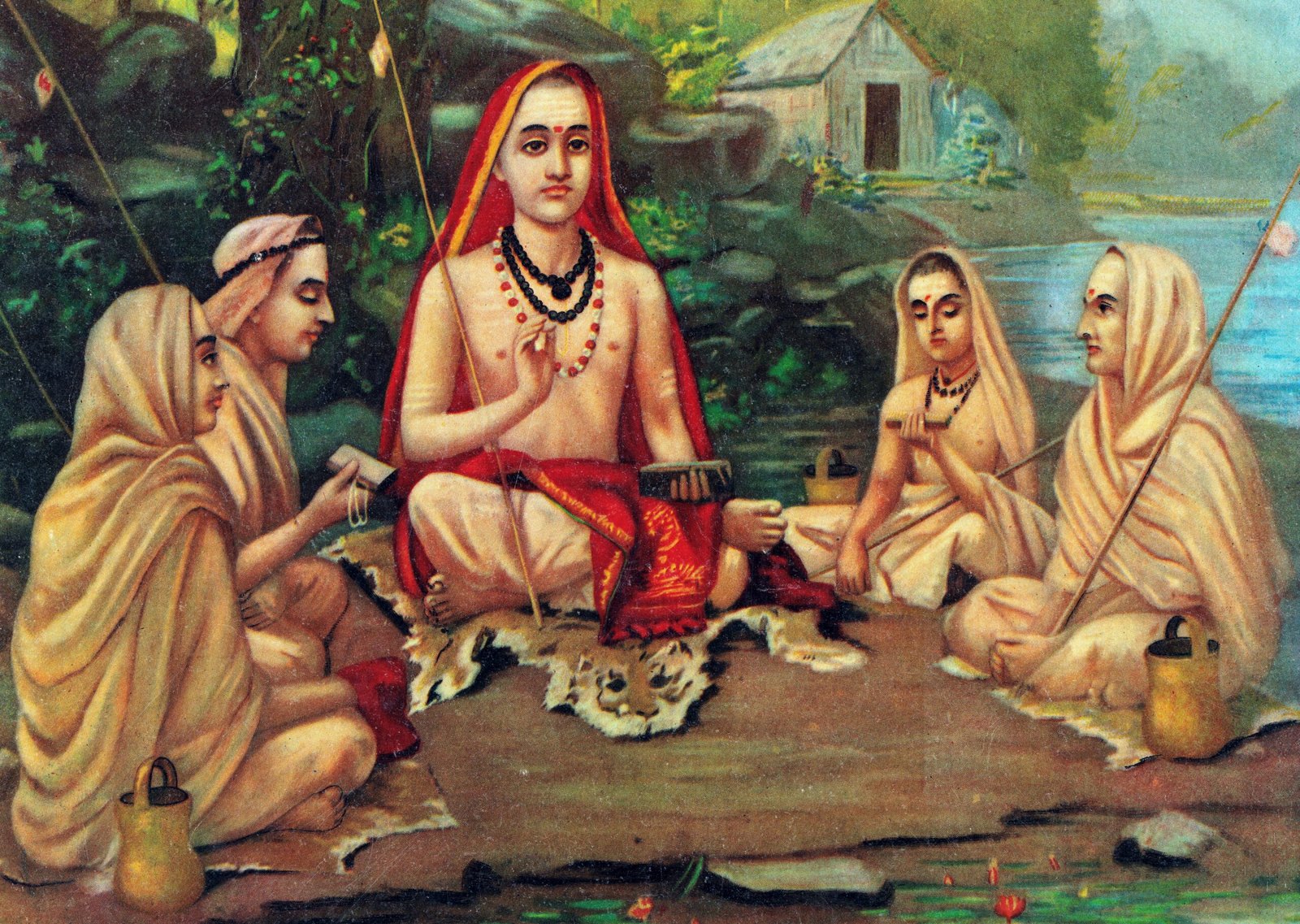
Adi Shankara, the 8th-century Indian philosopher and theologian, is a towering figure in the history of Indian thought. Known for his profound contributions to Advaita Vedanta, Shankara’s teachings and methods also hold valuable insights into education, teaching, and learning that transcend time and geography. Let’s explore how Shankara’s philosophy and practices can inform modern approaches to these domains.
1. Education as a Journey to Self-Realization
For Shankara, education was not merely the accumulation of information but a transformative process aimed at self-realization. His emphasis on understanding the self (“Atman”) as non-different from the universal reality (“Brahman”) underscores the importance of introspection and higher-order thinking in learning.
Modern education can draw from this principle by fostering reflective practices. Encouraging students to ask deeper questions about their purpose, values, and connection to the world can make education more holistic and meaningful.
2. The Role of the Guru (Teacher)
Shankara’s life highlights the critical role of the guru in guiding students. His relationship with his teacher, Govinda Bhagavatpada, exemplifies a dynamic where the teacher is not merely a transmitter of knowledge but a guide who helps students navigate complex intellectual and spiritual terrain. The guru-student relationship in Shankara’s time was rooted in trust, mutual respect, and a shared commitment to learning.
This relationship can inspire modern educators to move beyond rote teaching and adopt a mentorship approach, emphasizing personalized guidance and fostering curiosity in learners.
3. Dialectical Method: Learning Through Dialogue
Shankara’s teaching method often involved dialectical reasoning, as seen in his debates with proponents of other philosophical schools. He used logic and reasoning to clarify concepts, challenge assumptions, and arrive at deeper truths. His approach underscores the value of dialogue and critical thinking in learning.
In contemporary classrooms, encouraging debates, Socratic questioning, and collaborative problem-solving can emulate this method. Such practices cultivate analytical skills, open-mindedness, and intellectual humility.
4. Learning as a Lifelong Process
Shankara’s extensive travels and engagements with scholars of different traditions demonstrate his belief in lifelong learning. Despite being a revered teacher, he remained a seeker, always open to new perspectives and insights.
This mindset is particularly relevant today, where the rapid pace of change demands continuous learning. Schools and institutions can embed this principle by fostering adaptability, curiosity, and a growth mindset in learners.
5. Integration of Knowledge and Practice
Shankara emphasized the integration of theoretical knowledge (“Jnana”) with practice (“Karma”). He argued that understanding must be accompanied by action to realize its full potential. For instance, while he elaborated on the non-dual nature of reality, he also stressed the importance of ethical conduct and meditation.
Modern education systems can benefit from blending theoretical and experiential learning. Project-based learning, internships, and real-world problem-solving activities align with Shankara’s philosophy, making education both practical and profound.
6. Cognitive Diversity and Respect for Multiple Perspectives
Although Shankara firmly established Advaita Vedanta, he engaged deeply with diverse philosophical schools, respecting their viewpoints while articulating his own. This approach highlights the importance of cognitive diversity and respectful dialogue in education.
Encouraging students to explore diverse perspectives, engage in interdisciplinary learning, and appreciate cultural differences can prepare them for a complex, interconnected world.
7. The Power of Clarity and Simplicity
Shankara’s ability to distill profound philosophical truths into accessible language made his teachings widely understood. His commentaries on the Upanishads, Bhagavad Gita, and Brahmasutras showcase the power of clarity in communication.
Educators today can learn from this by prioritizing clarity, breaking down complex ideas, and using relatable examples to ensure that learning is inclusive and impactful.
Conclusion
Adi Shankara’s insights into education, teaching, and learning are as relevant today as they were centuries ago. By emphasizing self-realization, the guru-student relationship, critical dialogue, lifelong learning, practical integration, cognitive diversity, and clarity, his teachings offer a rich framework for reimagining education in the 21st century.
In an era marked by rapid technological advancements and global challenges, Shankara’s wisdom reminds us that education is not just about preparing for a career but about nurturing the intellect, spirit, and character of learners. By integrating his timeless principles, we can create educational systems that are not only effective but also transformative.