Skip to content

Learning-Science Digest

Fringe of Human Learning Technology and Emergence

Categories

  • 4E Cognition
  • Ability grouping
  • Accelerated learning
  • Acting/ Role play
  • Active learning
  • Active/ Action learning
  • Activities
  • Adaptive Learning
  • Administration & Leadership
  • Affordances
  • After-School Programs
  • Agency/ Autonomy
  • Analogy & Analogy based Learning
  • Anchored Instruction
  • Andragogy
  • Anthropology/ Ethnographic learning
  • Apprenticeship
  • Approaches
  • Apps
  • Artificial Intelligence
  • Assessment
  • Asynchronous Learning
  • Attitude
  • Banking model
  • Behavior Design
  • Behavioural
  • Belonging
  • Biology
  • Blended, Flipped, etc
  • books
  • Brain
  • Bricolage
  • Catholic Education
  • Causation
  • Coaching
  • Cognitive Diversity
  • Cognitive Load
  • Cognitive Science
  • Collaborative learning
  • Communities of practice
  • Competency-Based Learning
  • Complexity Theory
  • Compliance Training
  • Computational Learning
  • Computer Based Math
  • Concept Differences
  • Concept similarity
  • Connected Learning
  • Connectivism
  • Constraints
  • Constraints-Led Approach
  • Constructionism
  • Constructivism
  • Contextualized Learning
  • Contrast and Polarity
  • Courses
  • Creativity/ Innovation
  • Critical articles
  • Critical Pedagogy
  • Critical Thinking
  • Cultural Intelligence
  • Cultural Learning
  • Cumulative culture
  • Curriculum
  • Curriculum Design
  • Deliberate Practice
  • Design Science/ Approaches
  • Desirable Difficulty
  • Dialogic Learning
  • Differential learning
  • Digital Learning
  • Direct Instruction/ KLC
  • Disability and Learning
  • Discovery Learning
  • Discussion/ Debate
  • Disposition/Propensity
  • Distributed Cognition/ Learning
  • DIY learning/ Edupunk
  • Dynamics and learning
  • Early Intervention
  • Ecological Approch
  • Ecological Dynamics
  • Ed-tech
  • Education
  • Education Models
  • Education Policy
  • Education Thinkers
  • Effectuation
  • Elaboration
  • Embedded Cognition
  • Embodied Cognition
  • Emergence
  • Emergency learning
  • Emerging technology
  • Emulative learning
  • Enactive learning
  • Enskilment
  • Entangled pedagogy
  • Entrepreneurial Learning
  • Ethics and Moral learning
  • Evaluation
  • Evidence
  • Evolution and Learning
  • Exams
  • Exaptation
  • Exercise
  • Experiential Learning
  • Expertise
  • Explicit instruction
  • Extended Cognition
  • Family/ Religion
  • Feedback
  • Frameworks
  • Future Of Learning
  • Games/ Gamification
  • Generation Effect
  • Generative AI
  • Genius
  • Geragogy
  • Grading
  • Happiness and learning
  • Heuristics
  • Heutagogy
  • Higher Education
  • History Of Education
  • Home Slider
  • Home/ Home Schooling/ Learning
  • Homework
  • Human Machine Interface
  • Humor
  • Hypercorrection
  • Improvisation
  • Informal Learning
  • Innovation
  • Inquiry
  • Instructional Design
  • Instrumentalism
  • Intelligence
  • Interviews
  • Job training
  • Knowledge Rich Curriculum
  • Knowledge: Types. etc.
  • Labelling
  • Language Learning
  • Law and Legal Learning
  • Learning and Development
  • Learning Difficulties
  • Learning Environments
  • Learning for life
  • Learning in Chaos
  • Learning in complexity
  • Learning Management System
  • Learning Myths
  • Learning Programming
  • Learning Science
  • Learning Stations
  • Learning Systems
  • Learning Techniques/Methods
  • Learning Thinkers
  • Learning under anxiety/pressure/stress
  • Learning/ Teaching Strategies
  • Learning/ Understanding By Design
  • Looping effect
  • Maker Learning
  • Mastery
  • Mathew Effect
  • Maths Learning
  • Measurement
  • Medical Education/Learning
  • Memory
  • Meta-Analysis
  • Meta-Cognition
  • mindset
  • Mnemonics
  • Montessori
  • Motivation
  • Motor Learning
  • Music/ Arts and Learning
  • Mystagogy
  • Needs and Need based Learning
  • Networked Learning
  • Networks and Ecosystem
  • Neurodivergence
  • Neuroscience
  • Non Computational
  • Non-Representational
  • Nonlinear Pedagogy
  • Novelty and learning
  • Observational learning
  • On-the-Job Training
  • Online and MOOC Learning
  • outdoor-education
  • Pedagogy
  • Peer Learning
  • Personalized Learning
  • Philosophy Of Education
  • Philosophy Of Learning
  • Philosophy Of Science
  • Place-Based Learning
  • Play/ Ludic Pedagogy
  • Policy
  • Pragmatism
  • Problem-based learning
  • Productive Failures
  • Professional education
  • Professional Learning
  • Progressive Education
  • Project Based Learning
  • Proximity and Learning
  • Psychological Issues
  • Question asking/ Question design
  • Reading , Literacy , etc
  • Recognition
  • Reification/ Reductionism
  • Relational Expertise
  • Relational Learning
  • Religion
  • Research
  • Resting/ offline consolidation
  • Retrieval
  • Salience/Closeness
  • Scaffolding
  • Science Of Learning
  • self-efficacy
  • Self-Organization
  • Self-Paced Learning
  • Self-Regulated/ Self-Directed
  • Service Learning
  • Short Concept Introduction
  • Signalling
  • Simulation or Simulative Learning
  • Situated Learning
  • Skill
  • Sleep and Rest
  • Social Effects
  • Social Learning
  • Social-emotional learning
  • Society-Ecosystem etc
  • Socioeconomic Factors
  • Sociology Of Learning
  • Software And Technology Review
  • Speaking/Public Speaking
  • Spiral design
  • Sports learning
  • Sports Science
  • Story/Narrative based learning
  • Studying
  • Teacher/ teaching
  • Testing
  • Theology and learning
  • Theories
  • Tools, Aids, Artifacts
  • Training
  • Training Needs Analysis
  • Transdisciplinary/ Interdisciplinary, etc
  • Transfer Of Learning
  • Trending News
  • Uncategorized
  • Uncertainty and learning
  • Variable Practice
  • Vicarious learning
  • Video playlist
  • Virtual, Augmented, etc
  • Visible Learning/ Hattie
  • Visual Learning/Drawing
  • Vocational Education
  • Wakeful Resting
  • Work Place Learning
  • Workshop Model
  • Zone of Proximal Development (ZPD)
Primary Menu
  • Home
  • About
  • Thinkers
    • Learning Thinkers
    • Education Thinkers
  • Design For Learning
    • Design Science/ Approaches
    • Instructional Design
    • Behavior Design
    • Curriculum Design
    • Learning/ Understanding By Design
    • Motivation
    • Ecological Approch
    • Blended, Flipped, etc
    • Games/ Gamification
  • Tools/Techniques/Methods
    • Learning Techniques/Methods
    • Education Models
    • Testing
    • Retrieval
    • Blended, Flipped, etc
    • Differential learning
    • Dialogic Learning
    • Computer Based Math
    • Tools, Aids, Artifacts
    • Knowledge Rich Curriculum
    • Cognitive Load
    • Online and MOOC Learning
    • Scaffolding
    • Contrast and Polarity
    • Play/ Ludic Pedagogy
    • Problem-based learning
    • Cultural Learning
    • Direct Instruction/ KLC
    • Deliberate Practice
    • Visual Learning/Drawing
    • Games/ Gamification
    • Acting/ Role play
    • Analogy & Analogy based Learning
    • Inquiry
    • Improvisation
    • Constructionism
    • Situated Learning
    • Productive Failures
    • Anthropology/ Ethnographic learning
    • Project Based Learning
    • Connected Learning
    • Nonlinear Pedagogy
    • Personalized Learning
    • Maker Learning
    • Virtual, Augmented, etc
    • Service Learning
    • Constructivism
    • Connectivism
    • Vicarious learning
    • Active/ Action learning
    • Computational Learning
    • Relational Learning
    • Apprenticeship
    • Communities of practice
    • Home/ Home Schooling/ Learning
    • Contextualized Learning
    • DIY learning/ Edupunk
    • Constraints-Led Approach
    • Peer Learning
  • Domains
    • Language Learning
    • Entrepreneurial Learning
    • Maths Learning
    • Sports Science
    • Theology and learning
    • Sports learning
    • Professional education
    • Law and Legal Learning
    • Catholic Education
    • Higher Education
    • Medical Education/Learning
    • Work Place Learning
    • Learning Programming
    • On-the-Job Training
    • Job training
    • Compliance Training
  • Approaches
    • Neuroscience
    • Social Learning
    • Ecological Approch
    • 4E Cognition
    • Active learning
    • Transfer Of Learning
    • Cumulative culture
    • Embodied Cognition
    • Evolution and Learning
    • Embedded Cognition
    • Differential learning
    • Dialogic Learning
    • Experiential Learning
    • Learning Environments
    • Cultural Intelligence
    • Enactive learning
    • Constraints-Led Approach
    • Non-Representational
    • Self-Organization
    • Relational Learning
    • Relational Expertise
    • Enskilment
    • Extended Cognition
    • Distributed Cognition/ Learning
  • Artificial Intelligence
  • Education Policy
  • Expertise
Subscribe or Login
  • Home
  • Education
  • Understanding Learning: Insights into Self-Perception and Education
  • Education
  • Social Effects

Understanding Learning: Insights into Self-Perception and Education

Jacob Chacko November 4, 2022
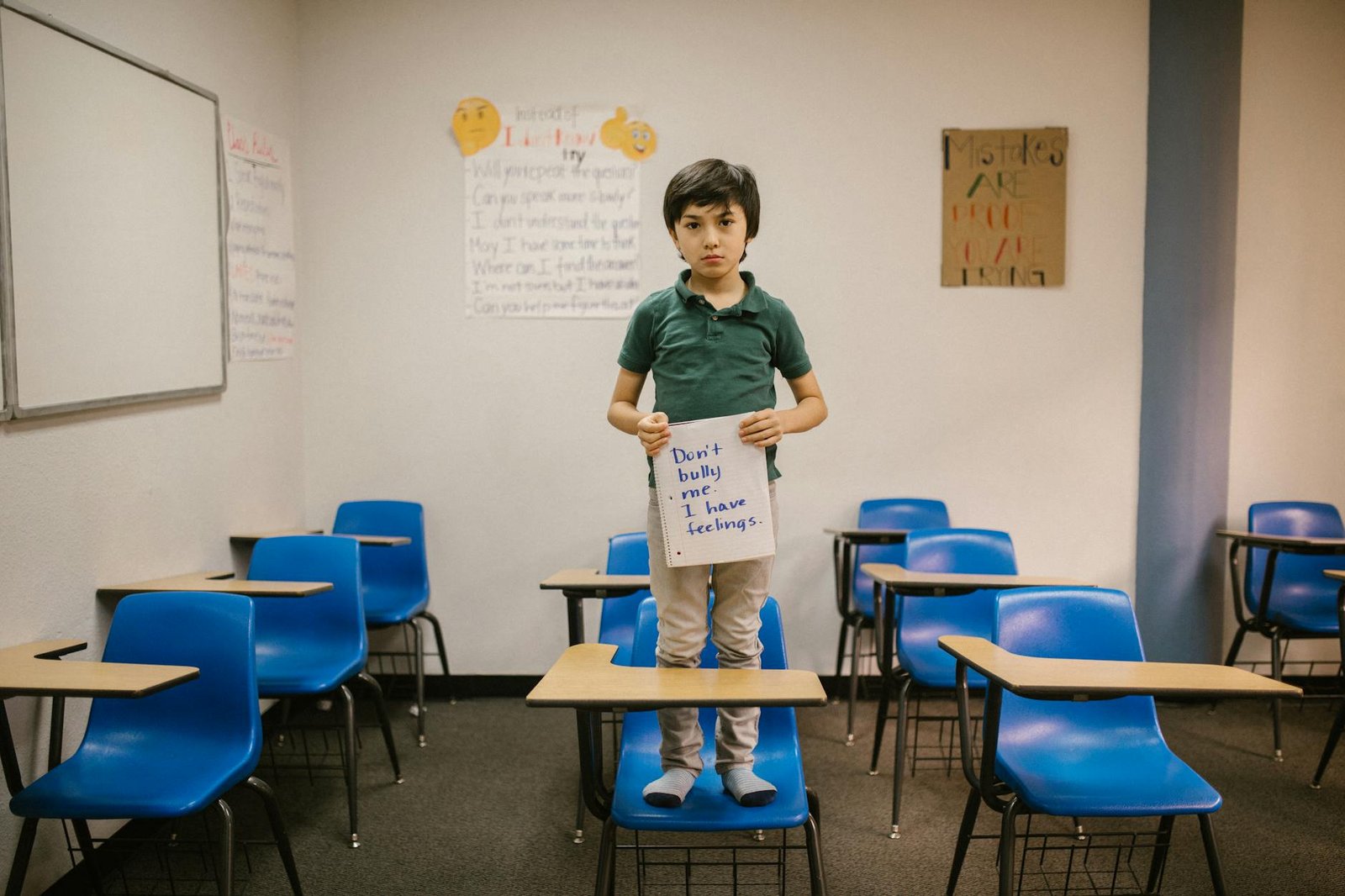
boy standing on blue chair while holding a message against bullying

Photo by RDNE Stock project on <a href="https://www.pexels.com/photo/boy-standing-on-blue-chair-while-holding-a-message-against-bullying-6936473/" rel="nofollow">Pexels.com</a>

Learning is not just about acquiring knowledge but also about understanding oneself as a learner. At its core, education serves as a bridge to self-awareness and societal contribution. However, our ability to accurately assess our achievements and set expectations is crucial in determining educational outcomes.

Research by Kuncel, Crede, and Thomas (2005) highlights the remarkable accuracy with which most students perceive their academic performance. High school students, for example, have a strong understanding of their achievement levels across various subjects. This finding suggests that learners are generally capable of predicting their academic outcomes with a degree of precision that rivals formal assessments.

Self-Perception in Learning

Students’ self-reported grades are a form of prior achievement that reflects their personal assessment of past learning experiences. These self-assessments are often influenced by consistent exposure to feedback in educational environments. For most students, the correlation between their self-reported performance and actual achievement is strikingly high (r = 0.80+). This challenges the need for excessive standardized testing, as students themselves already have an innate sense of their strengths and areas for improvement.

However, this trend is not universal. Minority students, while generally demonstrating lower academic performance compared to their peers, tend to show less accuracy in self-estimations. This discrepancy could be rooted in systemic inequities, such as limited access to quality resources, underrepresentation in advanced programs, or implicit biases that affect teacher expectations. As a result, the self-perceptions of these students may reflect not only their abilities but also the barriers they face within the educational system.

Expectations: A Double-Edged Sword

While accurate self-assessment empowers students, expectations can also act as a ceiling, limiting achievement. If a learner sets expectations based on previous performance, they may unconsciously cap their potential. For instance, a student who believes they are only “average” in math might not strive for higher-level problem-solving, even if they have the capability to excel. This self-fulfilling prophecy underscores the importance of fostering an educational culture that challenges students to reimagine their potential.

Implications for Education

The findings on self-reported grades invite educators to rethink the role of assessments and feedback. If students already have a strong sense of their performance, testing should focus less on validation and more on identifying growth opportunities. Additionally, educators should consider how their interactions with students influence self-perception, particularly for those from marginalized backgrounds.

By cultivating an environment where learners feel supported in stretching beyond their perceived limits, education can transcend the mere transmission of knowledge. It can become a journey of self-discovery, breaking down barriers and creating pathways to success for every student.

Final Thoughts

Understanding how students view their learning journey offers valuable insights into their needs and potential. As education evolves, it is essential to build systems that not only measure achievement but also nurture the confidence and aspirations of every learner. After all, the goal of education is not just to teach facts but to inspire individuals to see themselves as capable of achieving more than they ever thought possible.

References

Kuncel, Nathan R., Marcus Crede, and Lindsey L. Thomas. “The Validity of Self-Reported Grade Point Averages, Class Ranks, and Test Scores: A Meta-Analysis and Review of the Literature.” Review of Educational Research 75, no. 1 (2005): 63–82.

Continue Reading

Previous: Lurking as an Educational Approach: Valid Engagement or a Missed Opportunity?
Next: Learning in Chaos: Some Insights

Categories

Archives

  • September 2025
  • July 2025
  • June 2025
  • May 2025
  • April 2025
  • March 2025
  • February 2025
  • January 2025
  • December 2024
  • November 2024
  • October 2024
  • September 2024
  • August 2024
  • July 2024
  • June 2024
  • May 2024
  • April 2024
  • March 2024
  • February 2024
  • January 2024
  • December 2023
  • November 2023
  • October 2023
  • September 2023
  • August 2023
  • July 2023
  • June 2023
  • May 2023
  • April 2023
  • March 2023
  • February 2023
  • January 2023
  • December 2022
  • November 2022
  • October 2022
  • September 2022
  • August 2022
  • July 2022
  • June 2022
  • May 2022
  • April 2022
  • March 2022
  • February 2022
  • January 2022
  • December 2021
  • November 2021
  • October 2021
  • September 2021
  • August 2021
  • July 2021
  • June 2021
  • May 2021
Copy Right © 2025–2026 Learning Science Digest (lsdigest.com). All rights reserved.

Copyright © 2025-2026 LsDigest.com

Copyright © 2025-2026 LsDigest.com | MoreNews by AF themes.