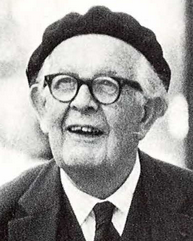
Cognitive development is a fascinating journey that shapes how we perceive, understand, and interact with the world around us. One of the most influential theories explaining this process was articulated by Swiss developmental psychologist Jean Piaget. His theory of cognitive development outlines four distinct stages that individuals pass through as they grow and mature: the sensorimotor stage, the preoperational stage, the concrete operational stage, and the formal operational stage. Each stage represents a unique way of thinking and understanding, with interstitial elements that bridge one level to the next. Let’s dive into Piaget’s stages and explore how they illuminate the path to cognitive maturity.
1. The Sensorimotor Stage (Birth to 2 Years)
The journey begins with the sensorimotor stage, which spans from birth to approximately two years of age. During this stage, infants learn about the world primarily through their senses and motor actions. They explore by touching, tasting, seeing, hearing, and moving.
A key milestone in this stage is the development of object permanence—the understanding that objects continue to exist even when they are out of sight. For example, when a toy is hidden under a blanket, a child who has developed object permanence will search for it, realizing it hasn’t simply disappeared. This stage lays the foundation for later cognitive abilities, as infants begin to understand cause and effect and develop basic problem-solving skills.
2. The Preoperational Stage (2 to 7 Years)
As children enter the preoperational stage, their cognitive abilities expand, but their thinking remains egocentric and intuitive rather than logical. During this stage, children develop language and begin to use symbols, such as words and images, to represent objects and ideas. However, they struggle with understanding perspectives other than their own, a concept known as egocentrism.
Another hallmark of this stage is animism, where children attribute human characteristics to inanimate objects. For instance, a child might believe that a stuffed animal has feelings or that the sun is “happy” when it shines. While their imagination flourishes, children in this stage often lack the ability to perform logical operations, such as conservation (understanding that quantity remains the same despite changes in shape or appearance).
3. The Concrete Operational Stage (7 to 11 Years)
The concrete operational stage marks a significant shift in cognitive development. Children in this stage begin to think more logically and systematically, but their reasoning is still tied to concrete, tangible experiences rather than abstract concepts. They develop the ability to perform conservation tasks, such as recognizing that pouring water from a tall, narrow glass into a short, wide one doesn’t change the amount of water.
Additionally, children in this stage start to understand classification (grouping objects by shared characteristics) and seriation (ordering objects by size, weight, or other attributes). However, abstract or hypothetical thinking remains challenging, as their cognitive abilities are firmly rooted in the here and now.
4. The Formal Operational Stage (12 Years and Beyond)
The final stage in Piaget’s theory is the formal operational stage, which typically begins around adolescence and continues into adulthood. At this level, individuals develop the capacity for abstract and hypothetical thinking. They can reason about possibilities, engage in deductive reasoning, and consider multiple perspectives.
For example, a teenager in the formal operational stage can ponder philosophical questions, solve complex mathematical problems, or imagine future scenarios. This stage also enables individuals to think critically, plan for the long term, and engage in scientific reasoning. It represents the pinnacle of cognitive development, where the mind becomes capable of navigating both the concrete and the abstract.
Interstitial Elements: Bridging the Stages
While Piaget’s stages are distinct, they are not rigidly separated. Interstitial elements—transitional phases—exist between each stage, allowing for gradual progression. These transitions highlight the fluidity of cognitive development, as individuals integrate new ways of thinking while still retaining aspects of previous stages.
For instance, a child transitioning from the preoperational to the concrete operational stage might begin to grasp conservation tasks but still struggle with more complex logical problems. These interstitial phases underscore the dynamic and continuous nature of cognitive growth.
Why Piaget’s Theory Matters
Piaget’s theory of cognitive development has had a profound impact on education, psychology, and parenting. By understanding the stages of cognitive growth, educators can tailor teaching methods to match students’ developmental levels. Parents can also foster their children’s learning by providing age-appropriate challenges and support.
While some critics argue that Piaget underestimated the abilities of young children or overlooked cultural influences, his framework remains a cornerstone of developmental psychology. It reminds us that cognitive development is a gradual, transformative process, shaped by both biological maturation and interaction with the environment.
Final Thoughts
Jean Piaget’s theory of cognitive development offers a roadmap for understanding how we grow from curious infants into logical, abstract-thinking adults. Each stage—sensorimotor, preoperational, concrete operational, and formal operational—represents a unique way of engaging with the world, building upon the foundations laid in earlier stages.
As we reflect on Piaget’s work, we gain not only insight into our own cognitive journeys but also a deeper appreciation for the complexity and wonder of human development. Whether you’re a parent, educator, or lifelong learner, Piaget’s stages remind us that growth is a continuous, ever-evolving process—one that shapes who we are and how we see the world.