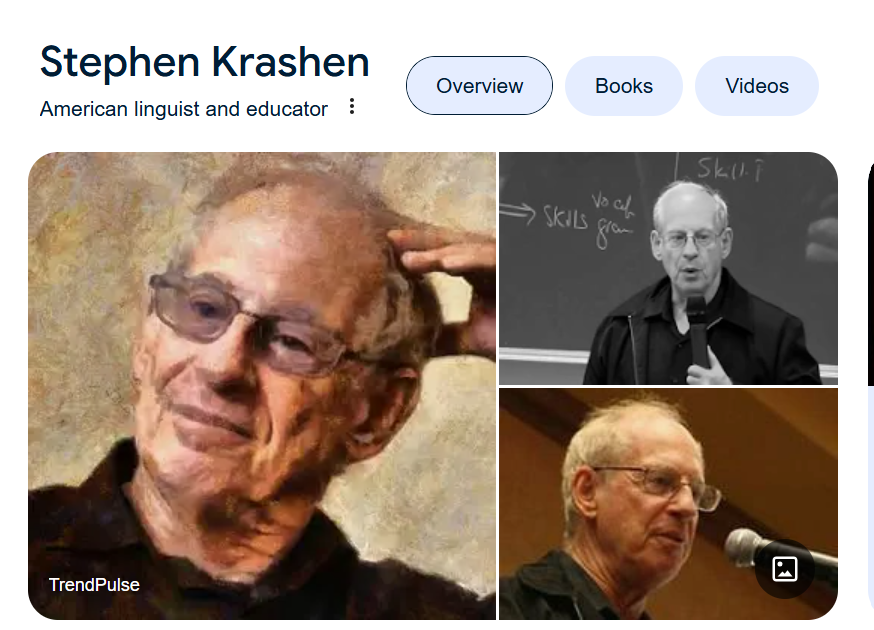
Language acquisition is one of the most complex and fascinating processes in education. Yet, according to Stephen Krashen, the renowned linguist and educator, the way we acquire language is surprisingly simple and universal. In a compelling presentation, Krashen explains his Input Hypothesis and challenges conventional teaching practices. Here’s an exploration of his key ideas and how they can transform language learning and teaching.
How Do We Acquire Language?
Krashen begins with a bold statement: We all acquire language in the same way.
This idea may seem audacious in a world obsessed with individual learning styles and cognitive differences. From theories about “left-brain versus right-brain thinkers” to cultural learning styles, education often emphasizes our differences. While Krashen acknowledges that individual variation exists, he points out that some processes—like digestion or the way our visual system works—are universal. Language acquisition, he argues, is one of those universal processes.
The Input Hypothesis: The Heart of Language Learning
According to Krashen, we acquire language in one way and one way only: when we understand messages.
This process is what he calls comprehensible input—language that is slightly above our current level of understanding but made clear through context, visuals, or prior knowledge. He illustrates this with two contrasting German lessons:
- Lesson 1: A lecture in German filled with unfamiliar words and phrases.
- Lesson 2: A lively, visual demonstration with gestures and pictures that make the meaning clear.
In Lesson 2, even if students don’t know every word, they can understand the gist of what is being communicated. This is the essence of comprehensible input.
Why Speaking Isn’t Practicing
One of Krashen’s most surprising claims is that talking is not practicing.
He argues that speaking a language, especially in isolation (e.g., practicing in front of a mirror), does not significantly contribute to acquisition. Instead, speaking emerges naturally as a result of understanding input over time. He recounts a personal story about Itomi, a young Japanese girl who spent months in silence before suddenly beginning to speak fluent English. During those silent months, she wasn’t idle—she was absorbing comprehensible input. Speaking, when it finally began, was the result of language acquisition, not the starting point.
The Role of the Affective Filter
Krashen introduces another critical concept: the Affective Filter Hypothesis.
For language acquisition to occur, learners must be in a low-anxiety, high-confidence environment. Motivation, self-esteem, and anxiety levels play a huge role in determining whether input penetrates the brain’s “language acquisition device” (a term borrowed from Noam Chomsky).
- Low motivation or self-esteem: Raises the filter, blocking input.
- High anxiety: Creates a defensive mindset, preventing language learning.
In a relaxed and engaging environment, however, the filter drops, and language learning flourishes. Krashen notes that this is why highly engaging conversations or immersive experiences—where the focus is on the message, not the language—are so effective.
Implications for Language Teaching
Krashen’s insights have profound implications for how we approach language education:
- Focus on Comprehensible Input: Teachers should prioritize making language understandable through context, visuals, and engaging content. Grammar drills, rote memorization, and forced speaking exercises are less effective than rich, meaningful input.
- Create a Low-Anxiety Environment: Classrooms should be spaces where students feel safe, motivated, and confident. Mistakes should be seen as natural, not as failures.
- Emphasize Listening and Reading: Input should come from authentic, interesting materials that students can understand and enjoy. Conversations, stories, and accessible books are invaluable tools.
- Be Patient with the Silent Period: Some learners, like Itomi, need time to absorb input before they begin speaking. This silent period is not a sign of failure; it’s a normal and necessary stage of language acquisition.
A Paradigm Shift in Language Learning
Krashen’s Input Hypothesis challenges many traditional practices in language education, but the evidence supporting his ideas is compelling. When we prioritize understanding over output, and when we reduce anxiety in the classroom, language learning becomes not just effective but also enjoyable.
As Krashen famously puts it:
“We acquire language in one way, and only one way: when we get comprehensible input in a low-anxiety environment.”
By embracing this principle, educators and learners alike can unlock the true potential of language acquisition.