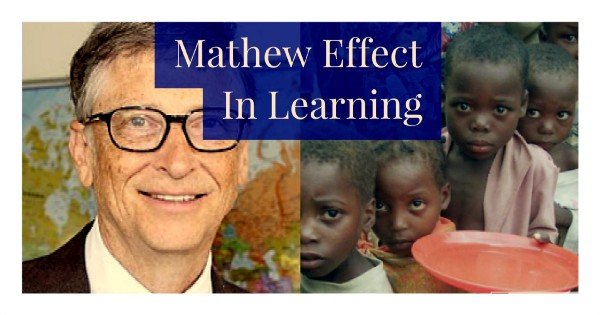
The Matthew Effect, a concept first introduced in academia by sociologist Robert K. Merton, originates from a biblical verse (Matthew 25:29):
“For unto everyone that hath shall be given, and he shall have abundance; but from him that hath not shall be taken away even that which he hath.”
Merton used the term to describe how recognition and resources in academic and professional fields tend to accumulate disproportionately, with the already successful receiving more opportunities. In education, this concept was later applied by Walberg and Tsai (1983) to describe cumulative advantage—where early success leads to more success, while early struggles can result in an ever-widening gap in achievement.
Early Success Breeds Success
Walberg and Tsai’s research demonstrated that early educational experiences strongly predict later academic engagement and achievement. Students who acquire foundational skills early—like literacy or numeracy—build on these skills more effectively over time. Early learning boosts motivation, participation in educational activities, and the capacity to tackle more complex concepts.
Keith Stanovich, a psychologist and reading researcher, expanded this idea in the context of reading. According to Stanovich:
- Children who learn to read early are more likely to continue reading, reinforcing their vocabulary, comprehension, and critical thinking skills.
- Conversely, children who struggle with reading by the third or fourth grade often read less, leading to weaker skills and further difficulties in learning.
This snowball effect means that small initial differences in ability grow into significant disparities over time.
Why the Matthew Effect Matters
1. The Reading Gap
Early reading struggles create a domino effect. Students who fall behind in reading find it harder to access content in other subjects, where reading is essential for learning. History, science, math problems, and even instructions in class often depend on strong reading comprehension. Over time, this gap can lead to:
- Poor performance in multiple subjects.
- Lower self-esteem and motivation.
- Higher dropout rates compared to peers.
2. The Role of Cumulative Advantage
The Matthew Effect isn’t limited to reading. Any area of learning—math, science, or even social skills—can be subject to this phenomenon. Students who receive more opportunities, support, and resources early in their education accumulate advantages that compound over time. Conversely, those who lack these experiences face growing disadvantages.
3. Equity in Education
The Matthew Effect underscores the importance of addressing inequality in education. Children from disadvantaged backgrounds may lack access to high-quality early education, resources at home, or personalized support. Without intervention, these systemic inequalities amplify the effects of early learning gaps.
Breaking the Cycle
To counteract the Matthew Effect, educators and policymakers can adopt several strategies:
1. Early Intervention
Providing targeted support in early childhood can prevent small gaps from widening. Programs like early literacy initiatives, phonics-based instruction, and individualized tutoring can give struggling learners the boost they need.
2. Access to Resources
Ensuring that all students have access to books, technology, and enriching learning environments helps level the playing field. Libraries, reading programs, and access to educational tools can make a significant difference.
3. Encouraging Reading for Pleasure
Fostering a love of reading outside of academic requirements can help struggling readers improve. Schools and parents can emphasize the joy of stories, offer diverse reading materials, and encourage regular reading habits.
4. Continuous Monitoring
Regular assessments allow educators to identify students who are falling behind and provide timely support. Personalized learning plans and teacher feedback can help struggling students catch up.
A Call to Action
The Matthew Effect in learning is a powerful reminder of how crucial early education is. Without intervention, initial advantages and disadvantages can grow into lifelong disparities, shaping not only academic success but also life opportunities.
Breaking this cycle requires a commitment to equity, early intervention, and sustained support. By addressing gaps early and fostering cumulative advantages for all learners, we can ensure that every child has the opportunity to thrive.