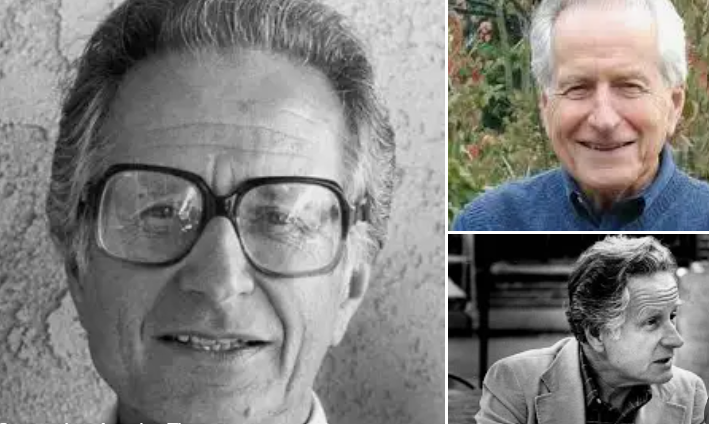
John I. Goodlad, one of the most influential figures in modern education, dedicated his life to advancing two core missions: improving the quality of teaching and ensuring equitable access to public education for all. His remarkable career spanned decades, continents, and disciplines, leaving an indelible mark on how we think about schooling, curriculum design, teacher education, and educational reform. Through his roles as a researcher, philosopher, activist, and leader, Goodlad shaped not only American education but also global perspectives on what schools should be—and what they must become.
A Life Devoted to Education
Goodlad’s journey began in a one-room rural schoolhouse in British Columbia, Canada, where he faced the challenges of teaching students ranging from ages 6 to 17 in a single classroom. This early experience ignited his lifelong commitment to questioning traditional practices like graded schooling and advocating for innovative approaches such as non-grading. By the time he earned his Ph.D. from the University of Chicago in 1949, Goodlad had already developed a keen awareness of the social, psychological, and pedagogical implications of rigid educational structures.
Over the course of his career, Goodlad held prestigious positions at institutions such as Emory University, UCLA, and the University of Washington. He served as dean, director, and president of numerous organizations, including the American Educational Research Association (AERA) and the Institute for Educational Inquiry. Yet, despite his many titles, Goodlad remained deeply grounded in the belief that education is a moral enterprise—a vehicle for fostering equity, justice, and human flourishing.
Key Contributions to Education
Goodlad’s work can be distilled into several interconnected themes that reflect both his empirical research and philosophical reflections:
1. Non-Grading: Challenging Traditional Structures
One of Goodlad’s earliest and most enduring contributions was his advocacy for non-grading—a system that moves away from rigid grade levels and standardized promotion policies. His own experiences as a teacher revealed the harm caused by condemning children to repeated failure due to arbitrary benchmarks. Through studies and theoretical frameworks, Goodlad argued that non-grading could better accommodate individual learning needs while promoting moral concern, economic efficiency, and psychological well-being.
2. Curriculum Inquiry: Bridging Theory and Practice
Goodlad approached curriculum development with a three-tiered lens:
- Practice: Investigating real-world trends in elementary and secondary curricula.
- Framework: Developing conceptual systems to address societal, institutional, and instructional dimensions of curriculum.
- Field of Study: Reflecting critically on the state of curriculum scholarship itself.
His seminal book, Curriculum Inquiry: The Study of Curriculum Practice (1979), remains a cornerstone text for understanding how curriculum shapes—and is shaped by—broader cultural values. Goodlad emphasized the importance of separating normative questions (“what ought to be”) from descriptive ones (“what is”), urging educators to focus on actual practices rather than idealized visions alone.
3. Schooling and Its Purpose
For Goodlad, the purpose of schools extended beyond academics. In works like What Schools Are For (1979) and A Place Called School (1984), he outlined four key goals of schooling:
- Academic: Fostering intellectual growth across domains of knowledge.
- Vocational: Preparing students for productive work and economic responsibility.
- Social/Civic: Equipping individuals to navigate complex societies.
- Personal: Encouraging self-expression, responsibility, and talent development.
At their core, schools were meant to cultivate rational individuals who contribute positively to humanity. For Goodlad, this vision balanced personal fulfillment with collective welfare—a testament to his deep moral philosophy.
4. Teacher Education: Elevating the Profession
Goodlad believed passionately in the transformative power of teachers. As early as the 1960s, he challenged the trend toward technification in teacher training, arguing instead for a focus on the moral dimensions of teaching. His landmark study, Teachers for Our Nation’s Schools (1990), identified 20 postulates for sound teacher education, emphasizing collaboration between universities and K-12 schools.
5. Educational Renewal: Bridging Research and Action
Perhaps Goodlad’s greatest legacy lies in his efforts to bridge theory and practice through educational renewal. Rejecting linear models of change like RDDE (research, development, dissemination, evaluation), he proposed the DDAE model (dialogue, decisions, actions, evaluation)—a dynamic process rooted in continuous dialogue and tension between internal responsiveness and external stimulation. Through initiatives like the National Network for Educational Renewal, Goodlad inspired partnerships among colleges, universities, and school districts to create networks of innovation and improvement.
A Moral Vision for Education
Throughout his career, Goodlad’s empirical studies were guided by a profound moral vision. He championed fairness, equity, and social justice, insisting that every child deserves access to excellent public education. His concept of teaching as a “synthesis” underscored the ethical responsibility of educators to facilitate enculturation, provide access to knowledge, build meaningful relationships, and practice good stewardship.
Goodlad’s optimism about the future of education stemmed from his unwavering belief in its potential to transform lives and societies. Despite witnessing countless pendulum swings and fleeting fads in education policy, he remained steadfast in his message: Education is not merely a technical endeavor but a profoundly human one.
Global Influence and Lasting Impact
Goodlad’s influence transcended borders. His writings have been translated into multiple languages, and his ideas continue to resonate worldwide. Notably, his visit to China in 1981 paralleled John Dewey’s earlier impact on Chinese education, reinforcing the universal relevance of his principles.
As Ralph Tyler once observed, Goodlad excelled in three rare yet complementary roles: researcher, prophet, and mover. His ability to connect empirical realities with inspiring ideals made him a true visionary. Whether through his groundbreaking books, leadership in professional organizations, or hands-on involvement in renewal projects, Goodlad left an indelible imprint on the field of education.
Conclusion: The Beat of a Different Drummer
In honoring John I. Goodlad, we celebrate not just a scholar or reformer but a gentle advocate for humanity’s highest aspirations. His life’s work reminds us that education is more than a system—it is a sacred trust. To borrow the title of a tribute volume, Goodlad truly marched to the beat of a different drummer, calling us to imagine—and build—a brighter future for all learners.