Skip to content

Learning-Science Digest

Fringe of Human Learning Technology and Emergence

Categories

  • 4E Cognition
  • Ability grouping
  • Accelerated learning
  • Acting/ Role play
  • Active learning
  • Active/ Action learning
  • Activities
  • Adaptive Learning
  • Administration & Leadership
  • Affordances
  • After-School Programs
  • Agency/ Autonomy
  • Analogy & Analogy based Learning
  • Anchored Instruction
  • Andragogy
  • Anthropology/ Ethnographic learning
  • Apprenticeship
  • Approaches
  • Apps
  • Artificial Intelligence
  • Assessment
  • Asynchronous Learning
  • Attitude
  • Banking model
  • Behavior Design
  • Behavioural
  • Belonging
  • Biology
  • Blended, Flipped, etc
  • books
  • Brain
  • Bricolage
  • Catholic Education
  • Causation
  • Coaching
  • Cognitive Diversity
  • Cognitive Load
  • Cognitive Science
  • Collaborative learning
  • Communities of practice
  • Competency-Based Learning
  • Complexity Theory
  • Compliance Training
  • Computational Learning
  • Computer Based Math
  • Concept Differences
  • Concept similarity
  • Connected Learning
  • Connectivism
  • Constraints
  • Constraints-Led Approach
  • Constructionism
  • Constructivism
  • Contextualized Learning
  • Contrast and Polarity
  • Courses
  • Creativity/ Innovation
  • Critical articles
  • Critical Pedagogy
  • Critical Thinking
  • Cultural Intelligence
  • Cultural Learning
  • Cumulative culture
  • Curriculum
  • Curriculum Design
  • Deliberate Practice
  • Design Science/ Approaches
  • Desirable Difficulty
  • Dialogic Learning
  • Differential learning
  • Digital Learning
  • Direct Instruction/ KLC
  • Disability and Learning
  • Discovery Learning
  • Discussion/ Debate
  • Disposition/Propensity
  • Distributed Cognition/ Learning
  • DIY learning/ Edupunk
  • Dynamics and learning
  • Early Intervention
  • Ecological Approch
  • Ecological Dynamics
  • Ed-tech
  • Education
  • Education Models
  • Education Policy
  • Education Thinkers
  • Effectuation
  • Elaboration
  • Embedded Cognition
  • Embodied Cognition
  • Emergence
  • Emergency learning
  • Emerging technology
  • Emulative learning
  • Enactive learning
  • Enskilment
  • Entangled pedagogy
  • Entrepreneurial Learning
  • Ethics and Moral learning
  • Evaluation
  • Evidence
  • Evolution and Learning
  • Exams
  • Exaptation
  • Exercise
  • Experiential Learning
  • Expertise
  • Explicit instruction
  • Extended Cognition
  • Family/ Religion
  • Feedback
  • Frameworks
  • Future Of Learning
  • Games/ Gamification
  • Generation Effect
  • Generative AI
  • Genius
  • Geragogy
  • Grading
  • Happiness and learning
  • Heuristics
  • Heutagogy
  • Higher Education
  • History Of Education
  • Home Slider
  • Home/ Home Schooling/ Learning
  • Homework
  • Human Machine Interface
  • Humor
  • Hypercorrection
  • Improvisation
  • Informal Learning
  • Innovation
  • Inquiry
  • Instructional Design
  • Instrumentalism
  • Intelligence
  • Interviews
  • Job training
  • Knowledge Rich Curriculum
  • Knowledge: Types. etc.
  • Labelling
  • Language Learning
  • Law and Legal Learning
  • Learning and Development
  • Learning Difficulties
  • Learning Environments
  • Learning for life
  • Learning in Chaos
  • Learning in complexity
  • Learning Management System
  • Learning Myths
  • Learning Programming
  • Learning Science
  • Learning Stations
  • Learning Systems
  • Learning Techniques/Methods
  • Learning Thinkers
  • Learning under anxiety/pressure/stress
  • Learning/ Teaching Strategies
  • Learning/ Understanding By Design
  • Looping effect
  • Maker Learning
  • Mastery
  • Mathew Effect
  • Maths Learning
  • Measurement
  • Medical Education/Learning
  • Memory
  • Meta-Analysis
  • Meta-Cognition
  • mindset
  • Mnemonics
  • Montessori
  • Motivation
  • Motor Learning
  • Music/ Arts and Learning
  • Mystagogy
  • Needs and Need based Learning
  • Networked Learning
  • Networks and Ecosystem
  • Neurodivergence
  • Neuroscience
  • Non Computational
  • Non-Representational
  • Nonlinear Pedagogy
  • Novelty and learning
  • Observational learning
  • On-the-Job Training
  • Online and MOOC Learning
  • outdoor-education
  • Pedagogy
  • Peer Learning
  • Personalized Learning
  • Philosophy Of Education
  • Philosophy Of Learning
  • Philosophy Of Science
  • Place-Based Learning
  • Play/ Ludic Pedagogy
  • Policy
  • Pragmatism
  • Problem-based learning
  • Productive Failures
  • Professional education
  • Professional Learning
  • Progressive Education
  • Project Based Learning
  • Proximity and Learning
  • Psychological Issues
  • Question asking/ Question design
  • Reading , Literacy , etc
  • Recognition
  • Reification/ Reductionism
  • Relational Expertise
  • Relational Learning
  • Religion
  • Research
  • Resting/ offline consolidation
  • Retrieval
  • Salience/Closeness
  • Scaffolding
  • Science Of Learning
  • self-efficacy
  • Self-Organization
  • Self-Paced Learning
  • Self-Regulated/ Self-Directed
  • Service Learning
  • Short Concept Introduction
  • Signalling
  • Simulation or Simulative Learning
  • Situated Learning
  • Skill
  • Sleep and Rest
  • Social Effects
  • Social Learning
  • Social-emotional learning
  • Society-Ecosystem etc
  • Socioeconomic Factors
  • Sociology Of Learning
  • Software And Technology Review
  • Speaking/Public Speaking
  • Spiral design
  • Sports learning
  • Sports Science
  • Story/Narrative based learning
  • Studying
  • Teacher/ teaching
  • Testing
  • Theology and learning
  • Theories
  • Tools, Aids, Artifacts
  • Training
  • Training Needs Analysis
  • Transdisciplinary/ Interdisciplinary, etc
  • Transfer Of Learning
  • Trending News
  • Uncategorized
  • Uncertainty and learning
  • Variable Practice
  • Vicarious learning
  • Video playlist
  • Virtual, Augmented, etc
  • Visible Learning/ Hattie
  • Visual Learning/Drawing
  • Vocational Education
  • Wakeful Resting
  • Work Place Learning
  • Workshop Model
  • Zone of Proximal Development (ZPD)
Primary Menu
  • Home
  • About
  • Thinkers
    • Learning Thinkers
    • Education Thinkers
  • Design For Learning
    • Design Science/ Approaches
    • Instructional Design
    • Behavior Design
    • Curriculum Design
    • Learning/ Understanding By Design
    • Motivation
    • Ecological Approch
    • Blended, Flipped, etc
    • Games/ Gamification
  • Tools/Techniques/Methods
    • Learning Techniques/Methods
    • Education Models
    • Testing
    • Retrieval
    • Blended, Flipped, etc
    • Differential learning
    • Dialogic Learning
    • Computer Based Math
    • Tools, Aids, Artifacts
    • Knowledge Rich Curriculum
    • Cognitive Load
    • Online and MOOC Learning
    • Scaffolding
    • Contrast and Polarity
    • Play/ Ludic Pedagogy
    • Problem-based learning
    • Cultural Learning
    • Direct Instruction/ KLC
    • Deliberate Practice
    • Visual Learning/Drawing
    • Games/ Gamification
    • Acting/ Role play
    • Analogy & Analogy based Learning
    • Inquiry
    • Improvisation
    • Constructionism
    • Situated Learning
    • Productive Failures
    • Anthropology/ Ethnographic learning
    • Project Based Learning
    • Connected Learning
    • Nonlinear Pedagogy
    • Personalized Learning
    • Maker Learning
    • Virtual, Augmented, etc
    • Service Learning
    • Constructivism
    • Connectivism
    • Vicarious learning
    • Active/ Action learning
    • Computational Learning
    • Relational Learning
    • Apprenticeship
    • Communities of practice
    • Home/ Home Schooling/ Learning
    • Contextualized Learning
    • DIY learning/ Edupunk
    • Constraints-Led Approach
    • Peer Learning
  • Domains
    • Language Learning
    • Entrepreneurial Learning
    • Maths Learning
    • Sports Science
    • Theology and learning
    • Sports learning
    • Professional education
    • Law and Legal Learning
    • Catholic Education
    • Higher Education
    • Medical Education/Learning
    • Work Place Learning
    • Learning Programming
    • On-the-Job Training
    • Job training
    • Compliance Training
  • Approaches
    • Neuroscience
    • Social Learning
    • Ecological Approch
    • 4E Cognition
    • Active learning
    • Transfer Of Learning
    • Cumulative culture
    • Embodied Cognition
    • Evolution and Learning
    • Embedded Cognition
    • Differential learning
    • Dialogic Learning
    • Experiential Learning
    • Learning Environments
    • Cultural Intelligence
    • Enactive learning
    • Constraints-Led Approach
    • Non-Representational
    • Self-Organization
    • Relational Learning
    • Relational Expertise
    • Enskilment
    • Extended Cognition
    • Distributed Cognition/ Learning
  • Artificial Intelligence
  • Education Policy
  • Expertise
Subscribe or Login
  • Home
  • Constructionism
  • Seymour Papert, Constructionism, and the Maker Movement: How One Vision is Shaping Modern Learning
  • Constructionism
  • Maker Learning

Seymour Papert, Constructionism, and the Maker Movement: How One Vision is Shaping Modern Learning

Thomas Collins January 20, 2024
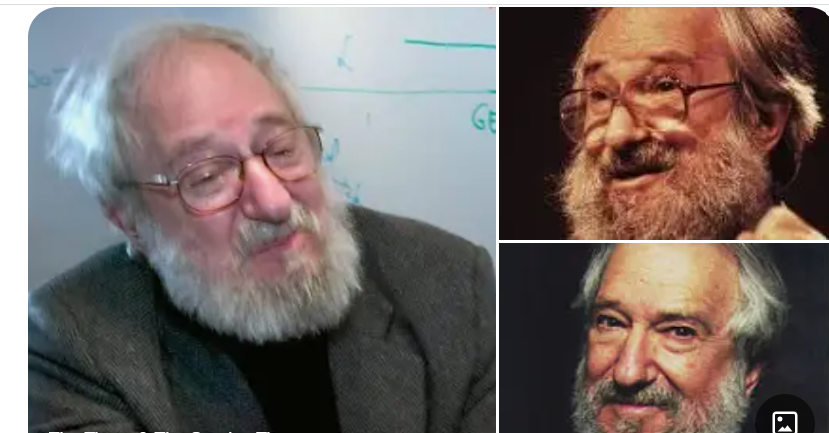
Screenshot 2025-01-23 234855

In a world where technology is constantly evolving, the way we approach learning has also undergone a significant transformation. One of the most influential figures in rethinking education was Seymour Papert, a mathematician, educator, and the father of constructionism. His ideas laid the groundwork for movements like the Maker Movement, which has revolutionized how we engage with knowledge today. In this blog post, we’ll explore Papert’s groundbreaking ideas, the rise of constructionism, and how the Maker Movement continues to shape the way we learn and create.

The Vision of Seymour Papert

Seymour Papert’s work on learning and education is rooted in the belief that children learn best when they actively engage with the world around them. He was a strong proponent of the idea that learning should not be about memorizing facts or passively receiving information; rather, it should be an active process where learners are creators of their knowledge. Papert’s key contribution to education theory is constructionism, an approach based on constructivism, a theory initially developed by Jean Piaget.

What is Constructionism?

Papert’s constructionism emphasizes that learning is most effective when people are engaged in constructing something that is personally meaningful to them. This could be anything from a computer program to a physical artifact. Papert’s landmark work with the programming language LOGO, which he co-developed, was one of the first educational tools to put this theory into practice. LOGO allowed children to program a “turtle” to move around the screen, creating geometric shapes and animations. The key here was not the technology itself, but the empowerment it gave children to think creatively and learn by doing.

For Papert, the act of creation was central to learning. By engaging with tools and materials in a hands-on way, learners could experiment, make mistakes, and iterate. This process was not only more engaging but also allowed for deeper understanding and retention of knowledge.

The Rise of the Maker Movement

Fast forward to the 21st century, and we find that the spirit of constructionism has inspired a global cultural trend—the Maker Movement. The Maker Movement is a vibrant community of creators, tinkerers, and innovators who use tools like 3D printers, Arduino microcontrollers, robotics kits, and other technologies to build and experiment. It’s a movement that values hands-on learning, creativity, and DIY culture—principles that closely mirror Papert’s educational philosophy.

Just like Papert’s vision, the Maker Movement encourages people to learn through making. The movement promotes the idea that anyone, regardless of age or background, can become a maker, creator, or inventor. Whether it’s a school project, a hobby, or a business idea, the Maker Movement encourages individuals to experiment, prototype, and develop their ideas into tangible outcomes.

Papert’s Influence on the Maker Movement

The connections between constructionism and the Maker Movement are undeniable. Both emphasize active, learner-driven engagement. In Maker spaces and labs, people of all ages are encouraged to learn through experimentation, collaboration, and hands-on projects. It’s a philosophy that prioritizes creative problem-solving over rote learning and fosters a mindset of continuous learning.

In classrooms, the Maker Movement has revitalized STEM/STEAM education, which integrates Science, Technology, Engineering, Arts, and Mathematics through project-based learning. By incorporating Papert’s constructionist principles, educators now encourage students to build, code, design, and experiment in ways that blend disciplines and inspire innovation.

Shared Philosophies: Learning by Doing

At its core, both constructionism and the Maker Movement share the idea that learning is an active process. It’s about more than just understanding concepts—it’s about applying those concepts in the real world. Here’s how these ideas overlap:

  1. Active Learning: Both Papert and the Maker Movement reject passive learning. Instead, they emphasize hands-on, inquiry-based learning, where students learn by actively creating and experimenting.
  2. Creativity and Innovation: Papert’s constructionism encourages students to solve real-world problems creatively. The Maker Movement takes this further by integrating cutting-edge tools like 3D printers and robotics, giving creators the means to bring their ideas to life.
  3. Failure as a Learning Tool: In both constructionism and the Maker Movement, failure is seen as a critical part of the learning process. By making mistakes, learners gain insights and can iterate on their designs.
  4. Collaborative Learning: Both frameworks emphasize collaboration. Maker spaces, for example, are places where people come together to share knowledge, tools, and resources. This mirrors Papert’s belief that learning thrives in communities of inquiry.

The Legacy of Seymour Papert

Seymour Papert’s influence can be seen everywhere—from the way we engage with technology to how we approach learning. He believed that technology should empower learners to think critically and creatively, and in many ways, the Maker Movement is the living embodiment of his ideas. By offering people the tools to build and create, the Maker Movement makes learning an interactive, dynamic experience that mirrors the very principles Papert championed.

The impact of constructionism is far-reaching, not only within educational settings but also in shaping industries that require innovation and creativity. Makers today continue to build on Papert’s vision, exploring new frontiers of technology, creativity, and learning.

Conclusion

Seymour Papert’s work laid the foundation for a new way of thinking about education. His theory of constructionism changed the way we view learning, making it a process of creative construction rather than rote memorization. The Maker Movement is a testament to Papert’s enduring influence, as it continues to inspire a generation of learners, creators, and innovators. As we move forward, we should look to Papert’s ideas not only as a model for the classroom but as a call to action for a more engaged, hands-on, and collaborative world of learning.

In the end, whether in the classroom, a maker space, or at home, the principle remains the same: learn by making.

Continue Reading

Previous: Two Perspectives on Failures and Mistakes in Learning and Education
Next: Unlocking Effective Learning: The Successive Approximation Model (SAM) in Instructional Design

Categories

Archives

  • September 2025
  • July 2025
  • June 2025
  • May 2025
  • April 2025
  • March 2025
  • February 2025
  • January 2025
  • December 2024
  • November 2024
  • October 2024
  • September 2024
  • August 2024
  • July 2024
  • June 2024
  • May 2024
  • April 2024
  • March 2024
  • February 2024
  • January 2024
  • December 2023
  • November 2023
  • October 2023
  • September 2023
  • August 2023
  • July 2023
  • June 2023
  • May 2023
  • April 2023
  • March 2023
  • February 2023
  • January 2023
  • December 2022
  • November 2022
  • October 2022
  • September 2022
  • August 2022
  • July 2022
  • June 2022
  • May 2022
  • April 2022
  • March 2022
  • February 2022
  • January 2022
  • December 2021
  • November 2021
  • October 2021
  • September 2021
  • August 2021
  • July 2021
  • June 2021
  • May 2021
Copy Right © 2025–2026 Learning Science Digest (lsdigest.com). All rights reserved.

Copyright © 2025-2026 LsDigest.com

Copyright © 2025-2026 LsDigest.com | MoreNews by AF themes.