Skip to content

Learning-Science Digest

Fringe of Human Learning Technology and Emergence

Categories

  • 4E Cognition
  • Ability grouping
  • Accelerated learning
  • Acting/ Role play
  • Active learning
  • Active/ Action learning
  • Activities
  • Adaptive Learning
  • Administration & Leadership
  • Affordances
  • After-School Programs
  • Agency/ Autonomy
  • Analogy & Analogy based Learning
  • Anchored Instruction
  • Andragogy
  • Anthropology/ Ethnographic learning
  • Apprenticeship
  • Approaches
  • Apps
  • Artificial Intelligence
  • Assessment
  • Asynchronous Learning
  • Attitude
  • Banking model
  • Behavior Design
  • Behavioural
  • Belonging
  • Biology
  • Blended, Flipped, etc
  • books
  • Brain
  • Bricolage
  • Catholic Education
  • Causation
  • Coaching
  • Cognitive Diversity
  • Cognitive Load
  • Cognitive Science
  • Collaborative learning
  • Communities of practice
  • Competency-Based Learning
  • Complexity Theory
  • Compliance Training
  • Computational Learning
  • Computer Based Math
  • Concept Differences
  • Concept similarity
  • Connected Learning
  • Connectivism
  • Constraints
  • Constraints-Led Approach
  • Constructionism
  • Constructivism
  • Contextualized Learning
  • Contrast and Polarity
  • Courses
  • Creativity/ Innovation
  • Critical articles
  • Critical Pedagogy
  • Critical Thinking
  • Cultural Intelligence
  • Cultural Learning
  • Cumulative culture
  • Curriculum
  • Curriculum Design
  • Deliberate Practice
  • Design Science/ Approaches
  • Desirable Difficulty
  • Dialogic Learning
  • Differential learning
  • Digital Learning
  • Direct Instruction/ KLC
  • Disability and Learning
  • Discovery Learning
  • Discussion/ Debate
  • Disposition/Propensity
  • Distributed Cognition/ Learning
  • DIY learning/ Edupunk
  • Dynamics and learning
  • Early Intervention
  • Ecological Approch
  • Ecological Dynamics
  • Ed-tech
  • Education
  • Education Models
  • Education Policy
  • Education Thinkers
  • Effectuation
  • Elaboration
  • Embedded Cognition
  • Embodied Cognition
  • Emergence
  • Emergency learning
  • Emerging technology
  • Emulative learning
  • Enactive learning
  • Enskilment
  • Entangled pedagogy
  • Entrepreneurial Learning
  • Ethics and Moral learning
  • Evaluation
  • Evidence
  • Evolution and Learning
  • Exams
  • Exaptation
  • Exercise
  • Experiential Learning
  • Expertise
  • Explicit instruction
  • Extended Cognition
  • Family/ Religion
  • Feedback
  • Frameworks
  • Future Of Learning
  • Games/ Gamification
  • Generation Effect
  • Generative AI
  • Genius
  • Geragogy
  • Grading
  • Happiness and learning
  • Heuristics
  • Heutagogy
  • Higher Education
  • History Of Education
  • Home Slider
  • Home/ Home Schooling/ Learning
  • Homework
  • Human Machine Interface
  • Humor
  • Hypercorrection
  • Improvisation
  • Informal Learning
  • Innovation
  • Inquiry
  • Instructional Design
  • Instrumentalism
  • Intelligence
  • Interviews
  • Job training
  • Knowledge Rich Curriculum
  • Knowledge: Types. etc.
  • Labelling
  • Language Learning
  • Law and Legal Learning
  • Learning and Development
  • Learning Difficulties
  • Learning Environments
  • Learning for life
  • Learning in Chaos
  • Learning in complexity
  • Learning Management System
  • Learning Myths
  • Learning Programming
  • Learning Science
  • Learning Stations
  • Learning Systems
  • Learning Techniques/Methods
  • Learning Thinkers
  • Learning under anxiety/pressure/stress
  • Learning/ Teaching Strategies
  • Learning/ Understanding By Design
  • Looping effect
  • Maker Learning
  • Mastery
  • Mathew Effect
  • Maths Learning
  • Measurement
  • Medical Education/Learning
  • Memory
  • Meta-Analysis
  • Meta-Cognition
  • mindset
  • Mnemonics
  • Montessori
  • Motivation
  • Motor Learning
  • Music/ Arts and Learning
  • Mystagogy
  • Needs and Need based Learning
  • Networked Learning
  • Networks and Ecosystem
  • Neurodivergence
  • Neuroscience
  • Non Computational
  • Non-Representational
  • Nonlinear Pedagogy
  • Novelty and learning
  • Observational learning
  • On-the-Job Training
  • Online and MOOC Learning
  • outdoor-education
  • Pedagogy
  • Peer Learning
  • Personalized Learning
  • Philosophy Of Education
  • Philosophy Of Learning
  • Philosophy Of Science
  • Place-Based Learning
  • Play/ Ludic Pedagogy
  • Policy
  • Pragmatism
  • Problem-based learning
  • Productive Failures
  • Professional education
  • Professional Learning
  • Progressive Education
  • Project Based Learning
  • Proximity and Learning
  • Psychological Issues
  • Question asking/ Question design
  • Reading , Literacy , etc
  • Recognition
  • Reification/ Reductionism
  • Relational Expertise
  • Relational Learning
  • Religion
  • Research
  • Resting/ offline consolidation
  • Retrieval
  • Salience/Closeness
  • Scaffolding
  • Science Of Learning
  • self-efficacy
  • Self-Organization
  • Self-Paced Learning
  • Self-Regulated/ Self-Directed
  • Service Learning
  • Short Concept Introduction
  • Signalling
  • Simulation or Simulative Learning
  • Situated Learning
  • Skill
  • Sleep and Rest
  • Social Effects
  • Social Learning
  • Social-emotional learning
  • Society-Ecosystem etc
  • Socioeconomic Factors
  • Sociology Of Learning
  • Software And Technology Review
  • Speaking/Public Speaking
  • Spiral design
  • Sports learning
  • Sports Science
  • Story/Narrative based learning
  • Studying
  • Teacher/ teaching
  • Testing
  • Theology and learning
  • Theories
  • Tools, Aids, Artifacts
  • Training
  • Training Needs Analysis
  • Transdisciplinary/ Interdisciplinary, etc
  • Transfer Of Learning
  • Trending News
  • Uncategorized
  • Uncertainty and learning
  • Variable Practice
  • Vicarious learning
  • Video playlist
  • Virtual, Augmented, etc
  • Visible Learning/ Hattie
  • Visual Learning/Drawing
  • Vocational Education
  • Wakeful Resting
  • Work Place Learning
  • Workshop Model
  • Zone of Proximal Development (ZPD)
Primary Menu
  • Home
  • About
  • Thinkers
    • Learning Thinkers
    • Education Thinkers
  • Design For Learning
    • Design Science/ Approaches
    • Instructional Design
    • Behavior Design
    • Curriculum Design
    • Learning/ Understanding By Design
    • Motivation
    • Ecological Approch
    • Blended, Flipped, etc
    • Games/ Gamification
  • Tools/Techniques/Methods
    • Learning Techniques/Methods
    • Education Models
    • Testing
    • Retrieval
    • Blended, Flipped, etc
    • Differential learning
    • Dialogic Learning
    • Computer Based Math
    • Tools, Aids, Artifacts
    • Knowledge Rich Curriculum
    • Cognitive Load
    • Online and MOOC Learning
    • Scaffolding
    • Contrast and Polarity
    • Play/ Ludic Pedagogy
    • Problem-based learning
    • Cultural Learning
    • Direct Instruction/ KLC
    • Deliberate Practice
    • Visual Learning/Drawing
    • Games/ Gamification
    • Acting/ Role play
    • Analogy & Analogy based Learning
    • Inquiry
    • Improvisation
    • Constructionism
    • Situated Learning
    • Productive Failures
    • Anthropology/ Ethnographic learning
    • Project Based Learning
    • Connected Learning
    • Nonlinear Pedagogy
    • Personalized Learning
    • Maker Learning
    • Virtual, Augmented, etc
    • Service Learning
    • Constructivism
    • Connectivism
    • Vicarious learning
    • Active/ Action learning
    • Computational Learning
    • Relational Learning
    • Apprenticeship
    • Communities of practice
    • Home/ Home Schooling/ Learning
    • Contextualized Learning
    • DIY learning/ Edupunk
    • Constraints-Led Approach
    • Peer Learning
  • Domains
    • Language Learning
    • Entrepreneurial Learning
    • Maths Learning
    • Sports Science
    • Theology and learning
    • Sports learning
    • Professional education
    • Law and Legal Learning
    • Catholic Education
    • Higher Education
    • Medical Education/Learning
    • Work Place Learning
    • Learning Programming
    • On-the-Job Training
    • Job training
    • Compliance Training
  • Approaches
    • Neuroscience
    • Social Learning
    • Ecological Approch
    • 4E Cognition
    • Active learning
    • Transfer Of Learning
    • Cumulative culture
    • Embodied Cognition
    • Evolution and Learning
    • Embedded Cognition
    • Differential learning
    • Dialogic Learning
    • Experiential Learning
    • Learning Environments
    • Cultural Intelligence
    • Enactive learning
    • Constraints-Led Approach
    • Non-Representational
    • Self-Organization
    • Relational Learning
    • Relational Expertise
    • Enskilment
    • Extended Cognition
    • Distributed Cognition/ Learning
  • Artificial Intelligence
  • Education Policy
  • Expertise
Subscribe or Login
  • Home
  • Education Thinkers
  • Rediscovering the Past: Lawrence A. Cremin and the Transformation of Educational History
  • Education Thinkers
  • Learning Thinkers

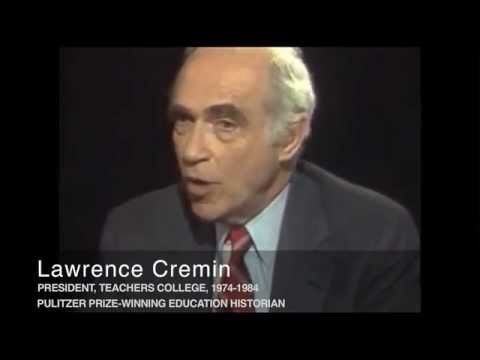
Rediscovering the Past: Lawrence A. Cremin and the Transformation of Educational History

Thomas Collins December 9, 2021
hqdefault

In the ever-evolving landscape of education, understanding where we’ve been is crucial to charting a path forward. Few scholars have contributed as profoundly to this endeavor as Lawrence A. Cremin (1925–1990), a historian, teacher, and leader whose work reshaped how we study and understand the history of education. Cremin’s legacy serves as both a foundation and a provocation for those seeking to grapple with the complexities of educational systems today.

Why Study the History of Education?

Cremin once argued that we don’t study the history of education merely to avoid past mistakes or recognize inefficiencies—though these are valuable lessons in themselves. Instead, he believed that examining history allows us to become aware of our own presuppositions and commitments in education. By understanding the origins of these ideas, we can expand our range of options when intervening for positive change.

For Cremin, history was not optional; its absence leaves us vulnerable to myths, distortions, and ideologies that thrive without critical scholarship. He echoed Socrates’ famous dictum: “The unexamined life is unfit to be lived.” For educators and policymakers alike, Cremin’s call to action remains urgent: scrutinize the past to illuminate the present.

Breaking Free from Tradition

When Cremin entered the field of educational history in the early 1950s, it was dominated by what came to be known as the Cubberly tradition, named after Ellwood P. Cubberly, a prominent figure in American educational scholarship. This approach romanticized public education as the “great equalizer” of democratic societies, often overlooking the undemocratic experiences of marginalized groups like Native Americans, slaves, immigrants, women, and ethnic minorities.

Historians within this tradition tended to focus narrowly on formal schooling, ignoring broader social and economic contexts. Their work was frequently uncritical, pedantic, and parochial—a pattern Cremin sought to disrupt. Inspired by historian Bernard Bailyn, Cremin broadened the scope of educational history beyond schools to include families, churches, libraries, museums, publishers, and other institutions that shape cultural beliefs and behaviors over time.

This shift marked a turning point in the field. In his seminal three-volume series—American Education: The Colonial Experience (1970), The National Experience (1980), and The Metropolitan Experience (1988)—Cremin redefined education itself as any deliberate, systematic effort to transmit knowledge, values, attitudes, skills, and sensibilities. His expansive definition blurred the lines between educational history and cultural history, offering readers a richer, more nuanced understanding of America’s educational journey.

A Legacy of Excellence

Cremin’s impact extended far beyond his writings. As a professor at Teachers College, Columbia University, he mentored generations of scholars who would go on to shape the field themselves. Among them were Patricia Albjerg Graham, Ellen Condliffe Lagemann, and Mary Ann Dzuback—all influential voices in contemporary educational research. Through organizations like the History of Education Society and the National Academy of Education, which he helped found, Cremin institutionalized high standards for scholarship and fostered a community dedicated to advancing educational inquiry.

His leadership also reached into policy circles. As president of the Spencer Foundation, Cremin championed grants for basic disciplinary research and programs addressing issues of educational equity. These efforts ensured that his commitment to improving the quality of educational scholarship translated into tangible support for emerging researchers.

Challenging and Expanding Perspectives

While Cremin transformed the field, his work also sparked debate. During the late 1960s and early 1970s, a new wave of historians emerged, influenced by the Civil Rights Movement, feminist thought, and critiques of class inequality. These scholars challenged Cremin’s emphasis on formal and informal enculturation, focusing instead on the role of race, gender, bureaucracy, and socioeconomic structures in shaping public education. They reframed schools not as engines of democracy but as institutions reinforcing patterns of social inequality.

Though this “revisionist” history diverged from Cremin’s vision, it ultimately enriched the field by introducing diverse perspectives and themes. Today, while formal schooling remains a central focus, there is greater balance between studying schools and exploring other educational agencies—a testament to Cremin’s enduring influence.

Lessons for Today

As debates about education reform continue to dominate headlines, Cremin’s insights remind us of the importance of historical context. Whether discussing curriculum design, standardized testing, or access to resources, we must ground our conversations in an awareness of how these issues have evolved over time. Cremin’s work challenges us to think critically about the narratives we construct around education—and to remain vigilant against oversimplifications that obscure deeper truths.

Final Thoughts

Lawrence A. Cremin’s contributions to educational history are nothing short of monumental. By broadening the parameters of inquiry, elevating the quality of scholarship, and inspiring countless others to follow in his footsteps, he left an indelible mark on the field. Yet perhaps his greatest gift lies in his insistence that we confront the past—not to enshrine it, but to question it, learn from it, and use it to build a better future.

For anyone passionate about education, Cremin’s writings remain essential reading. They invite us to see education not just as a set of policies or practices but as a dynamic force intertwined with culture, society, and human aspiration. In rediscovering Cremin’s work, we find not only a roadmap to the past but also a guidepost for navigating the challenges ahead.

Continue Reading

Previous: Harnessing Wakeful Rest to Boost Memory: Insights for Parents and Teachers
Next: Holistic Education: Cultivating Mind, Body, and Spirit

Categories

Archives

  • September 2025
  • July 2025
  • June 2025
  • May 2025
  • April 2025
  • March 2025
  • February 2025
  • January 2025
  • December 2024
  • November 2024
  • October 2024
  • September 2024
  • August 2024
  • July 2024
  • June 2024
  • May 2024
  • April 2024
  • March 2024
  • February 2024
  • January 2024
  • December 2023
  • November 2023
  • October 2023
  • September 2023
  • August 2023
  • July 2023
  • June 2023
  • May 2023
  • April 2023
  • March 2023
  • February 2023
  • January 2023
  • December 2022
  • November 2022
  • October 2022
  • September 2022
  • August 2022
  • July 2022
  • June 2022
  • May 2022
  • April 2022
  • March 2022
  • February 2022
  • January 2022
  • December 2021
  • November 2021
  • October 2021
  • September 2021
  • August 2021
  • July 2021
  • June 2021
  • May 2021
Copy Right © 2025–2026 Learning Science Digest (lsdigest.com). All rights reserved.

Copyright © 2025-2026 LsDigest.com

Copyright © 2025-2026 LsDigest.com | MoreNews by AF themes.