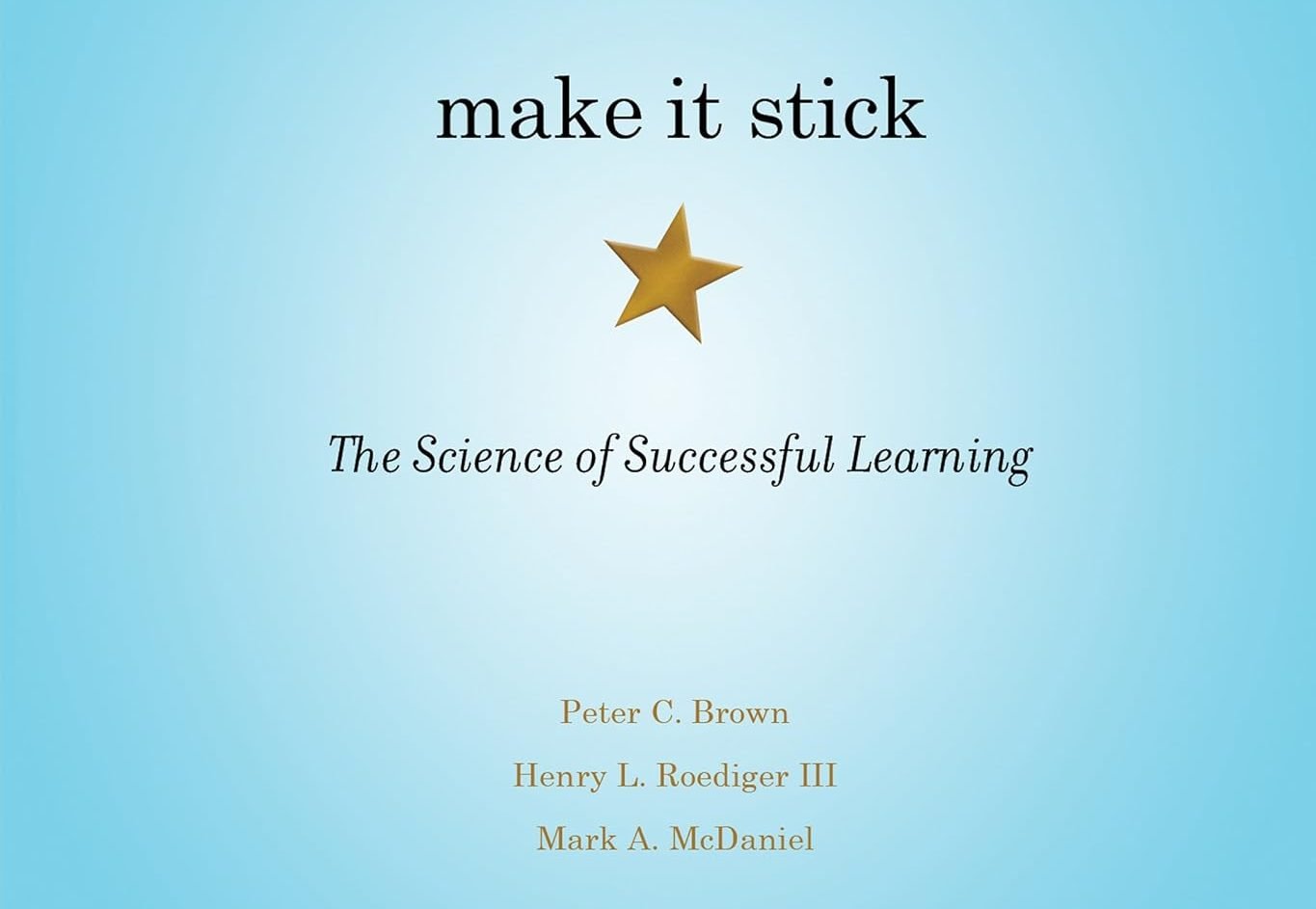
How often do you find yourself rereading notes or cramming before an exam? It feels effective, doesn’t it? But as research in cognitive psychology shows, these common study habits often create an “illusion of knowing” rather than lasting understanding. In their transformative book, Make It Stick: The Science of Successful Learning, authors Peter C. Brown, Henry L. Roediger III, and Mark A. McDaniel present evidence-backed strategies that defy these misconceptions and promote deep, enduring learning.
The Illusion of Knowing
Students tend to gravitate towards strategies that feel easy, such as rereading textbooks or massed practice—studying intensively in a single session. While these methods may create a false sense of familiarity, they’re poor at promoting long-term retention. Effective learning, as the authors highlight, requires “desirable difficulty”—challenges that engage our cognitive faculties, making the material stick.
Why Intuition Fails Us in Learning
Many believe that humans have an innate sense of how to learn, but research proves otherwise. For instance, rote repetition does little to embed information in memory. Instead, techniques like retrieval practice, spacing, and elaboration are far more effective.
- Retrieval Practice: Actively recalling information strengthens memory and enhances the ability to retrieve it in the future. Testing is not just an assessment tool; it’s a potent learning strategy.
- Spacing: Distributing study sessions over time allows for some forgetting, which makes relearning more robust.
- Elaboration: Connecting new information to existing knowledge or explaining concepts in your own words deepens understanding and fosters retention.
Breaking Myths: Learning Styles and Preferences
The book debunks the myth of learning styles—the idea that tailoring teaching to visual, auditory, or kinesthetic learners improves outcomes. Research shows that while people have preferences, these preferences don’t translate into better learning. Instead, focusing on universally effective strategies, like interleaving and retrieval, benefits all learners.
Interleaving: A Powerful Technique
Interleaving involves mixing different topics or types of problems within a single study session. This contrasts with blocked practice, where learners focus on one topic at a time. Interleaving not only improves problem recognition but also enhances the ability to apply knowledge in novel contexts. For example, mixing math problems from different chapters helps students identify the correct formulas and strategies during exams.
The Role of Reflection and Feedback
Reflecting on what you’ve learned—by summarizing key points, teaching the material to someone else, or evaluating your understanding—reveals gaps in knowledge and solidifies retention. Frequent, low-stakes quizzes also help by providing immediate feedback, guiding learners toward areas needing improvement.
Practical Applications
The principles outlined in Make It Stick are not confined to classrooms. Professionals can use these strategies for executive training, athletes can optimize their practice routines, and lifelong learners can enhance their mastery of new skills. For instance:
- Teachers: Introduce spaced quizzes and encourage students to explain their reasoning during lessons.
- Students: Replace cramming with spaced retrieval practice and self-testing.
- Professionals: Interleave topics during training to mirror real-world challenges.
Grit and Growth Mindset
Drawing on Carol Dweck’s research, the authors emphasize the importance of perseverance. Believing that intelligence can grow through effort encourages learners to embrace challenges and persist despite failures—a mindset critical for mastery.
Final Thoughts
Make It Stick offers invaluable insights for anyone eager to learn more effectively. By adopting scientifically supported strategies, learners can move beyond the illusion of knowing to achieve lasting understanding. Whether you’re a student, teacher, or lifelong learner, these principles can transform how you approach learning—and make it truly stick.