Skip to content

Learning-Science Digest

Fringe of Human Learning Technology and Emergence

Categories

  • 4E Cognition
  • Ability grouping
  • Accelerated learning
  • Acting/ Role play
  • Active learning
  • Active/ Action learning
  • Activities
  • Adaptive Learning
  • Administration & Leadership
  • Affordances
  • After-School Programs
  • Agency/ Autonomy
  • Analogy & Analogy based Learning
  • Anchored Instruction
  • Andragogy
  • Anthropology/ Ethnographic learning
  • Apprenticeship
  • Approaches
  • Apps
  • Artificial Intelligence
  • Assessment
  • Asynchronous Learning
  • Attitude
  • Banking model
  • Behavior Design
  • Behavioural
  • Belonging
  • Biology
  • Blended, Flipped, etc
  • books
  • Brain
  • Bricolage
  • Catholic Education
  • Causation
  • Coaching
  • Cognitive Diversity
  • Cognitive Load
  • Cognitive Science
  • Collaborative learning
  • Communities of practice
  • Competency-Based Learning
  • Complexity Theory
  • Compliance Training
  • Computational Learning
  • Computer Based Math
  • Concept Differences
  • Concept similarity
  • Connected Learning
  • Connectivism
  • Constraints
  • Constraints-Led Approach
  • Constructionism
  • Constructivism
  • Contextualized Learning
  • Contrast and Polarity
  • Courses
  • Creativity/ Innovation
  • Critical articles
  • Critical Pedagogy
  • Critical Thinking
  • Cultural Intelligence
  • Cultural Learning
  • Cumulative culture
  • Curriculum
  • Curriculum Design
  • Deliberate Practice
  • Design Science/ Approaches
  • Desirable Difficulty
  • Dialogic Learning
  • Differential learning
  • Digital Learning
  • Direct Instruction/ KLC
  • Disability and Learning
  • Discovery Learning
  • Discussion/ Debate
  • Disposition/Propensity
  • Distributed Cognition/ Learning
  • DIY learning/ Edupunk
  • Dynamics and learning
  • Early Intervention
  • Ecological Approch
  • Ecological Dynamics
  • Ed-tech
  • Education
  • Education Models
  • Education Policy
  • Education Thinkers
  • Effectuation
  • Elaboration
  • Embedded Cognition
  • Embodied Cognition
  • Emergence
  • Emergency learning
  • Emerging technology
  • Emulative learning
  • Enactive learning
  • Enskilment
  • Entangled pedagogy
  • Entrepreneurial Learning
  • Ethics and Moral learning
  • Evaluation
  • Evidence
  • Evolution and Learning
  • Exams
  • Exaptation
  • Exercise
  • Experiential Learning
  • Expertise
  • Explicit instruction
  • Extended Cognition
  • Family/ Religion
  • Feedback
  • Frameworks
  • Future Of Learning
  • Games/ Gamification
  • Generation Effect
  • Generative AI
  • Genius
  • Geragogy
  • Grading
  • Happiness and learning
  • Heuristics
  • Heutagogy
  • Higher Education
  • History Of Education
  • Home Slider
  • Home/ Home Schooling/ Learning
  • Homework
  • Human Machine Interface
  • Humor
  • Hypercorrection
  • Improvisation
  • Informal Learning
  • Innovation
  • Inquiry
  • Instructional Design
  • Instrumentalism
  • Intelligence
  • Interviews
  • Job training
  • Knowledge Rich Curriculum
  • Knowledge: Types. etc.
  • Labelling
  • Language Learning
  • Law and Legal Learning
  • Learning and Development
  • Learning Difficulties
  • Learning Environments
  • Learning for life
  • Learning in Chaos
  • Learning in complexity
  • Learning Management System
  • Learning Myths
  • Learning Programming
  • Learning Science
  • Learning Stations
  • Learning Systems
  • Learning Techniques/Methods
  • Learning Thinkers
  • Learning under anxiety/pressure/stress
  • Learning/ Teaching Strategies
  • Learning/ Understanding By Design
  • Looping effect
  • Maker Learning
  • Mastery
  • Mathew Effect
  • Maths Learning
  • Measurement
  • Medical Education/Learning
  • Memory
  • Meta-Analysis
  • Meta-Cognition
  • mindset
  • Mnemonics
  • Montessori
  • Motivation
  • Motor Learning
  • Music/ Arts and Learning
  • Mystagogy
  • Needs and Need based Learning
  • Networked Learning
  • Networks and Ecosystem
  • Neurodivergence
  • Neuroscience
  • Non Computational
  • Non-Representational
  • Nonlinear Pedagogy
  • Novelty and learning
  • Observational learning
  • On-the-Job Training
  • Online and MOOC Learning
  • outdoor-education
  • Pedagogy
  • Peer Learning
  • Personalized Learning
  • Philosophy Of Education
  • Philosophy Of Learning
  • Philosophy Of Science
  • Place-Based Learning
  • Play/ Ludic Pedagogy
  • Policy
  • Pragmatism
  • Problem-based learning
  • Productive Failures
  • Professional education
  • Professional Learning
  • Progressive Education
  • Project Based Learning
  • Proximity and Learning
  • Psychological Issues
  • Question asking/ Question design
  • Reading , Literacy , etc
  • Recognition
  • Reification/ Reductionism
  • Relational Expertise
  • Relational Learning
  • Religion
  • Research
  • Resting/ offline consolidation
  • Retrieval
  • Salience/Closeness
  • Scaffolding
  • Science Of Learning
  • self-efficacy
  • Self-Organization
  • Self-Paced Learning
  • Self-Regulated/ Self-Directed
  • Service Learning
  • Short Concept Introduction
  • Signalling
  • Simulation or Simulative Learning
  • Situated Learning
  • Skill
  • Sleep and Rest
  • Social Effects
  • Social Learning
  • Social-emotional learning
  • Society-Ecosystem etc
  • Socioeconomic Factors
  • Sociology Of Learning
  • Software And Technology Review
  • Speaking/Public Speaking
  • Spiral design
  • Sports learning
  • Sports Science
  • Story/Narrative based learning
  • Studying
  • Teacher/ teaching
  • Testing
  • Theology and learning
  • Theories
  • Tools, Aids, Artifacts
  • Training
  • Training Needs Analysis
  • Transdisciplinary/ Interdisciplinary, etc
  • Transfer Of Learning
  • Trending News
  • Uncategorized
  • Uncertainty and learning
  • Variable Practice
  • Vicarious learning
  • Video playlist
  • Virtual, Augmented, etc
  • Visible Learning/ Hattie
  • Visual Learning/Drawing
  • Vocational Education
  • Wakeful Resting
  • Work Place Learning
  • Workshop Model
  • Zone of Proximal Development (ZPD)
Primary Menu
  • Home
  • About
  • Thinkers
    • Learning Thinkers
    • Education Thinkers
  • Design For Learning
    • Design Science/ Approaches
    • Instructional Design
    • Behavior Design
    • Curriculum Design
    • Learning/ Understanding By Design
    • Motivation
    • Ecological Approch
    • Blended, Flipped, etc
    • Games/ Gamification
  • Tools/Techniques/Methods
    • Learning Techniques/Methods
    • Education Models
    • Testing
    • Retrieval
    • Blended, Flipped, etc
    • Differential learning
    • Dialogic Learning
    • Computer Based Math
    • Tools, Aids, Artifacts
    • Knowledge Rich Curriculum
    • Cognitive Load
    • Online and MOOC Learning
    • Scaffolding
    • Contrast and Polarity
    • Play/ Ludic Pedagogy
    • Problem-based learning
    • Cultural Learning
    • Direct Instruction/ KLC
    • Deliberate Practice
    • Visual Learning/Drawing
    • Games/ Gamification
    • Acting/ Role play
    • Analogy & Analogy based Learning
    • Inquiry
    • Improvisation
    • Constructionism
    • Situated Learning
    • Productive Failures
    • Anthropology/ Ethnographic learning
    • Project Based Learning
    • Connected Learning
    • Nonlinear Pedagogy
    • Personalized Learning
    • Maker Learning
    • Virtual, Augmented, etc
    • Service Learning
    • Constructivism
    • Connectivism
    • Vicarious learning
    • Active/ Action learning
    • Computational Learning
    • Relational Learning
    • Apprenticeship
    • Communities of practice
    • Home/ Home Schooling/ Learning
    • Contextualized Learning
    • DIY learning/ Edupunk
    • Constraints-Led Approach
    • Peer Learning
  • Domains
    • Language Learning
    • Entrepreneurial Learning
    • Maths Learning
    • Sports Science
    • Theology and learning
    • Sports learning
    • Professional education
    • Law and Legal Learning
    • Catholic Education
    • Higher Education
    • Medical Education/Learning
    • Work Place Learning
    • Learning Programming
    • On-the-Job Training
    • Job training
    • Compliance Training
  • Approaches
    • Neuroscience
    • Social Learning
    • Ecological Approch
    • 4E Cognition
    • Active learning
    • Transfer Of Learning
    • Cumulative culture
    • Embodied Cognition
    • Evolution and Learning
    • Embedded Cognition
    • Differential learning
    • Dialogic Learning
    • Experiential Learning
    • Learning Environments
    • Cultural Intelligence
    • Enactive learning
    • Constraints-Led Approach
    • Non-Representational
    • Self-Organization
    • Relational Learning
    • Relational Expertise
    • Enskilment
    • Extended Cognition
    • Distributed Cognition/ Learning
  • Artificial Intelligence
  • Education Policy
  • Expertise
Subscribe or Login
  • Home
  • Education Thinkers
  • Linda Darling-Hammond: Legacy
  • Education Thinkers
  • Learning Thinkers

Linda Darling-Hammond: Legacy

Jacob Chacko November 20, 2022
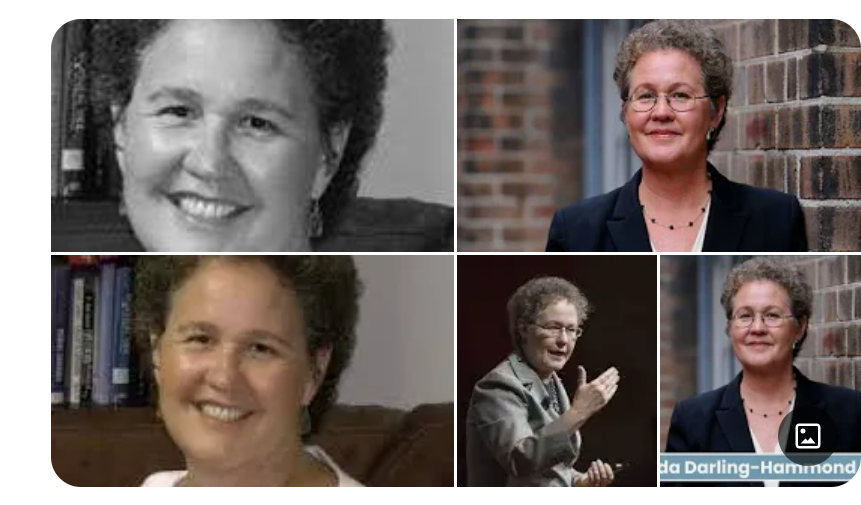
Screenshot 2025-05-19 073107

In the ever-evolving landscape of education, few figures have had as profound an impact as Linda Darling-Hammond. As a professor, researcher, policy-maker, and activist, she has dedicated her life to addressing systemic inequalities in education and reshaping how we think about teaching, learning, and school reform. Her work continues to influence federal legislation, state policies, local school districts, and classroom practices across the United States—and even globally.

Early Influences: Shaping a Vision for Equity in Education

Born in 1951, Linda Darling-Hammond grew up during a transformative period in American history—the late 1950s and 1960s—a time marked by social upheaval, civil rights activism, and calls for educational reform. Growing up in Cleveland, Ohio, she benefited from thoughtful, competent teachers who inspired her love for learning. However, it was also clear to her that access to quality education was far from equitable. The disparities between students from different racial, economic, and geographic backgrounds became evident when she attended Yale University as part of its first coeducational class in 1969.

At Yale, Darling-Hammond witnessed stark contrasts among her peers—students from privileged private schools versus those from underfunded public schools. These experiences deepened her understanding of how structural inequalities shape life chances and fueled her commitment to advocating for equal access to high-quality education for all students.

From Classroom Teacher to Policy Innovator

After graduating magna cum laude from Yale, Darling-Hammond embarked on a journey that would take her from the classroom to the forefront of national education policy. She began her career as a teacher in Camden, New Jersey—an economically depressed urban community where resources were scarce. Faced with students who struggled to read or write, she quickly realized that traditional methods weren’t enough. Instead, she brought books that resonated with her high schoolers’ lives, connecting literature to their personal experiences and helping them find meaning in their education.

This early experience taught her two critical lessons: (1) teachers must be responsive to their students’ needs, and (2) the system itself often hindered rather than supported effective teaching. Determined to understand these challenges more deeply, she pursued a doctorate at Temple University, where she studied under Professor Bernard Watson. Under his mentorship, she honed her ability to combine empirical rigor with passionate advocacy—a hallmark of her later work.

Building a New Model for Teaching and School Reform

Darling-Hammond’s tenure at the Rand Corporation and Teachers College, Columbia University, marked a turning point in her career. At Rand, she collaborated with colleagues like Arthur Wise to conduct groundbreaking research on teacher supply and demand, recruitment, licensing, and evaluation. This work laid the foundation for a new vision of teaching—one rooted in professionalism rather than bureaucracy.

At Teachers College, she co-founded the National Center for Restructuring Education, Schools, and Teaching (NCREST), which focused on creating innovative models for professional development and school reform. During this time, she worked closely with educators in New York City who were designing small, progressive schools that prioritized equity and student success. These efforts underscored her belief in the importance of linking policy to practice and building systems that empower teachers to thrive.

A Blueprint for Transforming Education

Perhaps Darling-Hammond’s most significant contribution came in 1996 with the publication of What Matters Most: Teaching for America’s Future, the landmark report of the National Commission on Teaching and America’s Future, which she directed. The report outlined five key recommendations for transforming education:

  1. Get serious about standards for both students and teachers.
  2. Reinvent teacher preparation and professional development to ensure ongoing growth.
  3. Fix teacher recruitment and place qualified teachers in every classroom.
  4. Encourage and reward teacher knowledge and skill through meaningful incentives.
  5. Create schools organized for student and teacher success, fostering collaboration and innovation.

These recommendations not only captured the attention of policymakers but also inspired dozens of legislative initiatives and countless local efforts to improve teaching and learning. The report’s emphasis on professionalizing teaching struck a chord with educators and leaders alike, offering a hopeful path forward amid persistent challenges.

Legacy and Impact

Linda Darling-Hammond’s influence extends beyond policy reports and academic publications. Her book The Right to Learn (1997) further solidified her reputation as a thought leader, providing a comprehensive framework for building democratic, learner-centered schools. Through her writings, speeches, and leadership roles, she has consistently championed the idea that education is a fundamental right—and that achieving equity requires addressing both the symptoms and root causes of inequality.

Today, Darling-Hammond remains a tireless advocate for change. As the Charles E. Ducommun Professor of Education at Stanford University and Executive Director of the Learning Policy Institute, she continues to bridge the gap between research and practice. Her work reminds us that true transformation begins with investing in teachers, empowering communities, and reimagining what schools can be.

Why Linda Darling-Hammond Matters

In a world where education remains one of the most powerful tools for social mobility, Linda Darling-Hammond stands out as a beacon of hope and action. Her story is one of resilience, curiosity, and unwavering dedication to justice. Whether you’re a teacher striving to make a difference in your classroom, a policymaker seeking evidence-based solutions, or simply someone who cares about the future of education, her insights offer invaluable guidance.

As we look ahead, let us draw inspiration from her example. Let us commit to building schools that are inclusive, equitable, and responsive to the needs of all learners. And let us remember that, as Darling-Hammond so eloquently reminds us, “the right to learn” is not just an aspiration—it’s a call to action.

Continue Reading

Previous: GRE’isation of entrepreneurship
Next: Embracing the Imperfect: How Diverse Models Illuminate Learning

Categories

Archives

  • September 2025
  • July 2025
  • June 2025
  • May 2025
  • April 2025
  • March 2025
  • February 2025
  • January 2025
  • December 2024
  • November 2024
  • October 2024
  • September 2024
  • August 2024
  • July 2024
  • June 2024
  • May 2024
  • April 2024
  • March 2024
  • February 2024
  • January 2024
  • December 2023
  • November 2023
  • October 2023
  • September 2023
  • August 2023
  • July 2023
  • June 2023
  • May 2023
  • April 2023
  • March 2023
  • February 2023
  • January 2023
  • December 2022
  • November 2022
  • October 2022
  • September 2022
  • August 2022
  • July 2022
  • June 2022
  • May 2022
  • April 2022
  • March 2022
  • February 2022
  • January 2022
  • December 2021
  • November 2021
  • October 2021
  • September 2021
  • August 2021
  • July 2021
  • June 2021
  • May 2021
Copy Right © 2025–2026 Learning Science Digest (lsdigest.com). All rights reserved.

Copyright © 2025-2026 LsDigest.com

Copyright © 2025-2026 LsDigest.com | MoreNews by AF themes.