Skip to content

Learning-Science Digest

Fringe of Human Learning Technology and Emergence

Categories

  • 4E Cognition
  • Ability grouping
  • Accelerated learning
  • Acting/ Role play
  • Active learning
  • Active/ Action learning
  • Activities
  • Adaptive Learning
  • Administration & Leadership
  • Affordances
  • After-School Programs
  • Agency/ Autonomy
  • Analogy & Analogy based Learning
  • Anchored Instruction
  • Andragogy
  • Anthropology/ Ethnographic learning
  • Apprenticeship
  • Approaches
  • Apps
  • Artificial Intelligence
  • Assessment
  • Asynchronous Learning
  • Attitude
  • Banking model
  • Behavior Design
  • Behavioural
  • Belonging
  • Biology
  • Blended, Flipped, etc
  • books
  • Brain
  • Bricolage
  • Catholic Education
  • Causation
  • Coaching
  • Cognitive Diversity
  • Cognitive Load
  • Cognitive Science
  • Collaborative learning
  • Communities of practice
  • Competency-Based Learning
  • Complexity Theory
  • Compliance Training
  • Computational Learning
  • Computer Based Math
  • Concept Differences
  • Concept similarity
  • Connected Learning
  • Connectivism
  • Constraints
  • Constraints-Led Approach
  • Constructionism
  • Constructivism
  • Contextualized Learning
  • Contrast and Polarity
  • Courses
  • Creativity/ Innovation
  • Critical articles
  • Critical Pedagogy
  • Critical Thinking
  • Cultural Intelligence
  • Cultural Learning
  • Cumulative culture
  • Curriculum
  • Curriculum Design
  • Deliberate Practice
  • Design Science/ Approaches
  • Desirable Difficulty
  • Dialogic Learning
  • Differential learning
  • Digital Learning
  • Direct Instruction/ KLC
  • Disability and Learning
  • Discovery Learning
  • Discussion/ Debate
  • Disposition/Propensity
  • Distributed Cognition/ Learning
  • DIY learning/ Edupunk
  • Dynamics and learning
  • Early Intervention
  • Ecological Approch
  • Ecological Dynamics
  • Ed-tech
  • Education
  • Education Models
  • Education Policy
  • Education Thinkers
  • Effectuation
  • Elaboration
  • Embedded Cognition
  • Embodied Cognition
  • Emergence
  • Emergency learning
  • Emerging technology
  • Emulative learning
  • Enactive learning
  • Enskilment
  • Entangled pedagogy
  • Entrepreneurial Learning
  • Ethics and Moral learning
  • Evaluation
  • Evidence
  • Evolution and Learning
  • Exams
  • Exaptation
  • Exercise
  • Experiential Learning
  • Expertise
  • Explicit instruction
  • Extended Cognition
  • Family/ Religion
  • Feedback
  • Frameworks
  • Future Of Learning
  • Games/ Gamification
  • Generation Effect
  • Generative AI
  • Genius
  • Geragogy
  • Grading
  • Happiness and learning
  • Heuristics
  • Heutagogy
  • Higher Education
  • History Of Education
  • Home Slider
  • Home/ Home Schooling/ Learning
  • Homework
  • Human Machine Interface
  • Humor
  • Hypercorrection
  • Improvisation
  • Informal Learning
  • Innovation
  • Inquiry
  • Instructional Design
  • Instrumentalism
  • Intelligence
  • Interviews
  • Job training
  • Knowledge Rich Curriculum
  • Knowledge: Types. etc.
  • Labelling
  • Language Learning
  • Law and Legal Learning
  • Learning and Development
  • Learning Difficulties
  • Learning Environments
  • Learning for life
  • Learning in Chaos
  • Learning in complexity
  • Learning Management System
  • Learning Myths
  • Learning Programming
  • Learning Science
  • Learning Stations
  • Learning Systems
  • Learning Techniques/Methods
  • Learning Thinkers
  • Learning under anxiety/pressure/stress
  • Learning/ Teaching Strategies
  • Learning/ Understanding By Design
  • Looping effect
  • Maker Learning
  • Mastery
  • Mathew Effect
  • Maths Learning
  • Measurement
  • Medical Education/Learning
  • Memory
  • Meta-Analysis
  • Meta-Cognition
  • mindset
  • Mnemonics
  • Montessori
  • Motivation
  • Motor Learning
  • Music/ Arts and Learning
  • Mystagogy
  • Needs and Need based Learning
  • Networked Learning
  • Networks and Ecosystem
  • Neurodivergence
  • Neuroscience
  • Non Computational
  • Non-Representational
  • Nonlinear Pedagogy
  • Novelty and learning
  • Observational learning
  • On-the-Job Training
  • Online and MOOC Learning
  • outdoor-education
  • Pedagogy
  • Peer Learning
  • Personalized Learning
  • Philosophy Of Education
  • Philosophy Of Learning
  • Philosophy Of Science
  • Place-Based Learning
  • Play/ Ludic Pedagogy
  • Policy
  • Pragmatism
  • Problem-based learning
  • Productive Failures
  • Professional education
  • Professional Learning
  • Progressive Education
  • Project Based Learning
  • Proximity and Learning
  • Psychological Issues
  • Question asking/ Question design
  • Reading , Literacy , etc
  • Recognition
  • Reification/ Reductionism
  • Relational Expertise
  • Relational Learning
  • Religion
  • Research
  • Resting/ offline consolidation
  • Retrieval
  • Salience/Closeness
  • Scaffolding
  • Science Of Learning
  • self-efficacy
  • Self-Organization
  • Self-Paced Learning
  • Self-Regulated/ Self-Directed
  • Service Learning
  • Short Concept Introduction
  • Signalling
  • Simulation or Simulative Learning
  • Situated Learning
  • Skill
  • Sleep and Rest
  • Social Effects
  • Social Learning
  • Social-emotional learning
  • Society-Ecosystem etc
  • Socioeconomic Factors
  • Sociology Of Learning
  • Software And Technology Review
  • Speaking/Public Speaking
  • Spiral design
  • Sports learning
  • Sports Science
  • Story/Narrative based learning
  • Studying
  • Teacher/ teaching
  • Testing
  • Theology and learning
  • Theories
  • Tools, Aids, Artifacts
  • Training
  • Training Needs Analysis
  • Transdisciplinary/ Interdisciplinary, etc
  • Transfer Of Learning
  • Trending News
  • Uncategorized
  • Uncertainty and learning
  • Variable Practice
  • Vicarious learning
  • Video playlist
  • Virtual, Augmented, etc
  • Visible Learning/ Hattie
  • Visual Learning/Drawing
  • Vocational Education
  • Wakeful Resting
  • Work Place Learning
  • Workshop Model
  • Zone of Proximal Development (ZPD)
Primary Menu
  • Home
  • About
  • Thinkers
    • Learning Thinkers
    • Education Thinkers
  • Design For Learning
    • Design Science/ Approaches
    • Instructional Design
    • Behavior Design
    • Curriculum Design
    • Learning/ Understanding By Design
    • Motivation
    • Ecological Approch
    • Blended, Flipped, etc
    • Games/ Gamification
  • Tools/Techniques/Methods
    • Learning Techniques/Methods
    • Education Models
    • Testing
    • Retrieval
    • Blended, Flipped, etc
    • Differential learning
    • Dialogic Learning
    • Computer Based Math
    • Tools, Aids, Artifacts
    • Knowledge Rich Curriculum
    • Cognitive Load
    • Online and MOOC Learning
    • Scaffolding
    • Contrast and Polarity
    • Play/ Ludic Pedagogy
    • Problem-based learning
    • Cultural Learning
    • Direct Instruction/ KLC
    • Deliberate Practice
    • Visual Learning/Drawing
    • Games/ Gamification
    • Acting/ Role play
    • Analogy & Analogy based Learning
    • Inquiry
    • Improvisation
    • Constructionism
    • Situated Learning
    • Productive Failures
    • Anthropology/ Ethnographic learning
    • Project Based Learning
    • Connected Learning
    • Nonlinear Pedagogy
    • Personalized Learning
    • Maker Learning
    • Virtual, Augmented, etc
    • Service Learning
    • Constructivism
    • Connectivism
    • Vicarious learning
    • Active/ Action learning
    • Computational Learning
    • Relational Learning
    • Apprenticeship
    • Communities of practice
    • Home/ Home Schooling/ Learning
    • Contextualized Learning
    • DIY learning/ Edupunk
    • Constraints-Led Approach
    • Peer Learning
  • Domains
    • Language Learning
    • Entrepreneurial Learning
    • Maths Learning
    • Sports Science
    • Theology and learning
    • Sports learning
    • Professional education
    • Law and Legal Learning
    • Catholic Education
    • Higher Education
    • Medical Education/Learning
    • Work Place Learning
    • Learning Programming
    • On-the-Job Training
    • Job training
    • Compliance Training
  • Approaches
    • Neuroscience
    • Social Learning
    • Ecological Approch
    • 4E Cognition
    • Active learning
    • Transfer Of Learning
    • Cumulative culture
    • Embodied Cognition
    • Evolution and Learning
    • Embedded Cognition
    • Differential learning
    • Dialogic Learning
    • Experiential Learning
    • Learning Environments
    • Cultural Intelligence
    • Enactive learning
    • Constraints-Led Approach
    • Non-Representational
    • Self-Organization
    • Relational Learning
    • Relational Expertise
    • Enskilment
    • Extended Cognition
    • Distributed Cognition/ Learning
  • Artificial Intelligence
  • Education Policy
  • Expertise
Subscribe or Login
  • Home
  • Education Thinkers
  • John Henry Newman’s Vision for Higher Education: A Timeless Blueprint
  • Education Thinkers
  • Higher Education
  • Learning Thinkers

John Henry Newman’s Vision for Higher Education: A Timeless Blueprint

kiran Johny July 15, 2024
images (4)

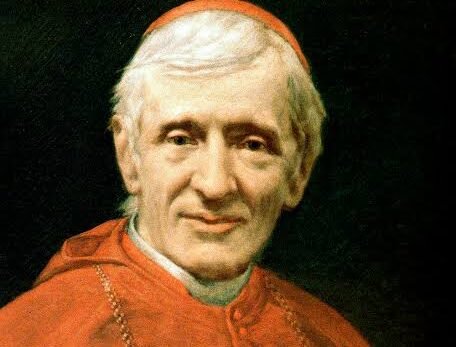
John Henry Newman, one of the most influential thinkers on education, dedicated much of his life to articulating a vision for higher education that remains profoundly relevant today. His seminal work, The Idea of a University, serves as both a philosophical treatise and a practical guide for what universities should strive to achieve. Rooted in his experiences as Rector of the Catholic University in Dublin and shaped by his intellectual journey from Oxford to Rome, Newman’s insights into higher education offer timeless wisdom about the purpose, methods, and challenges of fostering true learning.

The Purpose of a University: Intellectual Enlargement

At the heart of Newman’s philosophy lies the concept of “intellectual enlargement.” For him, the primary goal of a university is not merely to impart knowledge or train students for specific professions but to cultivate a broad, disciplined habit of mind. This “philosophical habit,” characterized by freedom, equitableness, calmness, moderation, and wisdom, enables individuals to think critically, engage deeply with ideas, and approach life with balance and perspective. Newman believed that this transformation of the intellect was the hallmark of a liberal education—one that lasts through life and enriches every aspect of human experience.

Universality of Knowledge

Newman emphasized the importance of universality in higher education. A university, he argued, must embrace all branches of knowledge without exclusion. No subject should be deemed irrelevant or unworthy of study because each contributes to a holistic understanding of the world. By exposing students to diverse disciplines—science, literature, philosophy, theology—they learn to compare ideas, draw connections, and systematize their thinking. This interdisciplinary approach fosters an intellectual tradition that shapes students’ minds far beyond the confines of any single field.

Active Engagement Over Passive Reception

For Newman, education is not a passive process where students simply absorb information. Instead, it requires active engagement. He described the act of learning as the “energetic action” of the mind upon new ideas—comparing them, organizing them, and integrating them into a coherent framework. This dynamic interaction transforms raw data into meaningful knowledge, enabling students to develop clarity, precision, and depth in their thinking. In today’s fast-paced digital age, where superficial consumption of information often replaces deep reflection, Newman’s call for mental rigor feels especially urgent.

The Danger of Overloading Curricula

While advocating for breadth and diversity in education, Newman also warned against the dangers of overloading curricula with an unmeaning profusion of subjects. He criticized the trend of multiplying topics and texts without ensuring that students achieved mastery or depth in any area. True enlightenment, he insisted, comes not from the sheer volume of material but from thoughtful exploration and integration of ideas. Universities must resist the temptation to prioritize quantity over quality, focusing instead on cultivating accuracy of mind—a theme Newman humorously illustrated through fictional dialogues between prospective students and their fathers.

Community as a Catalyst for Learning

One of Newman’s most compelling arguments is his emphasis on the communal nature of university life. He believed that bringing young minds together in residence fostered intellectual camaraderie and shared traditions, which played a vital role in shaping students’ perspectives. In fact, Newman went so far as to say that if forced to choose, he would prefer a university without formal examinations but with a vibrant community of learners over one that merely awarded degrees after assessments. This underscores his view of education as a collaborative endeavor rather than an isolated pursuit.

Knowledge as Its Own Reward

Newman saw knowledge as a treasure worth pursuing for its own sake. He believed that the pursuit of truth enriches life, regardless of practical applications, and serves as sufficient remuneration for years of effort. While acknowledging the value of professional training, he argued that specialized skills should never overshadow the broader goals of liberal education. Both aspects are essential for producing well-rounded individuals who can contribute meaningfully to society.

Moral Training and Religious Grounding

Although Newman championed liberal education, he recognized its limitations when divorced from moral training. Without religion or ethical grounding, he warned, liberal education risks replacing virtue with refinement and sin-awareness with mere moral sensibility. In the context of Catholic universities, Newman advocated for direct Church jurisdiction to provide moral direction and safeguard against secular excesses. While this stance may seem controversial today, it reflects his belief that education must address not only the intellect but also the soul.

The Role of Academies in Advancing Knowledge

Newman distinguished between the roles of universities and academies. He argued that while universities focus on diffusing knowledge widely among students, academies and private research institutions are better suited for advancing knowledge through specialized investigation. However, in later writings, he acknowledged the importance of scientific inquiry within universities, recognizing the need to balance diffusion with discovery. This nuanced perspective highlights his adaptability and willingness to refine his views based on context.

Accuracy of Mind: A Cornerstone of Education

Perhaps one of Newman’s most enduring contributions is his insistence on accuracy of mind. In his lectures, he vividly portrayed the difference between candidates for admission to a university—one lacking precision and clarity, the other embodying these qualities. Through humorous yet insightful exchanges, Newman demonstrated how indispensable accuracy is for meaningful learning. If modern universities encourage their students to labor toward cultivating precision and clarity in writing and thought, they will align themselves with Newman’s enduring principles.

A Legacy That Endures

Despite facing numerous challenges during his tenure as Rector of the Catholic University in Dublin—including resistance from Irish bishops and skepticism about secular learning within a religious framework—Newman remained steadfast in his vision. His reflections on higher education transcend time and context, offering enduring lessons for educators and learners alike. His emphasis on intellectual rigor, moral integrity, and the transformative power of knowledge reminds us that true education shapes not just careers but lives.

In today’s rapidly changing world, where syllabuses expand and faculties multiply, Newman’s ideas retain remarkable relevance. They invite us to reflect on whether our educational systems prioritize accuracy of mind, intellectual rigor, and moral grounding. His insistence on clarity and exactness in expression resonates particularly strongly in an age dominated by fleeting digital communication. As we navigate the complexities of contemporary education, Newman’s wisdom serves as a guiding light, urging us to remember that the pursuit of truth is among the highest callings of human existence.

Continue Reading

Previous: Kolb’s Learning Styles & Experiential Learning: A Deep Dive
Next: Exploring Approaches to Sports Learning: A Quick Guide

Categories

Archives

  • September 2025
  • July 2025
  • June 2025
  • May 2025
  • April 2025
  • March 2025
  • February 2025
  • January 2025
  • December 2024
  • November 2024
  • October 2024
  • September 2024
  • August 2024
  • July 2024
  • June 2024
  • May 2024
  • April 2024
  • March 2024
  • February 2024
  • January 2024
  • December 2023
  • November 2023
  • October 2023
  • September 2023
  • August 2023
  • July 2023
  • June 2023
  • May 2023
  • April 2023
  • March 2023
  • February 2023
  • January 2023
  • December 2022
  • November 2022
  • October 2022
  • September 2022
  • August 2022
  • July 2022
  • June 2022
  • May 2022
  • April 2022
  • March 2022
  • February 2022
  • January 2022
  • December 2021
  • November 2021
  • October 2021
  • September 2021
  • August 2021
  • July 2021
  • June 2021
  • May 2021
Copy Right © 2025–2026 Learning Science Digest (lsdigest.com). All rights reserved.

Copyright © 2025-2026 LsDigest.com

Copyright © 2025-2026 LsDigest.com | MoreNews by AF themes.