Skip to content

Learning-Science Digest

Fringe of Human Learning Technology and Emergence

Categories

  • 4E Cognition
  • Ability grouping
  • Accelerated learning
  • Acting/ Role play
  • Active learning
  • Active/ Action learning
  • Activities
  • Adaptive Learning
  • Administration & Leadership
  • Affordances
  • After-School Programs
  • Agency/ Autonomy
  • Analogy & Analogy based Learning
  • Anchored Instruction
  • Andragogy
  • Anthropology/ Ethnographic learning
  • Apprenticeship
  • Approaches
  • Apps
  • Artificial Intelligence
  • Assessment
  • Asynchronous Learning
  • Attitude
  • Banking model
  • Behavior Design
  • Behavioural
  • Belonging
  • Biology
  • Blended, Flipped, etc
  • books
  • Brain
  • Bricolage
  • Catholic Education
  • Causation
  • Coaching
  • Cognitive Diversity
  • Cognitive Load
  • Cognitive Science
  • Collaborative learning
  • Communities of practice
  • Competency-Based Learning
  • Complexity Theory
  • Compliance Training
  • Computational Learning
  • Computer Based Math
  • Concept Differences
  • Concept similarity
  • Connected Learning
  • Connectivism
  • Constraints
  • Constraints-Led Approach
  • Constructionism
  • Constructivism
  • Contextualized Learning
  • Contrast and Polarity
  • Courses
  • Creativity/ Innovation
  • Critical articles
  • Critical Pedagogy
  • Critical Thinking
  • Cultural Intelligence
  • Cultural Learning
  • Cumulative culture
  • Curriculum
  • Curriculum Design
  • Deliberate Practice
  • Design Science/ Approaches
  • Desirable Difficulty
  • Dialogic Learning
  • Differential learning
  • Digital Learning
  • Direct Instruction/ KLC
  • Disability and Learning
  • Discovery Learning
  • Discussion/ Debate
  • Disposition/Propensity
  • Distributed Cognition/ Learning
  • DIY learning/ Edupunk
  • Dynamics and learning
  • Early Intervention
  • Ecological Approch
  • Ecological Dynamics
  • Ed-tech
  • Education
  • Education Models
  • Education Policy
  • Education Thinkers
  • Effectuation
  • Elaboration
  • Embedded Cognition
  • Embodied Cognition
  • Emergence
  • Emergency learning
  • Emerging technology
  • Emulative learning
  • Enactive learning
  • Enskilment
  • Entangled pedagogy
  • Entrepreneurial Learning
  • Ethics and Moral learning
  • Evaluation
  • Evidence
  • Evolution and Learning
  • Exams
  • Exaptation
  • Exercise
  • Experiential Learning
  • Expertise
  • Explicit instruction
  • Extended Cognition
  • Family/ Religion
  • Feedback
  • Frameworks
  • Future Of Learning
  • Games/ Gamification
  • Generation Effect
  • Generative AI
  • Genius
  • Geragogy
  • Grading
  • Happiness and learning
  • Heuristics
  • Heutagogy
  • Higher Education
  • History Of Education
  • Home Slider
  • Home/ Home Schooling/ Learning
  • Homework
  • Human Machine Interface
  • Humor
  • Hypercorrection
  • Improvisation
  • Informal Learning
  • Innovation
  • Inquiry
  • Instructional Design
  • Instrumentalism
  • Intelligence
  • Interviews
  • Job training
  • Knowledge Rich Curriculum
  • Knowledge: Types. etc.
  • Labelling
  • Language Learning
  • Law and Legal Learning
  • Learning and Development
  • Learning Difficulties
  • Learning Environments
  • Learning for life
  • Learning in Chaos
  • Learning in complexity
  • Learning Management System
  • Learning Myths
  • Learning Programming
  • Learning Science
  • Learning Stations
  • Learning Systems
  • Learning Techniques/Methods
  • Learning Thinkers
  • Learning under anxiety/pressure/stress
  • Learning/ Teaching Strategies
  • Learning/ Understanding By Design
  • Looping effect
  • Maker Learning
  • Mastery
  • Mathew Effect
  • Maths Learning
  • Measurement
  • Medical Education/Learning
  • Memory
  • Meta-Analysis
  • Meta-Cognition
  • mindset
  • Mnemonics
  • Montessori
  • Motivation
  • Motor Learning
  • Music/ Arts and Learning
  • Mystagogy
  • Needs and Need based Learning
  • Networked Learning
  • Networks and Ecosystem
  • Neurodivergence
  • Neuroscience
  • Non Computational
  • Non-Representational
  • Nonlinear Pedagogy
  • Novelty and learning
  • Observational learning
  • On-the-Job Training
  • Online and MOOC Learning
  • outdoor-education
  • Pedagogy
  • Peer Learning
  • Personalized Learning
  • Philosophy Of Education
  • Philosophy Of Learning
  • Philosophy Of Science
  • Place-Based Learning
  • Play/ Ludic Pedagogy
  • Policy
  • Pragmatism
  • Problem-based learning
  • Productive Failures
  • Professional education
  • Professional Learning
  • Progressive Education
  • Project Based Learning
  • Proximity and Learning
  • Psychological Issues
  • Question asking/ Question design
  • Reading , Literacy , etc
  • Recognition
  • Reification/ Reductionism
  • Relational Expertise
  • Relational Learning
  • Religion
  • Research
  • Resting/ offline consolidation
  • Retrieval
  • Salience/Closeness
  • Scaffolding
  • Science Of Learning
  • self-efficacy
  • Self-Organization
  • Self-Paced Learning
  • Self-Regulated/ Self-Directed
  • Service Learning
  • Short Concept Introduction
  • Signalling
  • Simulation or Simulative Learning
  • Situated Learning
  • Skill
  • Sleep and Rest
  • Social Effects
  • Social Learning
  • Social-emotional learning
  • Society-Ecosystem etc
  • Socioeconomic Factors
  • Sociology Of Learning
  • Software And Technology Review
  • Speaking/Public Speaking
  • Spiral design
  • Sports learning
  • Sports Science
  • Story/Narrative based learning
  • Studying
  • Teacher/ teaching
  • Testing
  • Theology and learning
  • Theories
  • Tools, Aids, Artifacts
  • Training
  • Training Needs Analysis
  • Transdisciplinary/ Interdisciplinary, etc
  • Transfer Of Learning
  • Trending News
  • Uncategorized
  • Uncertainty and learning
  • Variable Practice
  • Vicarious learning
  • Video playlist
  • Virtual, Augmented, etc
  • Visible Learning/ Hattie
  • Visual Learning/Drawing
  • Vocational Education
  • Wakeful Resting
  • Work Place Learning
  • Workshop Model
  • Zone of Proximal Development (ZPD)
Primary Menu
  • Home
  • About
  • Thinkers
    • Learning Thinkers
    • Education Thinkers
  • Design For Learning
    • Design Science/ Approaches
    • Instructional Design
    • Behavior Design
    • Curriculum Design
    • Learning/ Understanding By Design
    • Motivation
    • Ecological Approch
    • Blended, Flipped, etc
    • Games/ Gamification
  • Tools/Techniques/Methods
    • Learning Techniques/Methods
    • Education Models
    • Testing
    • Retrieval
    • Blended, Flipped, etc
    • Differential learning
    • Dialogic Learning
    • Computer Based Math
    • Tools, Aids, Artifacts
    • Knowledge Rich Curriculum
    • Cognitive Load
    • Online and MOOC Learning
    • Scaffolding
    • Contrast and Polarity
    • Play/ Ludic Pedagogy
    • Problem-based learning
    • Cultural Learning
    • Direct Instruction/ KLC
    • Deliberate Practice
    • Visual Learning/Drawing
    • Games/ Gamification
    • Acting/ Role play
    • Analogy & Analogy based Learning
    • Inquiry
    • Improvisation
    • Constructionism
    • Situated Learning
    • Productive Failures
    • Anthropology/ Ethnographic learning
    • Project Based Learning
    • Connected Learning
    • Nonlinear Pedagogy
    • Personalized Learning
    • Maker Learning
    • Virtual, Augmented, etc
    • Service Learning
    • Constructivism
    • Connectivism
    • Vicarious learning
    • Active/ Action learning
    • Computational Learning
    • Relational Learning
    • Apprenticeship
    • Communities of practice
    • Home/ Home Schooling/ Learning
    • Contextualized Learning
    • DIY learning/ Edupunk
    • Constraints-Led Approach
    • Peer Learning
  • Domains
    • Language Learning
    • Entrepreneurial Learning
    • Maths Learning
    • Sports Science
    • Theology and learning
    • Sports learning
    • Professional education
    • Law and Legal Learning
    • Catholic Education
    • Higher Education
    • Medical Education/Learning
    • Work Place Learning
    • Learning Programming
    • On-the-Job Training
    • Job training
    • Compliance Training
  • Approaches
    • Neuroscience
    • Social Learning
    • Ecological Approch
    • 4E Cognition
    • Active learning
    • Transfer Of Learning
    • Cumulative culture
    • Embodied Cognition
    • Evolution and Learning
    • Embedded Cognition
    • Differential learning
    • Dialogic Learning
    • Experiential Learning
    • Learning Environments
    • Cultural Intelligence
    • Enactive learning
    • Constraints-Led Approach
    • Non-Representational
    • Self-Organization
    • Relational Learning
    • Relational Expertise
    • Enskilment
    • Extended Cognition
    • Distributed Cognition/ Learning
  • Artificial Intelligence
  • Education Policy
  • Expertise
Subscribe or Login
  • Home
  • Education Thinkers
  • Harold Rugg and His Vision for Progressive Education
  • Education Thinkers
  • Learning Thinkers

Harold Rugg and His Vision for Progressive Education

Thomas Collins December 7, 2024
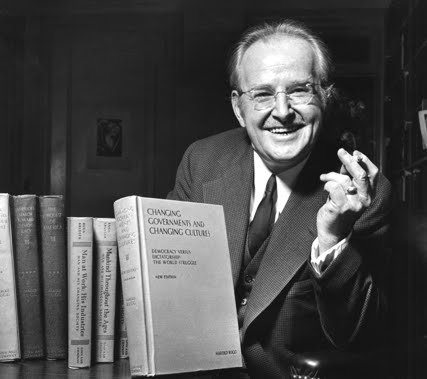
Rugg2

Harold Rugg (1886–1960) was a towering figure in the progressive education movement, leaving an indelible mark on how we think about schools, curriculum design, and the role of education in society. His ideas were bold, innovative, and often controversial, but they remain profoundly relevant today as educators grapple with preparing students for an increasingly complex world. In this blogpost, we’ll explore Harold Rugg’s educational philosophy, his contributions to progressive education, and why his vision still resonates.


The Progressive Educator Who Challenged Tradition

Harold Rugg believed that education should not merely reflect society—it should actively shape it. He envisioned schools as laboratories for social progress, where young people could develop into “sensitive, clearheaded, fearless, and confident” individuals capable of understanding modern life and striving to improve it. For Rugg, the purpose of education went beyond rote learning or adherence to traditional curricula; it was about equipping students to navigate and transform their world.

Rugg’s approach stood apart from other progressives like John Dewey, whose experimentalism emphasized discovery through experience. While Rugg admired much of Dewey’s work, he argued that focusing solely on child-centered methods risked neglecting broader societal issues. Instead, Rugg sought to balance individual creativity with a deep commitment to fostering “tolerant understanding” of modern civilization and its challenges.


Key Principles of Rugg’s Educational Thought

1. Schools as Agents of Social Reform

Rugg saw schools as powerful tools for creating a more just and equitable society. He rejected the notion that education should be neutral or detached from real-world problems. Instead, he advocated for programs that addressed pressing issues such as economic inequality, intercultural relations, and international cooperation.

2. A Society-Centered Curriculum

Rather than organizing schools around traditional subjects like history and geography, Rugg proposed a truly society-centered curriculum. This meant designing lessons based on the culture and needs of the people, focusing on themes relevant to modern living—such as industrialization, wealth distribution, and global interconnectedness.

3. Balancing Child-Centered and Social Goals

While Rugg valued child-centered education for nurturing creativity and intuition, he cautioned against limiting education to self-expression alone. He believed that fostering critical thinking and awareness of societal issues was equally important.

4. The Problem Method

One of Rugg’s most influential innovations was the “problem method,” which encouraged students to confront real-world dilemmas and alternatives. By engaging with these challenges, students practiced decision-making skills essential for active citizenship.

5. Integrated Learning Over Fragmentation

Rugg criticized compartmentalized curricula, arguing that they failed to provide students with a coherent understanding of modern life. His ideal program integrated subjects into thematic units, ensuring that students learned concepts and generalizations rather than disconnected facts.

6. Scientific Approach to Curriculum Development

Unlike many of his contemporaries who favored spontaneous classroom planning, Rugg insisted on a scientific, methodical approach to curriculum design. He developed instructional materials that were carefully field-tested and refined, ensuring practicality and adaptability.

7. Focus on Modern Problems

Rugg’s textbooks tackled contemporary issues head-on, including corporate economies, agricultural depression, and unequal wealth distribution. These materials aimed to help students make sense of the world while inspiring them to envision solutions.

8. Championing Creativity Amid Commercialism

Influenced by artists and cultural critics, Rugg valued individual creativity and resisted the commercialism prevalent in 1920s America. He believed that education should nurture imagination and originality rather than conform to societal norms driven by profit.

9. Controversy and Resilience

Rugg’s progressive ideas faced fierce opposition during the conservative backlash of the 1940s. Critics accused his work of being anti-capitalist and subversive, leading to widespread removal of his textbooks from schools. Despite these attacks, Rugg defended his vision and continued advocating for socially responsible education.

10. Legacy of Bold Experimentation

Rugg’s legacy lies in his pioneering efforts to translate progressive ideals into concrete educational programs. His meticulously crafted instructional materials demonstrated what a truly progressive curriculum could look like in practice, influencing generations of educators.


Why Rugg Matters Today

In an era dominated by standardized testing and narrowly instrumental educational policies, Harold Rugg’s emphasis on holistic, socially engaged learning feels more urgent than ever. His insistence on addressing real-world problems, fostering creativity, and promoting critical thinking offers a roadmap for reimagining education in ways that prioritize human development and societal well-being.

Rugg reminds us that schools are not just institutions for imparting knowledge—they are spaces where young people can learn to care deeply about their communities and the wider world. By embracing his insights, educators can strive to create learning environments that inspire curiosity, cultivate empathy, and empower students to become agents of change.


Final Thoughts

Harold Rugg’s contributions to education challenge us to think bigger and bolder about the possibilities of schooling. His vision of a society-centered curriculum, grounded in scientific rigor and infused with creative expression, invites us to reimagine what education can achieve. As we face new challenges in the 21st century, Rugg’s call for schools to build a “magnificent civilization” continues to inspire those who believe in the transformative power of education.

Continue Reading

Previous: Anchored Instruction: Learning Through Stories and Problems
Next: Unlocking Effective Learning: A Deep Dive into Gagné’s Nine Events of Instruction

Categories

Archives

  • September 2025
  • July 2025
  • June 2025
  • May 2025
  • April 2025
  • March 2025
  • February 2025
  • January 2025
  • December 2024
  • November 2024
  • October 2024
  • September 2024
  • August 2024
  • July 2024
  • June 2024
  • May 2024
  • April 2024
  • March 2024
  • February 2024
  • January 2024
  • December 2023
  • November 2023
  • October 2023
  • September 2023
  • August 2023
  • July 2023
  • June 2023
  • May 2023
  • April 2023
  • March 2023
  • February 2023
  • January 2023
  • December 2022
  • November 2022
  • October 2022
  • September 2022
  • August 2022
  • July 2022
  • June 2022
  • May 2022
  • April 2022
  • March 2022
  • February 2022
  • January 2022
  • December 2021
  • November 2021
  • October 2021
  • September 2021
  • August 2021
  • July 2021
  • June 2021
  • May 2021
Copy Right © 2025–2026 Learning Science Digest (lsdigest.com). All rights reserved.

Copyright © 2025-2026 LsDigest.com

Copyright © 2025-2026 LsDigest.com | MoreNews by AF themes.