Skip to content

Learning-Science Digest

Fringe of Human Learning Technology and Emergence

Categories

  • 4E Cognition
  • Ability grouping
  • Accelerated learning
  • Acting/ Role play
  • Active learning
  • Active/ Action learning
  • Activities
  • Adaptive Learning
  • Administration & Leadership
  • Affordances
  • After-School Programs
  • Agency/ Autonomy
  • Analogy & Analogy based Learning
  • Anchored Instruction
  • Andragogy
  • Anthropology/ Ethnographic learning
  • Apprenticeship
  • Approaches
  • Apps
  • Artificial Intelligence
  • Assessment
  • Asynchronous Learning
  • Attitude
  • Banking model
  • Behavior Design
  • Behavioural
  • Belonging
  • Biology
  • Blended, Flipped, etc
  • books
  • Brain
  • Bricolage
  • Catholic Education
  • Causation
  • Coaching
  • Cognitive Diversity
  • Cognitive Load
  • Cognitive Science
  • Collaborative learning
  • Communities of practice
  • Competency-Based Learning
  • Complexity Theory
  • Compliance Training
  • Computational Learning
  • Computer Based Math
  • Concept Differences
  • Concept similarity
  • Connected Learning
  • Connectivism
  • Constraints
  • Constraints-Led Approach
  • Constructionism
  • Constructivism
  • Contextualized Learning
  • Contrast and Polarity
  • Courses
  • Creativity/ Innovation
  • Critical articles
  • Critical Pedagogy
  • Critical Thinking
  • Cultural Intelligence
  • Cultural Learning
  • Cumulative culture
  • Curriculum
  • Curriculum Design
  • Deliberate Practice
  • Design Science/ Approaches
  • Desirable Difficulty
  • Dialogic Learning
  • Differential learning
  • Digital Learning
  • Direct Instruction/ KLC
  • Disability and Learning
  • Discovery Learning
  • Discussion/ Debate
  • Disposition/Propensity
  • Distributed Cognition/ Learning
  • DIY learning/ Edupunk
  • Dynamics and learning
  • Early Intervention
  • Ecological Approch
  • Ecological Dynamics
  • Ed-tech
  • Education
  • Education Models
  • Education Policy
  • Education Thinkers
  • Effectuation
  • Elaboration
  • Embedded Cognition
  • Embodied Cognition
  • Emergence
  • Emergency learning
  • Emerging technology
  • Emulative learning
  • Enactive learning
  • Enskilment
  • Entangled pedagogy
  • Entrepreneurial Learning
  • Ethics and Moral learning
  • Evaluation
  • Evidence
  • Evolution and Learning
  • Exams
  • Exaptation
  • Exercise
  • Experiential Learning
  • Expertise
  • Explicit instruction
  • Extended Cognition
  • Family/ Religion
  • Feedback
  • Frameworks
  • Future Of Learning
  • Games/ Gamification
  • Generation Effect
  • Generative AI
  • Genius
  • Geragogy
  • Grading
  • Happiness and learning
  • Heuristics
  • Heutagogy
  • Higher Education
  • History Of Education
  • Home Slider
  • Home/ Home Schooling/ Learning
  • Homework
  • Human Machine Interface
  • Humor
  • Hypercorrection
  • Improvisation
  • Informal Learning
  • Innovation
  • Inquiry
  • Instructional Design
  • Instrumentalism
  • Intelligence
  • Interviews
  • Job training
  • Knowledge Rich Curriculum
  • Knowledge: Types. etc.
  • Labelling
  • Language Learning
  • Law and Legal Learning
  • Learning and Development
  • Learning Difficulties
  • Learning Environments
  • Learning for life
  • Learning in Chaos
  • Learning in complexity
  • Learning Management System
  • Learning Myths
  • Learning Programming
  • Learning Science
  • Learning Stations
  • Learning Systems
  • Learning Techniques/Methods
  • Learning Thinkers
  • Learning under anxiety/pressure/stress
  • Learning/ Teaching Strategies
  • Learning/ Understanding By Design
  • Looping effect
  • Maker Learning
  • Mastery
  • Mathew Effect
  • Maths Learning
  • Measurement
  • Medical Education/Learning
  • Memory
  • Meta-Analysis
  • Meta-Cognition
  • mindset
  • Mnemonics
  • Montessori
  • Motivation
  • Motor Learning
  • Music/ Arts and Learning
  • Mystagogy
  • Needs and Need based Learning
  • Networked Learning
  • Networks and Ecosystem
  • Neurodivergence
  • Neuroscience
  • Non Computational
  • Non-Representational
  • Nonlinear Pedagogy
  • Novelty and learning
  • Observational learning
  • On-the-Job Training
  • Online and MOOC Learning
  • outdoor-education
  • Pedagogy
  • Peer Learning
  • Personalized Learning
  • Philosophy Of Education
  • Philosophy Of Learning
  • Philosophy Of Science
  • Place-Based Learning
  • Play/ Ludic Pedagogy
  • Policy
  • Pragmatism
  • Problem-based learning
  • Productive Failures
  • Professional education
  • Professional Learning
  • Progressive Education
  • Project Based Learning
  • Proximity and Learning
  • Psychological Issues
  • Question asking/ Question design
  • Reading , Literacy , etc
  • Recognition
  • Reification/ Reductionism
  • Relational Expertise
  • Relational Learning
  • Religion
  • Research
  • Resting/ offline consolidation
  • Retrieval
  • Salience/Closeness
  • Scaffolding
  • Science Of Learning
  • self-efficacy
  • Self-Organization
  • Self-Paced Learning
  • Self-Regulated/ Self-Directed
  • Service Learning
  • Short Concept Introduction
  • Signalling
  • Simulation or Simulative Learning
  • Situated Learning
  • Skill
  • Sleep and Rest
  • Social Effects
  • Social Learning
  • Social-emotional learning
  • Society-Ecosystem etc
  • Socioeconomic Factors
  • Sociology Of Learning
  • Software And Technology Review
  • Speaking/Public Speaking
  • Spiral design
  • Sports learning
  • Sports Science
  • Story/Narrative based learning
  • Studying
  • Teacher/ teaching
  • Testing
  • Theology and learning
  • Theories
  • Tools, Aids, Artifacts
  • Training
  • Training Needs Analysis
  • Transdisciplinary/ Interdisciplinary, etc
  • Transfer Of Learning
  • Trending News
  • Uncategorized
  • Uncertainty and learning
  • Variable Practice
  • Vicarious learning
  • Video playlist
  • Virtual, Augmented, etc
  • Visible Learning/ Hattie
  • Visual Learning/Drawing
  • Vocational Education
  • Wakeful Resting
  • Work Place Learning
  • Workshop Model
  • Zone of Proximal Development (ZPD)
Primary Menu
  • Home
  • About
  • Thinkers
    • Learning Thinkers
    • Education Thinkers
  • Design For Learning
    • Design Science/ Approaches
    • Instructional Design
    • Behavior Design
    • Curriculum Design
    • Learning/ Understanding By Design
    • Motivation
    • Ecological Approch
    • Blended, Flipped, etc
    • Games/ Gamification
  • Tools/Techniques/Methods
    • Learning Techniques/Methods
    • Education Models
    • Testing
    • Retrieval
    • Blended, Flipped, etc
    • Differential learning
    • Dialogic Learning
    • Computer Based Math
    • Tools, Aids, Artifacts
    • Knowledge Rich Curriculum
    • Cognitive Load
    • Online and MOOC Learning
    • Scaffolding
    • Contrast and Polarity
    • Play/ Ludic Pedagogy
    • Problem-based learning
    • Cultural Learning
    • Direct Instruction/ KLC
    • Deliberate Practice
    • Visual Learning/Drawing
    • Games/ Gamification
    • Acting/ Role play
    • Analogy & Analogy based Learning
    • Inquiry
    • Improvisation
    • Constructionism
    • Situated Learning
    • Productive Failures
    • Anthropology/ Ethnographic learning
    • Project Based Learning
    • Connected Learning
    • Nonlinear Pedagogy
    • Personalized Learning
    • Maker Learning
    • Virtual, Augmented, etc
    • Service Learning
    • Constructivism
    • Connectivism
    • Vicarious learning
    • Active/ Action learning
    • Computational Learning
    • Relational Learning
    • Apprenticeship
    • Communities of practice
    • Home/ Home Schooling/ Learning
    • Contextualized Learning
    • DIY learning/ Edupunk
    • Constraints-Led Approach
    • Peer Learning
  • Domains
    • Language Learning
    • Entrepreneurial Learning
    • Maths Learning
    • Sports Science
    • Theology and learning
    • Sports learning
    • Professional education
    • Law and Legal Learning
    • Catholic Education
    • Higher Education
    • Medical Education/Learning
    • Work Place Learning
    • Learning Programming
    • On-the-Job Training
    • Job training
    • Compliance Training
  • Approaches
    • Neuroscience
    • Social Learning
    • Ecological Approch
    • 4E Cognition
    • Active learning
    • Transfer Of Learning
    • Cumulative culture
    • Embodied Cognition
    • Evolution and Learning
    • Embedded Cognition
    • Differential learning
    • Dialogic Learning
    • Experiential Learning
    • Learning Environments
    • Cultural Intelligence
    • Enactive learning
    • Constraints-Led Approach
    • Non-Representational
    • Self-Organization
    • Relational Learning
    • Relational Expertise
    • Enskilment
    • Extended Cognition
    • Distributed Cognition/ Learning
  • Artificial Intelligence
  • Education Policy
  • Expertise
Subscribe or Login
  • Home
  • Education Thinkers
  • Exploring the Legacy of Lee J. Cronbach: A Pioneer in Educational Psychology and Measurement
  • Education Thinkers
  • Learning Thinkers

Exploring the Legacy of Lee J. Cronbach: A Pioneer in Educational Psychology and Measurement

kiran Johny December 24, 2021
1505b5a86290e9fe4af13de0837e22a3

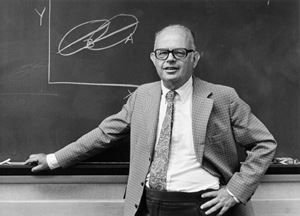
Lee J. Cronbach, born in 1916, stands as one of the most influential figures in the history of psychology and educational research. His groundbreaking contributions to measurement theory, psychometrics, and educational evaluation have left an indelible mark on both academic scholarship and practical applications in education. In this blog post, we’ll explore Cronbach’s remarkable journey, his key contributions, and why his work continues to shape the field today.


A Life Dedicated to Psychology and Education

Cronbach’s fascination with psychology began early in life. As a child, he was tested by a school psychologist and identified as part of Lewis Terman’s famous cohort of “gifted” children—a group that would later be studied extensively for decades. This early exposure to psychological testing set the stage for his lifelong interest in measurement and individual differences.

Despite financial constraints that prevented him from attending a traditional university, Cronbach excelled academically. He completed high school at just 14 years old and earned a teaching degree from Fresno State College by the age of 18. His initial training in mathematics laid the foundation for his later work in “engineering analysis of psychological measuring devices,” blending quantitative rigor with psychological inquiry.

After earning his Ph.D. from the University of Chicago in 1942, Cronbach embarked on a distinguished career that spanned several prestigious institutions, including the University of Illinois and Stanford University. Along the way, he became a leading voice in educational psychology, serving as president of both the American Psychological Association (APA) and the American Educational Research Association.


Key Contributions to Educational Measurement

1. Coefficient Alpha and Test Reliability

One of Cronbach’s most enduring legacies is his development of Coefficient Alpha, introduced in a seminal 1951 paper titled “Coefficient Alpha and the Internal Structure of Tests.” This statistical measure remains a cornerstone of test reliability analysis, helping researchers assess the consistency of scores across items in a test. Its simplicity and versatility have made it indispensable in fields ranging from education to clinical psychology.

2. Generalizability Theory

Cronbach advanced the field of psychological measurement by proposing Generalizability Theory (G-Theory), which replaced the classical “true score” model with a more nuanced framework. G-Theory accounts for multiple sources of variance in test scores, allowing researchers to generalize findings beyond specific samples or conditions. This innovation has had profound implications for improving the precision and fairness of assessments.

3. Aptitude-Treatment Interaction (ATI) Paradigm

Perhaps Cronbach’s most celebrated contribution is the Aptitude-Treatment Interaction (ATI) paradigm. First outlined in collaboration with Goldine C. Gleser and later expanded upon in his 1977 book with Richard Snow (Aptitudes and Instructional Methods), ATI explores how different instructional methods can be tailored to students’ aptitudes for optimal learning outcomes. This approach revolutionized our understanding of personalized education and remains highly relevant in today’s era of adaptive learning technologies.


Advancing Educational Evaluation

Beyond measurement, Cronbach played a pivotal role in shaping the field of educational evaluation. Influenced by his mentor Ralph Tyler and his involvement in the Eight-Year Study, Cronbach emphasized the importance of formative evaluation—assessing programs not only for accountability but also to improve their design and implementation. His work evaluating Stanford’s undergraduate program, “Values, Technology and Society,” exemplifies this commitment to practical, actionable insights.

In collaboration with Patrick Suppes, Cronbach also challenged traditional distinctions between “pure” and “applied” research, advocating instead for decision-oriented and conclusion-oriented approaches. This reframing encouraged scholars to focus on real-world impact while maintaining scientific rigor.


A Legacy That Endures

Cronbach’s influence extends far beyond his own publications. His ideas are deeply embedded in modern educational practices and continue to inspire new generations of researchers. Whether through his textbooks like Essentials of Psychological Testing or his theoretical advancements in validity and reliability, Cronbach’s work has become foundational knowledge for anyone involved in psychological or educational measurement.

Even after retiring from Stanford in 1980, Cronbach remained active in scholarly discourse, reflecting on the broader philosophical implications of education and assessment. His ability to bridge theory and practice, coupled with his relentless pursuit of methodological excellence, ensures that his legacy will endure for decades to come.


Why Cronbach Matters Today

In an age where data-driven decision-making dominates education policy and practice, Cronbach’s emphasis on rigorous measurement and thoughtful evaluation feels more relevant than ever. From standardized testing to adaptive learning platforms, his principles guide efforts to create fair, reliable, and meaningful assessments.

Moreover, Cronbach’s advocacy for tailoring instruction to individual differences resonates strongly with contemporary movements toward personalized learning. By recognizing that no single teaching method works for everyone, educators can leverage ATI principles to design interventions that maximize student potential.


Final Thoughts

Lee J. Cronbach’s career exemplifies the power of interdisciplinary thinking and methodological innovation. Through his pioneering work in psychometrics, educational psychology, and evaluation, he transformed how we understand and measure human abilities, attitudes, and learning processes. As we continue to grapple with complex questions about equity, effectiveness, and personalization in education, Cronbach’s insights serve as both a foundation and a beacon for future progress.

So the next time you encounter a reliable test, a well-designed evaluation, or an adaptive learning tool, take a moment to appreciate the intellectual giant whose ideas helped make it possible: Lee J. Cronbach.

Continue Reading

Previous: Technology in Mathematics: The Use of Various Computer Technologies in the Teaching of Mathematics
Next: Rethinking Education: Open-Ended Exploration vs. Cookbook Labs

Categories

Archives

  • September 2025
  • July 2025
  • June 2025
  • May 2025
  • April 2025
  • March 2025
  • February 2025
  • January 2025
  • December 2024
  • November 2024
  • October 2024
  • September 2024
  • August 2024
  • July 2024
  • June 2024
  • May 2024
  • April 2024
  • March 2024
  • February 2024
  • January 2024
  • December 2023
  • November 2023
  • October 2023
  • September 2023
  • August 2023
  • July 2023
  • June 2023
  • May 2023
  • April 2023
  • March 2023
  • February 2023
  • January 2023
  • December 2022
  • November 2022
  • October 2022
  • September 2022
  • August 2022
  • July 2022
  • June 2022
  • May 2022
  • April 2022
  • March 2022
  • February 2022
  • January 2022
  • December 2021
  • November 2021
  • October 2021
  • September 2021
  • August 2021
  • July 2021
  • June 2021
  • May 2021
Copy Right © 2025–2026 Learning Science Digest (lsdigest.com). All rights reserved.

Copyright © 2025-2026 LsDigest.com

Copyright © 2025-2026 LsDigest.com | MoreNews by AF themes.