Skip to content

Learning-Science Digest

Fringe of Human Learning Technology and Emergence

Categories

  • 4E Cognition
  • Ability grouping
  • Accelerated learning
  • Acting/ Role play
  • Active learning
  • Active/ Action learning
  • Activities
  • Adaptive Learning
  • Administration & Leadership
  • Affordances
  • After-School Programs
  • Agency/ Autonomy
  • Analogy & Analogy based Learning
  • Anchored Instruction
  • Andragogy
  • Anthropology/ Ethnographic learning
  • Apprenticeship
  • Approaches
  • Apps
  • Artificial Intelligence
  • Assessment
  • Asynchronous Learning
  • Attitude
  • Banking model
  • Behavior Design
  • Behavioural
  • Belonging
  • Biology
  • Blended, Flipped, etc
  • books
  • Brain
  • Bricolage
  • Catholic Education
  • Causation
  • Coaching
  • Cognitive Diversity
  • Cognitive Load
  • Cognitive Science
  • Collaborative learning
  • Communities of practice
  • Competency-Based Learning
  • Complexity Theory
  • Compliance Training
  • Computational Learning
  • Computer Based Math
  • Concept Differences
  • Concept similarity
  • Connected Learning
  • Connectivism
  • Constraints
  • Constraints-Led Approach
  • Constructionism
  • Constructivism
  • Contextualized Learning
  • Contrast and Polarity
  • Courses
  • Creativity/ Innovation
  • Critical articles
  • Critical Pedagogy
  • Critical Thinking
  • Cultural Intelligence
  • Cultural Learning
  • Cumulative culture
  • Curriculum
  • Curriculum Design
  • Deliberate Practice
  • Design Science/ Approaches
  • Desirable Difficulty
  • Dialogic Learning
  • Differential learning
  • Digital Learning
  • Direct Instruction/ KLC
  • Disability and Learning
  • Discovery Learning
  • Discussion/ Debate
  • Disposition/Propensity
  • Distributed Cognition/ Learning
  • DIY learning/ Edupunk
  • Dynamics and learning
  • Early Intervention
  • Ecological Approch
  • Ecological Dynamics
  • Ed-tech
  • Education
  • Education Models
  • Education Policy
  • Education Thinkers
  • Effectuation
  • Elaboration
  • Embedded Cognition
  • Embodied Cognition
  • Emergence
  • Emergency learning
  • Emerging technology
  • Emulative learning
  • Enactive learning
  • Enskilment
  • Entangled pedagogy
  • Entrepreneurial Learning
  • Ethics and Moral learning
  • Evaluation
  • Evidence
  • Evolution and Learning
  • Exams
  • Exaptation
  • Exercise
  • Experiential Learning
  • Expertise
  • Explicit instruction
  • Extended Cognition
  • Family/ Religion
  • Feedback
  • Frameworks
  • Future Of Learning
  • Games/ Gamification
  • Generation Effect
  • Generative AI
  • Genius
  • Geragogy
  • Grading
  • Happiness and learning
  • Heuristics
  • Heutagogy
  • Higher Education
  • History Of Education
  • Home Slider
  • Home/ Home Schooling/ Learning
  • Homework
  • Human Machine Interface
  • Humor
  • Hypercorrection
  • Improvisation
  • Informal Learning
  • Innovation
  • Inquiry
  • Instructional Design
  • Instrumentalism
  • Intelligence
  • Interviews
  • Job training
  • Knowledge Rich Curriculum
  • Knowledge: Types. etc.
  • Labelling
  • Language Learning
  • Law and Legal Learning
  • Learning and Development
  • Learning Difficulties
  • Learning Environments
  • Learning for life
  • Learning in Chaos
  • Learning in complexity
  • Learning Management System
  • Learning Myths
  • Learning Programming
  • Learning Science
  • Learning Stations
  • Learning Systems
  • Learning Techniques/Methods
  • Learning Thinkers
  • Learning under anxiety/pressure/stress
  • Learning/ Teaching Strategies
  • Learning/ Understanding By Design
  • Looping effect
  • Maker Learning
  • Mastery
  • Mathew Effect
  • Maths Learning
  • Measurement
  • Medical Education/Learning
  • Memory
  • Meta-Analysis
  • Meta-Cognition
  • mindset
  • Mnemonics
  • Montessori
  • Motivation
  • Motor Learning
  • Music/ Arts and Learning
  • Mystagogy
  • Needs and Need based Learning
  • Networked Learning
  • Networks and Ecosystem
  • Neurodivergence
  • Neuroscience
  • Non Computational
  • Non-Representational
  • Nonlinear Pedagogy
  • Novelty and learning
  • Observational learning
  • On-the-Job Training
  • Online and MOOC Learning
  • outdoor-education
  • Pedagogy
  • Peer Learning
  • Personalized Learning
  • Philosophy Of Education
  • Philosophy Of Learning
  • Philosophy Of Science
  • Place-Based Learning
  • Play/ Ludic Pedagogy
  • Policy
  • Pragmatism
  • Problem-based learning
  • Productive Failures
  • Professional education
  • Professional Learning
  • Progressive Education
  • Project Based Learning
  • Proximity and Learning
  • Psychological Issues
  • Question asking/ Question design
  • Reading , Literacy , etc
  • Recognition
  • Reification/ Reductionism
  • Relational Expertise
  • Relational Learning
  • Religion
  • Research
  • Resting/ offline consolidation
  • Retrieval
  • Salience/Closeness
  • Scaffolding
  • Science Of Learning
  • self-efficacy
  • Self-Organization
  • Self-Paced Learning
  • Self-Regulated/ Self-Directed
  • Service Learning
  • Short Concept Introduction
  • Signalling
  • Simulation or Simulative Learning
  • Situated Learning
  • Skill
  • Sleep and Rest
  • Social Effects
  • Social Learning
  • Social-emotional learning
  • Society-Ecosystem etc
  • Socioeconomic Factors
  • Sociology Of Learning
  • Software And Technology Review
  • Speaking/Public Speaking
  • Spiral design
  • Sports learning
  • Sports Science
  • Story/Narrative based learning
  • Studying
  • Teacher/ teaching
  • Testing
  • Theology and learning
  • Theories
  • Tools, Aids, Artifacts
  • Training
  • Training Needs Analysis
  • Transdisciplinary/ Interdisciplinary, etc
  • Transfer Of Learning
  • Trending News
  • Uncategorized
  • Uncertainty and learning
  • Variable Practice
  • Vicarious learning
  • Video playlist
  • Virtual, Augmented, etc
  • Visible Learning/ Hattie
  • Visual Learning/Drawing
  • Vocational Education
  • Wakeful Resting
  • Work Place Learning
  • Workshop Model
  • Zone of Proximal Development (ZPD)
Primary Menu
  • Home
  • About
  • Thinkers
    • Learning Thinkers
    • Education Thinkers
  • Design For Learning
    • Design Science/ Approaches
    • Instructional Design
    • Behavior Design
    • Curriculum Design
    • Learning/ Understanding By Design
    • Motivation
    • Ecological Approch
    • Blended, Flipped, etc
    • Games/ Gamification
  • Tools/Techniques/Methods
    • Learning Techniques/Methods
    • Education Models
    • Testing
    • Retrieval
    • Blended, Flipped, etc
    • Differential learning
    • Dialogic Learning
    • Computer Based Math
    • Tools, Aids, Artifacts
    • Knowledge Rich Curriculum
    • Cognitive Load
    • Online and MOOC Learning
    • Scaffolding
    • Contrast and Polarity
    • Play/ Ludic Pedagogy
    • Problem-based learning
    • Cultural Learning
    • Direct Instruction/ KLC
    • Deliberate Practice
    • Visual Learning/Drawing
    • Games/ Gamification
    • Acting/ Role play
    • Analogy & Analogy based Learning
    • Inquiry
    • Improvisation
    • Constructionism
    • Situated Learning
    • Productive Failures
    • Anthropology/ Ethnographic learning
    • Project Based Learning
    • Connected Learning
    • Nonlinear Pedagogy
    • Personalized Learning
    • Maker Learning
    • Virtual, Augmented, etc
    • Service Learning
    • Constructivism
    • Connectivism
    • Vicarious learning
    • Active/ Action learning
    • Computational Learning
    • Relational Learning
    • Apprenticeship
    • Communities of practice
    • Home/ Home Schooling/ Learning
    • Contextualized Learning
    • DIY learning/ Edupunk
    • Constraints-Led Approach
    • Peer Learning
  • Domains
    • Language Learning
    • Entrepreneurial Learning
    • Maths Learning
    • Sports Science
    • Theology and learning
    • Sports learning
    • Professional education
    • Law and Legal Learning
    • Catholic Education
    • Higher Education
    • Medical Education/Learning
    • Work Place Learning
    • Learning Programming
    • On-the-Job Training
    • Job training
    • Compliance Training
  • Approaches
    • Neuroscience
    • Social Learning
    • Ecological Approch
    • 4E Cognition
    • Active learning
    • Transfer Of Learning
    • Cumulative culture
    • Embodied Cognition
    • Evolution and Learning
    • Embedded Cognition
    • Differential learning
    • Dialogic Learning
    • Experiential Learning
    • Learning Environments
    • Cultural Intelligence
    • Enactive learning
    • Constraints-Led Approach
    • Non-Representational
    • Self-Organization
    • Relational Learning
    • Relational Expertise
    • Enskilment
    • Extended Cognition
    • Distributed Cognition/ Learning
  • Artificial Intelligence
  • Education Policy
  • Expertise
Subscribe or Login
  • Home
  • Inquiry
  • Exploring Inquiry-Based Learning: A Path to Deep Understanding
  • Inquiry

Exploring Inquiry-Based Learning: A Path to Deep Understanding

kiran Johny August 29, 2023
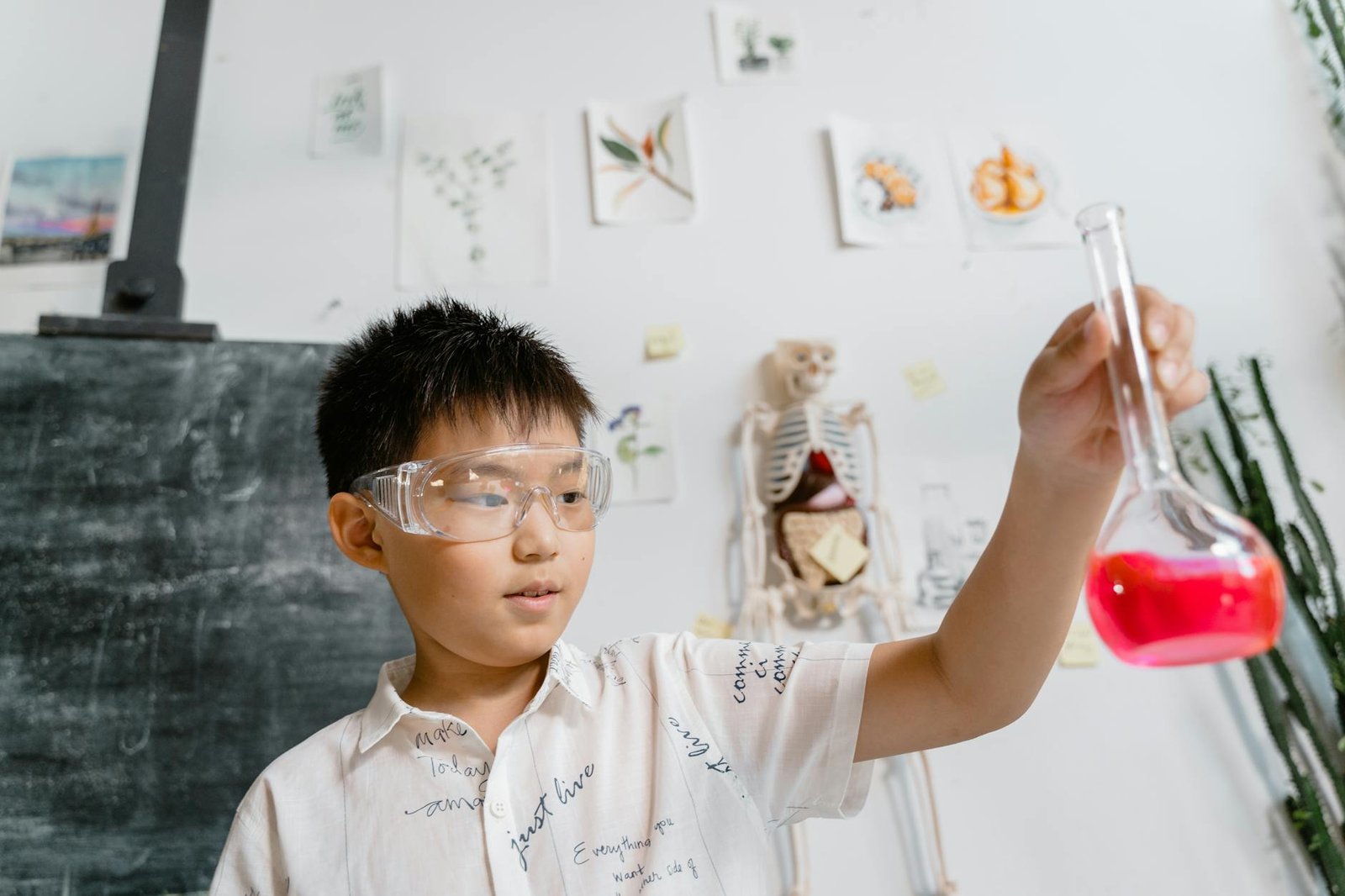
a boy holding a beaker

In the world of education, the traditional model of rote memorization and passive learning is gradually being replaced by more dynamic approaches that prioritize active engagement, critical thinking, and real-world application. One such approach that has gained significant traction is Inquiry-Based Learning (IBL). But what exactly does this method entail, and why is it gaining so much attention?

What is Inquiry-Based Learning?

Inquiry-Based Learning is an educational strategy that encourages students to explore questions, problems, and scenarios through their own investigation. Unlike conventional teaching methods, where information is directly delivered to students, IBL empowers learners to pose questions, seek answers, and construct their understanding based on exploration. This method encourages curiosity and fosters a sense of ownership over the learning process.

At its core, Inquiry-Based Learning is about making students active participants in their education, promoting deeper understanding and engagement. Rather than passively receiving knowledge from a teacher, students become researchers in their own right, discovering and interpreting information as they go along.

The Process of Inquiry-Based Learning

The inquiry process often follows a cycle that consists of the following steps:

  1. Asking Questions: The learning journey begins with students posing questions based on their own interests or the curriculum. These questions are often open-ended, allowing for exploration and deeper thinking. For example, a student might ask, “How does climate change affect biodiversity?” or “What factors contribute to economic inequality?”
  2. Conducting Research: Once the question is identified, students engage in research to find answers. This could involve gathering information from various sources, including books, articles, experts, and online platforms. Students are encouraged to think critically about the sources of information they consult, developing skills in evaluation and analysis.
  3. Hypothesizing and Investigating: In this phase, students form hypotheses or predictions about the answer to their question. They then test these hypotheses through experiments, observations, or further inquiry. This phase emphasizes hands-on learning and experimentation, providing students with real-world skills in data collection and problem-solving.
  4. Analysis and Reflection: After gathering data or information, students analyze their findings. This step often involves comparing results to initial predictions, discussing any discrepancies, and refining their understanding. Reflecting on the process encourages metacognition—thinking about how they learned and how their views may have changed.
  5. Presenting Findings: The final step is sharing the results of their inquiry. This could take the form of written reports, presentations, videos, or other creative outputs. Sharing findings not only allows students to communicate their learning but also encourages the development of presentation and persuasion skills.

The Benefits of Inquiry-Based Learning

1. Fosters Critical Thinking
IBL promotes the development of critical thinking skills as students learn to ask meaningful questions, evaluate evidence, and synthesize information from diverse sources. Rather than memorizing facts, students learn how to think logically, reason through problems, and analyze information critically.

2. Enhances Engagement
When students pursue their own questions and ideas, they are more likely to feel invested in the learning process. IBL taps into their natural curiosity, turning learning into an exploration rather than a task to be completed. This level of engagement can lead to deeper understanding and greater retention of information.

3. Encourages Collaboration
Although inquiry-based learning can be conducted individually, it often takes place in collaborative settings. Working with peers allows students to share insights, challenge each other’s thinking, and learn from diverse perspectives. This collaborative environment mirrors the real world, where teamwork is essential to problem-solving and innovation.

4. Develops Lifelong Learning Skills
IBL equips students with the tools they need to continue learning throughout their lives. In a world that is constantly changing, the ability to independently investigate new ideas, solve complex problems, and critically evaluate information is invaluable.

5. Promotes Autonomy and Ownership
By giving students control over their learning, IBL encourages autonomy. Students take responsibility for their own progress, set goals, and monitor their own learning. This sense of ownership boosts motivation and fosters a growth mindset.

Real-World Applications of Inquiry-Based Learning

Inquiry-Based Learning is not limited to any one subject area. It can be applied across disciplines—from science and math to history and literature. For instance, in a science classroom, students might explore the process of photosynthesis by designing experiments, while in a history class, students might investigate a particular period through primary sources and interviews.

Moreover, IBL has a profound impact on the development of interdisciplinary skills. For example, students studying environmental science may also delve into economics, ethics, and politics, as they explore topics like climate change. This interdisciplinary approach better reflects how knowledge is applied in real-world situations.

Implementing Inquiry-Based Learning in the Classroom

For educators interested in incorporating Inquiry-Based Learning into their classrooms, there are several strategies to consider:

  • Start with Open-Ended Questions: Craft questions that spark curiosity and encourage exploration. Questions should be broad enough to allow for multiple perspectives but focused enough to provide a clear direction for investigation.
  • Provide Resources and Guidance: While IBL emphasizes student independence, teachers play an important role in guiding students through the process. Provide resources, frameworks for research, and check-ins to support student progress.
  • Create a Collaborative Environment: Foster a learning community where students feel comfortable sharing ideas, collaborating, and learning from one another.
  • Use Technology and Tools: Incorporate digital tools to support inquiry. Research databases, online forums, and multimedia tools can enhance the research and presentation stages of inquiry.
  • Encourage Reflection: Build in time for students to reflect on their learning journey. Encourage them to think about what they have learned, how they have learned it, and what they might explore next.

Conclusion

Inquiry-Based Learning offers a powerful alternative to traditional educational methods by encouraging active, student-centered exploration. Through the process of questioning, researching, testing hypotheses, and reflecting, students develop not only academic knowledge but also valuable life skills in critical thinking, problem-solving, and independent learning. As the world continues to evolve, IBL prepares students to navigate complexity and uncertainty with curiosity, confidence, and resilience.

Incorporating inquiry into the classroom is not just about changing the way we teach—it’s about changing the way we think about learning itself. It’s about embracing the questions, the challenges, and the endless possibilities that lie at the heart of the human experience.

Continue Reading

Previous: Building a Math Curriculum for the AI Age: Computer-Based Math
Next: Unlocking the Power of Contrast Thinking in Learning

Categories

Archives

  • September 2025
  • July 2025
  • June 2025
  • May 2025
  • April 2025
  • March 2025
  • February 2025
  • January 2025
  • December 2024
  • November 2024
  • October 2024
  • September 2024
  • August 2024
  • July 2024
  • June 2024
  • May 2024
  • April 2024
  • March 2024
  • February 2024
  • January 2024
  • December 2023
  • November 2023
  • October 2023
  • September 2023
  • August 2023
  • July 2023
  • June 2023
  • May 2023
  • April 2023
  • March 2023
  • February 2023
  • January 2023
  • December 2022
  • November 2022
  • October 2022
  • September 2022
  • August 2022
  • July 2022
  • June 2022
  • May 2022
  • April 2022
  • March 2022
  • February 2022
  • January 2022
  • December 2021
  • November 2021
  • October 2021
  • September 2021
  • August 2021
  • July 2021
  • June 2021
  • May 2021
Copy Right © 2025–2026 Learning Science Digest (lsdigest.com). All rights reserved.

Copyright © 2025-2026 LsDigest.com

Copyright © 2025-2026 LsDigest.com | MoreNews by AF themes.