Skip to content

Learning-Science Digest

Fringe of Human Learning Technology and Emergence

Categories

  • 4E Cognition
  • Ability grouping
  • Accelerated learning
  • Acting/ Role play
  • Active learning
  • Active/ Action learning
  • Activities
  • Adaptive Learning
  • Administration & Leadership
  • Affordances
  • After-School Programs
  • Agency/ Autonomy
  • Analogy & Analogy based Learning
  • Anchored Instruction
  • Andragogy
  • Anthropology/ Ethnographic learning
  • Apprenticeship
  • Approaches
  • Apps
  • Artificial Intelligence
  • Assessment
  • Asynchronous Learning
  • Attitude
  • Banking model
  • Behavior Design
  • Behavioural
  • Belonging
  • Biology
  • Blended, Flipped, etc
  • books
  • Brain
  • Bricolage
  • Catholic Education
  • Causation
  • Coaching
  • Cognitive Diversity
  • Cognitive Load
  • Cognitive Science
  • Collaborative learning
  • Communities of practice
  • Competency-Based Learning
  • Complexity Theory
  • Compliance Training
  • Computational Learning
  • Computer Based Math
  • Concept Differences
  • Concept similarity
  • Connected Learning
  • Connectivism
  • Constraints
  • Constraints-Led Approach
  • Constructionism
  • Constructivism
  • Contextualized Learning
  • Contrast and Polarity
  • Courses
  • Creativity/ Innovation
  • Critical articles
  • Critical Pedagogy
  • Critical Thinking
  • Cultural Intelligence
  • Cultural Learning
  • Cumulative culture
  • Curriculum
  • Curriculum Design
  • Deliberate Practice
  • Design Science/ Approaches
  • Desirable Difficulty
  • Dialogic Learning
  • Differential learning
  • Digital Learning
  • Direct Instruction/ KLC
  • Disability and Learning
  • Discovery Learning
  • Discussion/ Debate
  • Disposition/Propensity
  • Distributed Cognition/ Learning
  • DIY learning/ Edupunk
  • Dynamics and learning
  • Early Intervention
  • Ecological Approch
  • Ecological Dynamics
  • Ed-tech
  • Education
  • Education Models
  • Education Policy
  • Education Thinkers
  • Effectuation
  • Elaboration
  • Embedded Cognition
  • Embodied Cognition
  • Emergence
  • Emergency learning
  • Emerging technology
  • Emulative learning
  • Enactive learning
  • Enskilment
  • Entangled pedagogy
  • Entrepreneurial Learning
  • Ethics and Moral learning
  • Evaluation
  • Evidence
  • Evolution and Learning
  • Exams
  • Exaptation
  • Exercise
  • Experiential Learning
  • Expertise
  • Explicit instruction
  • Extended Cognition
  • Family/ Religion
  • Feedback
  • Frameworks
  • Future Of Learning
  • Games/ Gamification
  • Generation Effect
  • Generative AI
  • Genius
  • Geragogy
  • Grading
  • Happiness and learning
  • Heuristics
  • Heutagogy
  • Higher Education
  • History Of Education
  • Home Slider
  • Home/ Home Schooling/ Learning
  • Homework
  • Human Machine Interface
  • Humor
  • Hypercorrection
  • Improvisation
  • Informal Learning
  • Innovation
  • Inquiry
  • Instructional Design
  • Instrumentalism
  • Intelligence
  • Interviews
  • Job training
  • Knowledge Rich Curriculum
  • Knowledge: Types. etc.
  • Labelling
  • Language Learning
  • Law and Legal Learning
  • Learning and Development
  • Learning Difficulties
  • Learning Environments
  • Learning for life
  • Learning in Chaos
  • Learning in complexity
  • Learning Management System
  • Learning Myths
  • Learning Programming
  • Learning Science
  • Learning Stations
  • Learning Systems
  • Learning Techniques/Methods
  • Learning Thinkers
  • Learning under anxiety/pressure/stress
  • Learning/ Teaching Strategies
  • Learning/ Understanding By Design
  • Looping effect
  • Maker Learning
  • Mastery
  • Mathew Effect
  • Maths Learning
  • Measurement
  • Medical Education/Learning
  • Memory
  • Meta-Analysis
  • Meta-Cognition
  • mindset
  • Mnemonics
  • Montessori
  • Motivation
  • Motor Learning
  • Music/ Arts and Learning
  • Mystagogy
  • Needs and Need based Learning
  • Networked Learning
  • Networks and Ecosystem
  • Neurodivergence
  • Neuroscience
  • Non Computational
  • Non-Representational
  • Nonlinear Pedagogy
  • Novelty and learning
  • Observational learning
  • On-the-Job Training
  • Online and MOOC Learning
  • outdoor-education
  • Pedagogy
  • Peer Learning
  • Personalized Learning
  • Philosophy Of Education
  • Philosophy Of Learning
  • Philosophy Of Science
  • Place-Based Learning
  • Play/ Ludic Pedagogy
  • Policy
  • Pragmatism
  • Problem-based learning
  • Productive Failures
  • Professional education
  • Professional Learning
  • Progressive Education
  • Project Based Learning
  • Proximity and Learning
  • Psychological Issues
  • Question asking/ Question design
  • Reading , Literacy , etc
  • Recognition
  • Reification/ Reductionism
  • Relational Expertise
  • Relational Learning
  • Religion
  • Research
  • Resting/ offline consolidation
  • Retrieval
  • Salience/Closeness
  • Scaffolding
  • Science Of Learning
  • self-efficacy
  • Self-Organization
  • Self-Paced Learning
  • Self-Regulated/ Self-Directed
  • Service Learning
  • Short Concept Introduction
  • Signalling
  • Simulation or Simulative Learning
  • Situated Learning
  • Skill
  • Sleep and Rest
  • Social Effects
  • Social Learning
  • Social-emotional learning
  • Society-Ecosystem etc
  • Socioeconomic Factors
  • Sociology Of Learning
  • Software And Technology Review
  • Speaking/Public Speaking
  • Spiral design
  • Sports learning
  • Sports Science
  • Story/Narrative based learning
  • Studying
  • Teacher/ teaching
  • Testing
  • Theology and learning
  • Theories
  • Tools, Aids, Artifacts
  • Training
  • Training Needs Analysis
  • Transdisciplinary/ Interdisciplinary, etc
  • Transfer Of Learning
  • Trending News
  • Uncategorized
  • Uncertainty and learning
  • Variable Practice
  • Vicarious learning
  • Video playlist
  • Virtual, Augmented, etc
  • Visible Learning/ Hattie
  • Visual Learning/Drawing
  • Vocational Education
  • Wakeful Resting
  • Work Place Learning
  • Workshop Model
  • Zone of Proximal Development (ZPD)
Primary Menu
  • Home
  • About
  • Thinkers
    • Learning Thinkers
    • Education Thinkers
  • Design For Learning
    • Design Science/ Approaches
    • Instructional Design
    • Behavior Design
    • Curriculum Design
    • Learning/ Understanding By Design
    • Motivation
    • Ecological Approch
    • Blended, Flipped, etc
    • Games/ Gamification
  • Tools/Techniques/Methods
    • Learning Techniques/Methods
    • Education Models
    • Testing
    • Retrieval
    • Blended, Flipped, etc
    • Differential learning
    • Dialogic Learning
    • Computer Based Math
    • Tools, Aids, Artifacts
    • Knowledge Rich Curriculum
    • Cognitive Load
    • Online and MOOC Learning
    • Scaffolding
    • Contrast and Polarity
    • Play/ Ludic Pedagogy
    • Problem-based learning
    • Cultural Learning
    • Direct Instruction/ KLC
    • Deliberate Practice
    • Visual Learning/Drawing
    • Games/ Gamification
    • Acting/ Role play
    • Analogy & Analogy based Learning
    • Inquiry
    • Improvisation
    • Constructionism
    • Situated Learning
    • Productive Failures
    • Anthropology/ Ethnographic learning
    • Project Based Learning
    • Connected Learning
    • Nonlinear Pedagogy
    • Personalized Learning
    • Maker Learning
    • Virtual, Augmented, etc
    • Service Learning
    • Constructivism
    • Connectivism
    • Vicarious learning
    • Active/ Action learning
    • Computational Learning
    • Relational Learning
    • Apprenticeship
    • Communities of practice
    • Home/ Home Schooling/ Learning
    • Contextualized Learning
    • DIY learning/ Edupunk
    • Constraints-Led Approach
    • Peer Learning
  • Domains
    • Language Learning
    • Entrepreneurial Learning
    • Maths Learning
    • Sports Science
    • Theology and learning
    • Sports learning
    • Professional education
    • Law and Legal Learning
    • Catholic Education
    • Higher Education
    • Medical Education/Learning
    • Work Place Learning
    • Learning Programming
    • On-the-Job Training
    • Job training
    • Compliance Training
  • Approaches
    • Neuroscience
    • Social Learning
    • Ecological Approch
    • 4E Cognition
    • Active learning
    • Transfer Of Learning
    • Cumulative culture
    • Embodied Cognition
    • Evolution and Learning
    • Embedded Cognition
    • Differential learning
    • Dialogic Learning
    • Experiential Learning
    • Learning Environments
    • Cultural Intelligence
    • Enactive learning
    • Constraints-Led Approach
    • Non-Representational
    • Self-Organization
    • Relational Learning
    • Relational Expertise
    • Enskilment
    • Extended Cognition
    • Distributed Cognition/ Learning
  • Artificial Intelligence
  • Education Policy
  • Expertise
Subscribe or Login
  • Home
  • Approaches
  • Embracing Innovative Approaches in Sports and Skill Practice
  • Approaches
  • Design Science/ Approaches
  • Ecological Approch
  • Learning Techniques/Methods

Embracing Innovative Approaches in Sports and Skill Practice

kiran Johny March 20, 2024
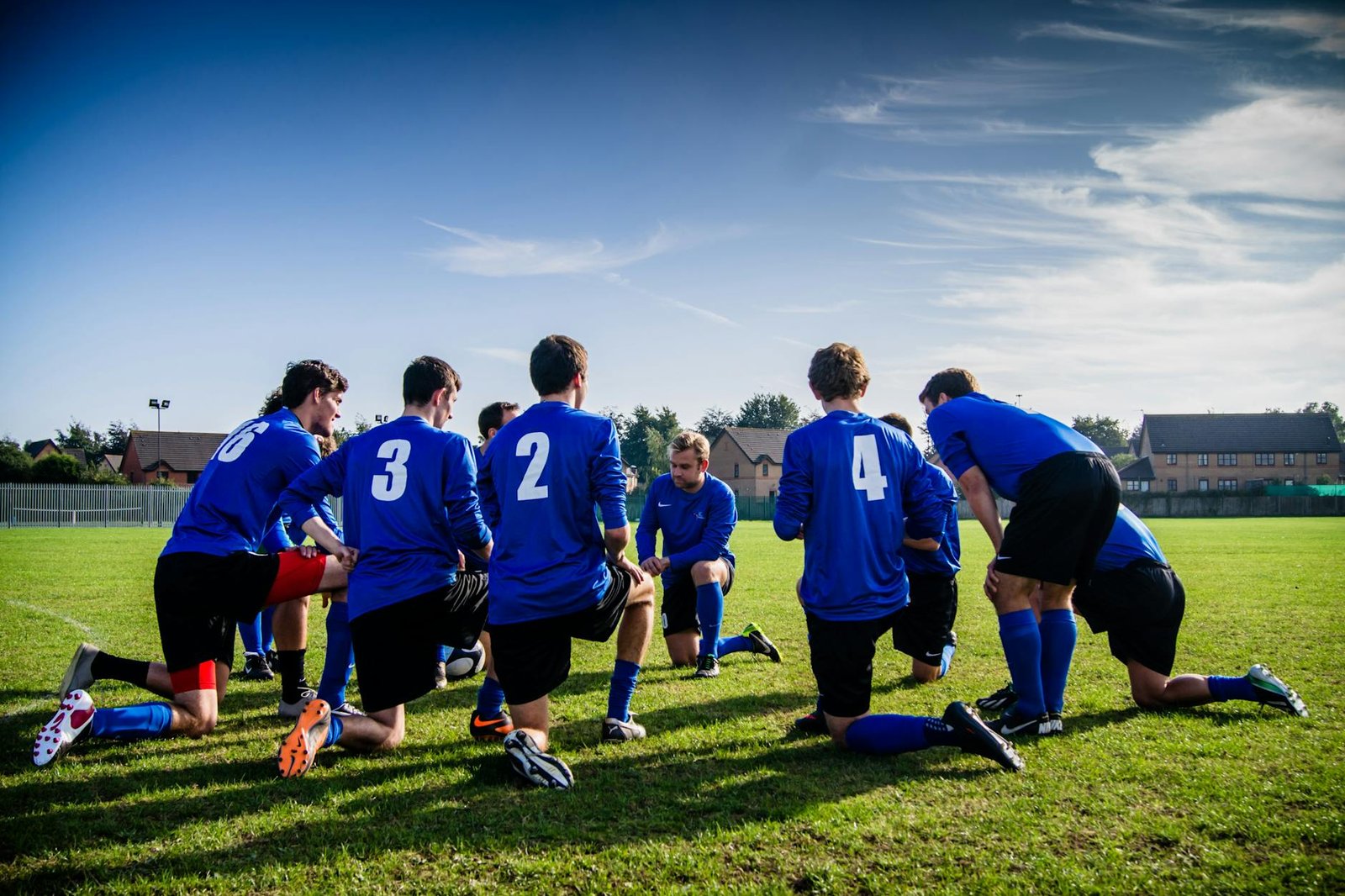
group of sports player kneeling on field

Photo by Pixabay on <a href="https://www.pexels.com/photo/group-of-sports-player-kneeling-on-field-262524/" rel="nofollow">Pexels.com</a>

In the ever-evolving landscape of sports and education, traditional methodologies are increasingly giving way to dynamic, evidence-based approaches. These methods prioritize adaptability, creativity, and contextual learning, offering more holistic pathways to mastery. Let’s delve into some of the transformative approaches—Constraints-Led Approach, Differential Learning, Nonlinear Pedagogy, and Naturalistic Decision Making—and explore how they shape modern skill acquisition.


1. Constraints-Led Approach (CLA)

The Constraints-Led Approach (CLA) is grounded in ecological dynamics and emphasizes the interaction between the individual, the task, and the environment. Instead of rigid drills, CLA encourages learning through variability and exploration within specific boundaries or constraints.

Key Features:

  • Task Constraints: Modifying rules, equipment, or goals to guide learners toward desired behaviors. For instance, using smaller playing areas to encourage quick decision-making.
  • Environmental Constraints: Adapting to factors like weather, surface conditions, or crowd noise.
  • Individual Constraints: Accounting for an athlete’s physical attributes, cognitive abilities, and emotional states.

Benefits: CLA promotes adaptability, resilience, and creativity by allowing learners to self-organize and discover effective solutions rather than relying on prescribed techniques.


2. Differential Learning

Differential Learning focuses on maximizing variability and randomness during practice sessions to stimulate the learner’s ability to adapt to unpredictable situations. Unlike repetitive drills, it leverages chaotic and non-repetitive tasks to enhance neural pathways and decision-making skills.

Key Features:

  • Practicing movements with slight variations in timing, speed, or trajectory.
  • Introducing random elements to create unique learning experiences.
  • Reducing over-reliance on perfection and embracing trial-and-error.

Benefits: This approach fosters creativity and robust problem-solving abilities, preparing athletes to perform under real-world, dynamic conditions.


3. Nonlinear Pedagogy

Nonlinear Pedagogy aligns closely with CLA but emphasizes the complex, emergent nature of learning. It focuses on designing learning environments that allow patterns of behavior to emerge naturally through exploration and interaction.

Key Features:

  • Self-Organization: Encouraging athletes to find their own solutions rather than prescribing techniques.
  • Representative Design: Mimicking real-world scenarios in practice to ensure transferable skills.
  • Perceptual-Motor Coupling: Enhancing the connection between perception and action.

Benefits: Nonlinear Pedagogy nurtures decision-making, contextual awareness, and an ability to adapt to varying circumstances.


4. Naturalistic Decision Making (NDM)

Naturalistic Decision Making examines how individuals make decisions in real-world, high-pressure situations. Originating from fields like emergency response and military training, NDM is increasingly being applied to sports and skill education.

Key Features:

  • Pattern Recognition: Building the ability to recognize and respond to familiar patterns quickly.
  • Situation Awareness: Developing an acute sense of context and understanding priorities.
  • Adaptive Expertise: Training athletes to balance intuitive decisions with analytical thinking.

Benefits: NDM equips learners to make effective decisions in uncertain and fast-paced environments, enhancing both individual and team performance.


Other Complementary Approaches

  1. Game-Based Learning: Using games to create engaging, context-rich learning environments that mirror real competition.
  2. Ecological Dynamics: Viewing skill acquisition as a relationship between the learner and their environment, focusing on adaptability.
  3. Implicit Learning: Encouraging subconscious learning through tasks without explicit instruction, fostering intuitive performance.
  4. Psychomotor Training: Combining physical and cognitive exercises to develop mind-body coordination and resilience.

Integrating These Approaches

Modern practitioners can integrate these methods to design innovative training programs tailored to specific needs. By combining elements of CLA, Differential Learning, Nonlinear Pedagogy, and NDM, coaches and educators can:

  • Create engaging, adaptable practice environments.
  • Enhance learners’ ability to perform under pressure.
  • Encourage creativity and decision-making in complex scenarios.

Conclusion

As the world of sports and education continues to evolve, embracing these progressive approaches can redefine how we train, learn, and perform. By focusing on adaptability, contextual learning, and decision-making, we prepare learners not just for the task at hand but for a lifetime of dynamic challenges. These approaches not only foster excellence but also promote a deeper, more sustainable connection to the skills and disciplines we seek to master.

Continue Reading

Previous: Learning in Law: Adapting to the Age of AI
Next: The Intersection of AI and Lifelong Learning

Categories

Archives

  • September 2025
  • July 2025
  • June 2025
  • May 2025
  • April 2025
  • March 2025
  • February 2025
  • January 2025
  • December 2024
  • November 2024
  • October 2024
  • September 2024
  • August 2024
  • July 2024
  • June 2024
  • May 2024
  • April 2024
  • March 2024
  • February 2024
  • January 2024
  • December 2023
  • November 2023
  • October 2023
  • September 2023
  • August 2023
  • July 2023
  • June 2023
  • May 2023
  • April 2023
  • March 2023
  • February 2023
  • January 2023
  • December 2022
  • November 2022
  • October 2022
  • September 2022
  • August 2022
  • July 2022
  • June 2022
  • May 2022
  • April 2022
  • March 2022
  • February 2022
  • January 2022
  • December 2021
  • November 2021
  • October 2021
  • September 2021
  • August 2021
  • July 2021
  • June 2021
  • May 2021
Copy Right © 2025–2026 Learning Science Digest (lsdigest.com). All rights reserved.

Copyright © 2025-2026 LsDigest.com

Copyright © 2025-2026 LsDigest.com | MoreNews by AF themes.