Skip to content

Learning-Science Digest

Fringe of Human Learning Technology and Emergence

Categories

  • 4E Cognition
  • Ability grouping
  • Accelerated learning
  • Acting/ Role play
  • Active learning
  • Active/ Action learning
  • Activities
  • Adaptive Learning
  • Administration & Leadership
  • Affordances
  • After-School Programs
  • Agency/ Autonomy
  • Analogy & Analogy based Learning
  • Anchored Instruction
  • Andragogy
  • Anthropology/ Ethnographic learning
  • Apprenticeship
  • Approaches
  • Apps
  • Artificial Intelligence
  • Assessment
  • Asynchronous Learning
  • Attitude
  • Banking model
  • Behavior Design
  • Behavioural
  • Belonging
  • Biology
  • Blended, Flipped, etc
  • books
  • Brain
  • Bricolage
  • Catholic Education
  • Causation
  • Coaching
  • Cognitive Diversity
  • Cognitive Load
  • Cognitive Science
  • Collaborative learning
  • Communities of practice
  • Competency-Based Learning
  • Complexity Theory
  • Compliance Training
  • Computational Learning
  • Computer Based Math
  • Concept Differences
  • Concept similarity
  • Connected Learning
  • Connectivism
  • Constraints
  • Constraints-Led Approach
  • Constructionism
  • Constructivism
  • Contextualized Learning
  • Contrast and Polarity
  • Courses
  • Creativity/ Innovation
  • Critical articles
  • Critical Pedagogy
  • Critical Thinking
  • Cultural Intelligence
  • Cultural Learning
  • Cumulative culture
  • Curriculum
  • Curriculum Design
  • Deliberate Practice
  • Design Science/ Approaches
  • Desirable Difficulty
  • Dialogic Learning
  • Differential learning
  • Digital Learning
  • Direct Instruction/ KLC
  • Disability and Learning
  • Discovery Learning
  • Discussion/ Debate
  • Disposition/Propensity
  • Distributed Cognition/ Learning
  • DIY learning/ Edupunk
  • Dynamics and learning
  • Early Intervention
  • Ecological Approch
  • Ecological Dynamics
  • Ed-tech
  • Education
  • Education Models
  • Education Policy
  • Education Thinkers
  • Effectuation
  • Elaboration
  • Embedded Cognition
  • Embodied Cognition
  • Emergence
  • Emergency learning
  • Emerging technology
  • Emulative learning
  • Enactive learning
  • Enskilment
  • Entangled pedagogy
  • Entrepreneurial Learning
  • Ethics and Moral learning
  • Evaluation
  • Evidence
  • Evolution and Learning
  • Exams
  • Exaptation
  • Exercise
  • Experiential Learning
  • Expertise
  • Explicit instruction
  • Extended Cognition
  • Family/ Religion
  • Feedback
  • Frameworks
  • Future Of Learning
  • Games/ Gamification
  • Generation Effect
  • Generative AI
  • Genius
  • Geragogy
  • Grading
  • Happiness and learning
  • Heuristics
  • Heutagogy
  • Higher Education
  • History Of Education
  • Home Slider
  • Home/ Home Schooling/ Learning
  • Homework
  • Human Machine Interface
  • Humor
  • Hypercorrection
  • Improvisation
  • Informal Learning
  • Innovation
  • Inquiry
  • Instructional Design
  • Instrumentalism
  • Intelligence
  • Interviews
  • Job training
  • Knowledge Rich Curriculum
  • Knowledge: Types. etc.
  • Labelling
  • Language Learning
  • Law and Legal Learning
  • Learning and Development
  • Learning Difficulties
  • Learning Environments
  • Learning for life
  • Learning in Chaos
  • Learning in complexity
  • Learning Management System
  • Learning Myths
  • Learning Programming
  • Learning Science
  • Learning Stations
  • Learning Systems
  • Learning Techniques/Methods
  • Learning Thinkers
  • Learning under anxiety/pressure/stress
  • Learning/ Teaching Strategies
  • Learning/ Understanding By Design
  • Looping effect
  • Maker Learning
  • Mastery
  • Mathew Effect
  • Maths Learning
  • Measurement
  • Medical Education/Learning
  • Memory
  • Meta-Analysis
  • Meta-Cognition
  • mindset
  • Mnemonics
  • Montessori
  • Motivation
  • Motor Learning
  • Music/ Arts and Learning
  • Mystagogy
  • Needs and Need based Learning
  • Networked Learning
  • Networks and Ecosystem
  • Neurodivergence
  • Neuroscience
  • Non Computational
  • Non-Representational
  • Nonlinear Pedagogy
  • Novelty and learning
  • Observational learning
  • On-the-Job Training
  • Online and MOOC Learning
  • outdoor-education
  • Pedagogy
  • Peer Learning
  • Personalized Learning
  • Philosophy Of Education
  • Philosophy Of Learning
  • Philosophy Of Science
  • Place-Based Learning
  • Play/ Ludic Pedagogy
  • Policy
  • Pragmatism
  • Problem-based learning
  • Productive Failures
  • Professional education
  • Professional Learning
  • Progressive Education
  • Project Based Learning
  • Proximity and Learning
  • Psychological Issues
  • Question asking/ Question design
  • Reading , Literacy , etc
  • Recognition
  • Reification/ Reductionism
  • Relational Expertise
  • Relational Learning
  • Religion
  • Research
  • Resting/ offline consolidation
  • Retrieval
  • Salience/Closeness
  • Scaffolding
  • Science Of Learning
  • self-efficacy
  • Self-Organization
  • Self-Paced Learning
  • Self-Regulated/ Self-Directed
  • Service Learning
  • Short Concept Introduction
  • Signalling
  • Simulation or Simulative Learning
  • Situated Learning
  • Skill
  • Sleep and Rest
  • Social Effects
  • Social Learning
  • Social-emotional learning
  • Society-Ecosystem etc
  • Socioeconomic Factors
  • Sociology Of Learning
  • Software And Technology Review
  • Speaking/Public Speaking
  • Spiral design
  • Sports learning
  • Sports Science
  • Story/Narrative based learning
  • Studying
  • Teacher/ teaching
  • Testing
  • Theology and learning
  • Theories
  • Tools, Aids, Artifacts
  • Training
  • Training Needs Analysis
  • Transdisciplinary/ Interdisciplinary, etc
  • Transfer Of Learning
  • Trending News
  • Uncategorized
  • Uncertainty and learning
  • Variable Practice
  • Vicarious learning
  • Video playlist
  • Virtual, Augmented, etc
  • Visible Learning/ Hattie
  • Visual Learning/Drawing
  • Vocational Education
  • Wakeful Resting
  • Work Place Learning
  • Workshop Model
  • Zone of Proximal Development (ZPD)
Primary Menu
  • Home
  • About
  • Thinkers
    • Learning Thinkers
    • Education Thinkers
  • Design For Learning
    • Design Science/ Approaches
    • Instructional Design
    • Behavior Design
    • Curriculum Design
    • Learning/ Understanding By Design
    • Motivation
    • Ecological Approch
    • Blended, Flipped, etc
    • Games/ Gamification
  • Tools/Techniques/Methods
    • Learning Techniques/Methods
    • Education Models
    • Testing
    • Retrieval
    • Blended, Flipped, etc
    • Differential learning
    • Dialogic Learning
    • Computer Based Math
    • Tools, Aids, Artifacts
    • Knowledge Rich Curriculum
    • Cognitive Load
    • Online and MOOC Learning
    • Scaffolding
    • Contrast and Polarity
    • Play/ Ludic Pedagogy
    • Problem-based learning
    • Cultural Learning
    • Direct Instruction/ KLC
    • Deliberate Practice
    • Visual Learning/Drawing
    • Games/ Gamification
    • Acting/ Role play
    • Analogy & Analogy based Learning
    • Inquiry
    • Improvisation
    • Constructionism
    • Situated Learning
    • Productive Failures
    • Anthropology/ Ethnographic learning
    • Project Based Learning
    • Connected Learning
    • Nonlinear Pedagogy
    • Personalized Learning
    • Maker Learning
    • Virtual, Augmented, etc
    • Service Learning
    • Constructivism
    • Connectivism
    • Vicarious learning
    • Active/ Action learning
    • Computational Learning
    • Relational Learning
    • Apprenticeship
    • Communities of practice
    • Home/ Home Schooling/ Learning
    • Contextualized Learning
    • DIY learning/ Edupunk
    • Constraints-Led Approach
    • Peer Learning
  • Domains
    • Language Learning
    • Entrepreneurial Learning
    • Maths Learning
    • Sports Science
    • Theology and learning
    • Sports learning
    • Professional education
    • Law and Legal Learning
    • Catholic Education
    • Higher Education
    • Medical Education/Learning
    • Work Place Learning
    • Learning Programming
    • On-the-Job Training
    • Job training
    • Compliance Training
  • Approaches
    • Neuroscience
    • Social Learning
    • Ecological Approch
    • 4E Cognition
    • Active learning
    • Transfer Of Learning
    • Cumulative culture
    • Embodied Cognition
    • Evolution and Learning
    • Embedded Cognition
    • Differential learning
    • Dialogic Learning
    • Experiential Learning
    • Learning Environments
    • Cultural Intelligence
    • Enactive learning
    • Constraints-Led Approach
    • Non-Representational
    • Self-Organization
    • Relational Learning
    • Relational Expertise
    • Enskilment
    • Extended Cognition
    • Distributed Cognition/ Learning
  • Artificial Intelligence
  • Education Policy
  • Expertise
Subscribe or Login
  • Home
  • Education
  • Do We Really Need to Coursify Everything? A Motivation Perspective
  • Education
  • Education Models
  • Motor Learning
  • Philosophy Of Education
  • Social-emotional learning

Do We Really Need to Coursify Everything? A Motivation Perspective

In a world increasingly driven by certifications, credentials, and structured pathways, we often overlook a fundamental question: do we really need to "coursify" things that people have a natural inclination to learn? This pervasive trend of creating courses, assigning grades, and awarding certificates may not just disrupt natural learning processes—it could also undermine intrinsic motivation.
kiran Johny September 7, 2024
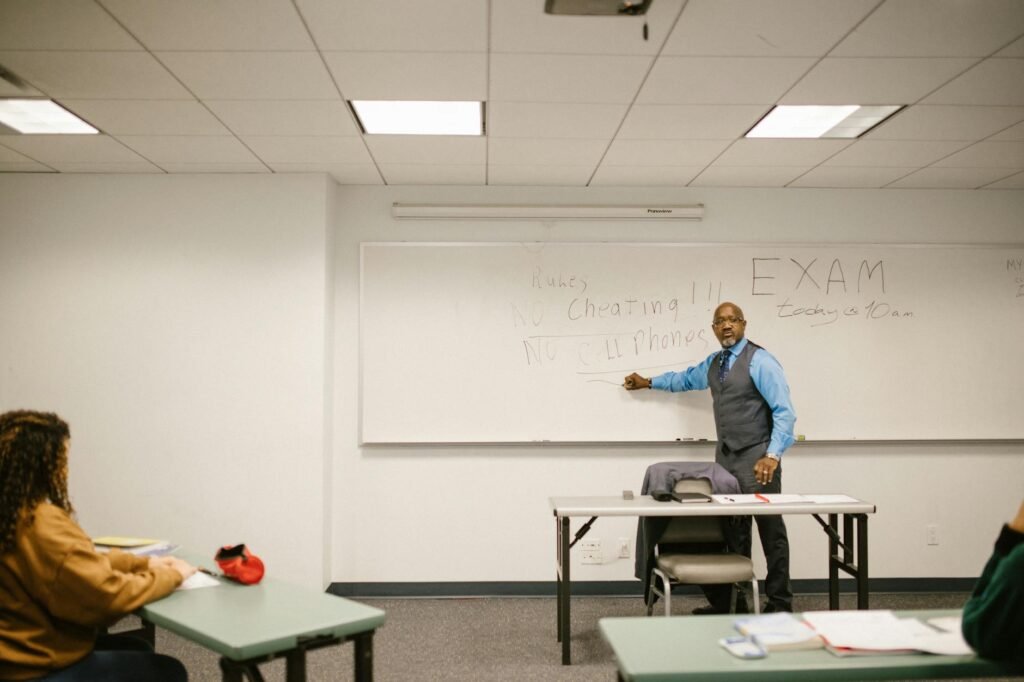
teacher giving instructions to his students not to cheat

Photo by RDNE Stock project on <a href="https://www.pexels.com/photo/teacher-giving-instructions-to-his-students-not-to-cheat-7092372/" rel="nofollow">Pexels.com</a>

In a world increasingly driven by certifications, credentials, and structured pathways, we often overlook a fundamental question: do we really need to “coursify” things that people have a natural inclination to learn? This pervasive trend of creating courses, assigning grades, and awarding certificates may not just disrupt natural learning processes—it could also undermine intrinsic motivation.

The Intrinsic vs. Extrinsic Motivation Debate

At its core, motivation comes in two forms:

  • Intrinsic motivation, where individuals engage in activities for the inherent satisfaction or curiosity they bring.
  • Extrinsic motivation, driven by external rewards such as grades, certificates, or monetary benefits.

The problem with coursification is its tendency to replace intrinsic motivation with extrinsic incentives. When we attach certificates or grades to learning, we risk shifting the focus from the joy of discovery to the pursuit of external validation. Over time, this can lead to a phenomenon called Motivation Crowding Out—where the presence of external rewards diminishes the intrinsic desire to learn.

The Looking-Glass Self: Learning for Validation

Sociological concepts like the Looking-Glass Self shed light on how external signals shape identity. Receiving a certificate can make individuals perceive themselves in light of how others view them—”I am competent because I have this credential.” While this can reinforce confidence temporarily, it also ties self-worth to external validation. This may lead to a systematic way of thinking that prioritizes “looking the part” over actual competence.

In the realm of education, this is especially evident. Certificates often serve as signifiers of achievement, influencing how others perceive us and, more importantly, how we perceive ourselves. This raises a critical question: are we learning to understand, or are we learning to earn a badge?

Human Capital vs. Signaling Theory

The debate about the purpose of education often revolves around two paradigms:

  1. Human Capital Theory posits that education enhances productivity and drives social mobility by equipping individuals with skills and knowledge.
  2. Signaling Theory suggests that education acts as a signal to employers, indicating a candidate’s competence and reliability. Here, the value lies not in the acquired knowledge but in the credential itself, which helps navigate asymmetric information in the job market.

While the signaling power of education is undeniable, it raises concerns about its long-term impact on learning motivation. When education is seen primarily as a means to acquire credentials, it risks becoming an exercise in optimization—maximizing grades and certificates—at the expense of genuine curiosity and understanding.

The Risk of Post-Credential Demotivation

One of the most intriguing challenges of the credential-driven approach is its potential to demotivate individuals once the external incentives disappear. In the “post-credential life,” where no more grades or certificates are at stake, will learners retain the drive to continue exploring and growing? Or will the absence of extrinsic motivators leave them adrift?

Edward Deci, the creator of Self-Determination Theory, highlights this risk. In one study, participants who were initially intrinsically motivated to solve puzzles became less interested after being offered financial incentives. The external reward killed their internal drive. Similarly, over-reliance on certificates and grades can erode a learner’s intrinsic curiosity, leaving them disengaged once the external motivators are removed.

Rethinking Learning: Beyond Coursification

If coursification risks killing intrinsic motivation, what can we do instead? Here are some ideas:

  1. Foster Intrinsic Motivation: Focus on creating learning experiences that prioritize curiosity, creativity, and personal growth over grades and certificates.
  2. Embrace Learning for Its Own Sake: Encourage learners to pursue knowledge as an end in itself rather than a means to an extrinsic reward. Highlight the joy and fulfillment that comes from mastering a skill or understanding a concept.
  3. Reimagine Assessment: Replace standardized tests with reflective practices, portfolios, and real-world projects that emphasize learning over measurement.
  4. Value Contextual Learning: Design educational experiences that are grounded in real-world applications, allowing learners to see the relevance and utility of what they learn.
  5. Support Lifelong Learning: Create environments where individuals feel inspired to learn beyond formal education, driven by curiosity rather than the need for validation.

Conclusion

The pursuit of knowledge should be driven by curiosity and a love for discovery, not the lure of certificates or grades. While coursification and certification can serve as useful tools, they must not overshadow the essence of learning. By prioritizing intrinsic motivation and fostering a culture of lifelong curiosity, we can ensure that education remains a source of empowerment rather than a tool of commodification.

Continue Reading

Previous: The Homework Myth: Time to Rethink an Outdated Practice?
Next: Misunderstanding John Hattie’s Research: A Call for Nuance in Educational Discourse

Categories

Archives

  • September 2025
  • July 2025
  • June 2025
  • May 2025
  • April 2025
  • March 2025
  • February 2025
  • January 2025
  • December 2024
  • November 2024
  • October 2024
  • September 2024
  • August 2024
  • July 2024
  • June 2024
  • May 2024
  • April 2024
  • March 2024
  • February 2024
  • January 2024
  • December 2023
  • November 2023
  • October 2023
  • September 2023
  • August 2023
  • July 2023
  • June 2023
  • May 2023
  • April 2023
  • March 2023
  • February 2023
  • January 2023
  • December 2022
  • November 2022
  • October 2022
  • September 2022
  • August 2022
  • July 2022
  • June 2022
  • May 2022
  • April 2022
  • March 2022
  • February 2022
  • January 2022
  • December 2021
  • November 2021
  • October 2021
  • September 2021
  • August 2021
  • July 2021
  • June 2021
  • May 2021
Copy Right © 2025–2026 Learning Science Digest (lsdigest.com). All rights reserved.

Copyright © 2025-2026 LsDigest.com

Copyright © 2025-2026 LsDigest.com | MoreNews by AF themes.