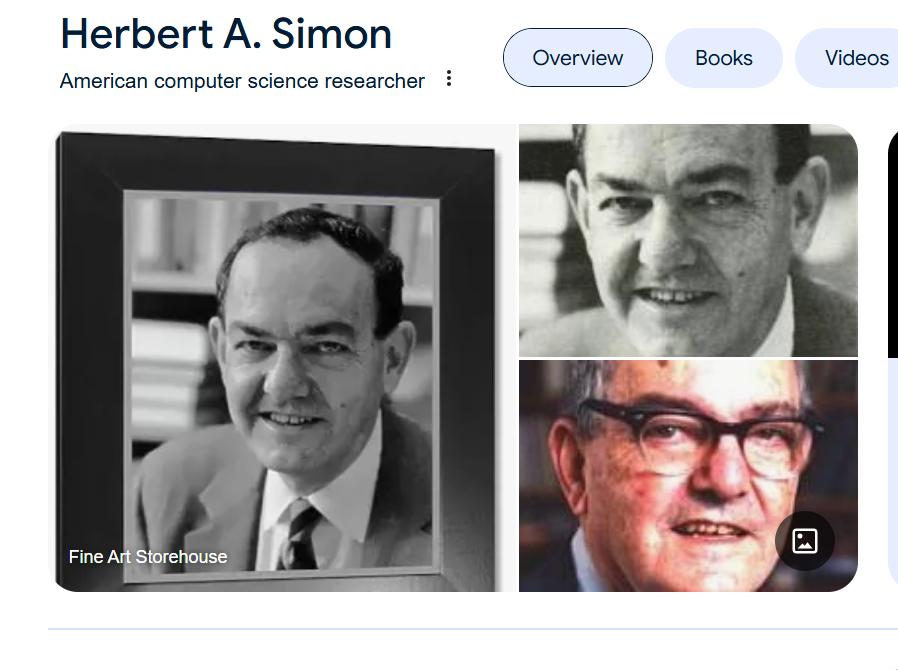
Education is a quintessentially complex domain, characterized by a myriad of interacting variables, non-linear feedback loops, and a high degree of unpredictability. Designing solutions for such domains requires approaches that embrace complexity, rather than attempting to oversimplify it. Drawing from Herbert A. Simon’s principles of complex system design—homeostasis, membranes, specialization, and near-decomposability—this blog explores how these principles can inform complexity-friendly educational design.
1. Homeostasis: Balancing Stability and Adaptability
Homeostasis in complex systems refers to mechanisms that stabilize key internal variables, even in the face of external fluctuations. In education, this could manifest as systems that buffer learners and educators from excessive instability while remaining responsive to external demands.
Applications in Education:
- Personalized Learning Buffers: Create adaptive learning platforms that adjust difficulty levels and content pacing to suit individual learners, providing stability while allowing for growth.
- Institutional Stability: Ensure schools and educational systems have core policies and structures that remain consistent over time, while peripheral elements (e.g., curriculum specifics) adapt to changing societal needs.
- Feedback Systems: Use data-driven feedback loops, such as real-time assessments, to help educators identify areas of stability and areas needing intervention.
Trade-offs: Stability mechanisms must avoid rigidity. For instance, overly standardized curricula may provide stability but fail to adapt to diverse student needs.
2. Membranes: Filtering and Specialized Interfaces
Membranes in complex systems act as boundaries that regulate the exchange of information or resources. In education, this translates to creating interfaces that allow meaningful interactions while protecting core processes.
Applications in Education:
- School-Community Interfaces: Develop structured channels for community and parental engagement that enrich the educational experience without overwhelming educators with external demands.
- Technology Integration: Employ tools and platforms that integrate seamlessly into classrooms, serving as specialized “membranes” that bring in external knowledge (e.g., online resources) while filtering out irrelevant or harmful content.
- Policy Shields: Design policies that protect teachers and students from excessive external pressures, such as unrealistic standardized testing requirements.
Trade-offs: Effective membranes must strike a balance between openness and insulation. Too much filtering can limit innovation, while too little can lead to information overload.
3. Specialization: Dividing and Conquering Complexity
Specialization allows a system to break down complex tasks into manageable parts, with each subsystem handling specific functions. In education, this principle supports differentiated roles and tailored approaches.
Applications in Education:
- Role Differentiation: Assign specialized roles within schools, such as instructional designers, mental health counselors, and technology coordinators, to address specific challenges.
- Customized Learning Paths: Implement modular curricula that let students specialize in areas of interest while maintaining a foundation of core knowledge.
- Teacher Expertise: Encourage professional development programs that allow teachers to specialize in subjects or pedagogical methods.
Trade-offs: While specialization simplifies certain tasks, it introduces new complexities in coordination. For example, highly specialized educators may struggle to collaborate across disciplines without effective communication systems.
4. Near-Decomposability: Leveraging Hierarchical Structures
Near-decomposability refers to systems structured in hierarchical layers, where interactions within subsystems are stronger than interactions between them. This principle can guide the organization of educational institutions and curricula.
Applications in Education:
- Hierarchical Curriculum Design: Develop multi-layered curricula where foundational skills (e.g., literacy and numeracy) are taught first, followed by higher-order skills (e.g., critical thinking and collaboration).
- Institutional Hierarchies: Organize educational governance into tiers (e.g., local, regional, national) to allow decentralized decision-making while maintaining overarching alignment.
- Learning Progressions: Use scaffolding techniques that build on students’ prior knowledge, enabling steady progression through increasingly complex concepts.
Trade-offs: Hierarchical structures risk becoming overly rigid or siloed. Cross-disciplinary and cross-level communication mechanisms are essential to maintain integration.
Designing with Complexity in Mind
Incorporating Simon’s principles into educational design requires a paradigm shift. Instead of attempting to reduce complexity, designers must acknowledge it and work with it. This involves:
- Embracing Uncertainty: Recognize that education systems operate in unpredictable environments and must remain adaptable.
- Focusing on Resilience: Build systems capable of absorbing shocks and adapting without losing core functionality.
- Designing for Diversity: Account for cognitive, cultural, and contextual diversity in learners and educators.
By prioritizing flexibility, feedback, and interconnectedness, we can create educational systems that not only cope with complexity but thrive within it.