Skip to content

Learning-Science Digest

Fringe of Human Learning Technology and Emergence

Categories

  • 4E Cognition
  • Ability grouping
  • Accelerated learning
  • Acting/ Role play
  • Active learning
  • Active/ Action learning
  • Activities
  • Adaptive Learning
  • Administration & Leadership
  • Affordances
  • After-School Programs
  • Agency/ Autonomy
  • Analogy & Analogy based Learning
  • Anchored Instruction
  • Andragogy
  • Anthropology/ Ethnographic learning
  • Apprenticeship
  • Approaches
  • Apps
  • Artificial Intelligence
  • Assessment
  • Asynchronous Learning
  • Attitude
  • Banking model
  • Behavior Design
  • Behavioural
  • Belonging
  • Biology
  • Blended, Flipped, etc
  • books
  • Brain
  • Bricolage
  • Catholic Education
  • Causation
  • Coaching
  • Cognitive Diversity
  • Cognitive Load
  • Cognitive Science
  • Collaborative learning
  • Communities of practice
  • Competency-Based Learning
  • Complexity Theory
  • Compliance Training
  • Computational Learning
  • Computer Based Math
  • Concept Differences
  • Concept similarity
  • Connected Learning
  • Connectivism
  • Constraints
  • Constraints-Led Approach
  • Constructionism
  • Constructivism
  • Contextualized Learning
  • Contrast and Polarity
  • Courses
  • Creativity/ Innovation
  • Critical articles
  • Critical Pedagogy
  • Critical Thinking
  • Cultural Intelligence
  • Cultural Learning
  • Cumulative culture
  • Curriculum
  • Curriculum Design
  • Deliberate Practice
  • Design Science/ Approaches
  • Desirable Difficulty
  • Dialogic Learning
  • Differential learning
  • Digital Learning
  • Direct Instruction/ KLC
  • Disability and Learning
  • Discovery Learning
  • Discussion/ Debate
  • Disposition/Propensity
  • Distributed Cognition/ Learning
  • DIY learning/ Edupunk
  • Dynamics and learning
  • Early Intervention
  • Ecological Approch
  • Ecological Dynamics
  • Ed-tech
  • Education
  • Education Models
  • Education Policy
  • Education Thinkers
  • Effectuation
  • Elaboration
  • Embedded Cognition
  • Embodied Cognition
  • Emergence
  • Emergency learning
  • Emerging technology
  • Emulative learning
  • Enactive learning
  • Enskilment
  • Entangled pedagogy
  • Entrepreneurial Learning
  • Ethics and Moral learning
  • Evaluation
  • Evidence
  • Evolution and Learning
  • Exams
  • Exaptation
  • Exercise
  • Experiential Learning
  • Expertise
  • Explicit instruction
  • Extended Cognition
  • Family/ Religion
  • Feedback
  • Frameworks
  • Future Of Learning
  • Games/ Gamification
  • Generation Effect
  • Generative AI
  • Genius
  • Geragogy
  • Grading
  • Happiness and learning
  • Heuristics
  • Heutagogy
  • Higher Education
  • History Of Education
  • Home Slider
  • Home/ Home Schooling/ Learning
  • Homework
  • Human Machine Interface
  • Humor
  • Hypercorrection
  • Improvisation
  • Informal Learning
  • Innovation
  • Inquiry
  • Instructional Design
  • Instrumentalism
  • Intelligence
  • Interviews
  • Job training
  • Knowledge Rich Curriculum
  • Knowledge: Types. etc.
  • Labelling
  • Language Learning
  • Law and Legal Learning
  • Learning and Development
  • Learning Difficulties
  • Learning Environments
  • Learning for life
  • Learning in Chaos
  • Learning in complexity
  • Learning Management System
  • Learning Myths
  • Learning Programming
  • Learning Science
  • Learning Stations
  • Learning Systems
  • Learning Techniques/Methods
  • Learning Thinkers
  • Learning under anxiety/pressure/stress
  • Learning/ Teaching Strategies
  • Learning/ Understanding By Design
  • Looping effect
  • Maker Learning
  • Mastery
  • Mathew Effect
  • Maths Learning
  • Measurement
  • Medical Education/Learning
  • Memory
  • Meta-Analysis
  • Meta-Cognition
  • mindset
  • Mnemonics
  • Montessori
  • Motivation
  • Motor Learning
  • Music/ Arts and Learning
  • Mystagogy
  • Needs and Need based Learning
  • Networked Learning
  • Networks and Ecosystem
  • Neurodivergence
  • Neuroscience
  • Non Computational
  • Non-Representational
  • Nonlinear Pedagogy
  • Novelty and learning
  • Observational learning
  • On-the-Job Training
  • Online and MOOC Learning
  • outdoor-education
  • Pedagogy
  • Peer Learning
  • Personalized Learning
  • Philosophy Of Education
  • Philosophy Of Learning
  • Philosophy Of Science
  • Place-Based Learning
  • Play/ Ludic Pedagogy
  • Policy
  • Pragmatism
  • Problem-based learning
  • Productive Failures
  • Professional education
  • Professional Learning
  • Progressive Education
  • Project Based Learning
  • Proximity and Learning
  • Psychological Issues
  • Question asking/ Question design
  • Reading , Literacy , etc
  • Recognition
  • Reification/ Reductionism
  • Relational Expertise
  • Relational Learning
  • Religion
  • Research
  • Resting/ offline consolidation
  • Retrieval
  • Salience/Closeness
  • Scaffolding
  • Science Of Learning
  • self-efficacy
  • Self-Organization
  • Self-Paced Learning
  • Self-Regulated/ Self-Directed
  • Service Learning
  • Short Concept Introduction
  • Signalling
  • Simulation or Simulative Learning
  • Situated Learning
  • Skill
  • Sleep and Rest
  • Social Effects
  • Social Learning
  • Social-emotional learning
  • Society-Ecosystem etc
  • Socioeconomic Factors
  • Sociology Of Learning
  • Software And Technology Review
  • Speaking/Public Speaking
  • Spiral design
  • Sports learning
  • Sports Science
  • Story/Narrative based learning
  • Studying
  • Teacher/ teaching
  • Testing
  • Theology and learning
  • Theories
  • Tools, Aids, Artifacts
  • Training
  • Training Needs Analysis
  • Transdisciplinary/ Interdisciplinary, etc
  • Transfer Of Learning
  • Trending News
  • Uncategorized
  • Uncertainty and learning
  • Variable Practice
  • Vicarious learning
  • Video playlist
  • Virtual, Augmented, etc
  • Visible Learning/ Hattie
  • Visual Learning/Drawing
  • Vocational Education
  • Wakeful Resting
  • Work Place Learning
  • Workshop Model
  • Zone of Proximal Development (ZPD)
Primary Menu
  • Home
  • About
  • Thinkers
    • Learning Thinkers
    • Education Thinkers
  • Design For Learning
    • Design Science/ Approaches
    • Instructional Design
    • Behavior Design
    • Curriculum Design
    • Learning/ Understanding By Design
    • Motivation
    • Ecological Approch
    • Blended, Flipped, etc
    • Games/ Gamification
  • Tools/Techniques/Methods
    • Learning Techniques/Methods
    • Education Models
    • Testing
    • Retrieval
    • Blended, Flipped, etc
    • Differential learning
    • Dialogic Learning
    • Computer Based Math
    • Tools, Aids, Artifacts
    • Knowledge Rich Curriculum
    • Cognitive Load
    • Online and MOOC Learning
    • Scaffolding
    • Contrast and Polarity
    • Play/ Ludic Pedagogy
    • Problem-based learning
    • Cultural Learning
    • Direct Instruction/ KLC
    • Deliberate Practice
    • Visual Learning/Drawing
    • Games/ Gamification
    • Acting/ Role play
    • Analogy & Analogy based Learning
    • Inquiry
    • Improvisation
    • Constructionism
    • Situated Learning
    • Productive Failures
    • Anthropology/ Ethnographic learning
    • Project Based Learning
    • Connected Learning
    • Nonlinear Pedagogy
    • Personalized Learning
    • Maker Learning
    • Virtual, Augmented, etc
    • Service Learning
    • Constructivism
    • Connectivism
    • Vicarious learning
    • Active/ Action learning
    • Computational Learning
    • Relational Learning
    • Apprenticeship
    • Communities of practice
    • Home/ Home Schooling/ Learning
    • Contextualized Learning
    • DIY learning/ Edupunk
    • Constraints-Led Approach
    • Peer Learning
  • Domains
    • Language Learning
    • Entrepreneurial Learning
    • Maths Learning
    • Sports Science
    • Theology and learning
    • Sports learning
    • Professional education
    • Law and Legal Learning
    • Catholic Education
    • Higher Education
    • Medical Education/Learning
    • Work Place Learning
    • Learning Programming
    • On-the-Job Training
    • Job training
    • Compliance Training
  • Approaches
    • Neuroscience
    • Social Learning
    • Ecological Approch
    • 4E Cognition
    • Active learning
    • Transfer Of Learning
    • Cumulative culture
    • Embodied Cognition
    • Evolution and Learning
    • Embedded Cognition
    • Differential learning
    • Dialogic Learning
    • Experiential Learning
    • Learning Environments
    • Cultural Intelligence
    • Enactive learning
    • Constraints-Led Approach
    • Non-Representational
    • Self-Organization
    • Relational Learning
    • Relational Expertise
    • Enskilment
    • Extended Cognition
    • Distributed Cognition/ Learning
  • Artificial Intelligence
  • Education Policy
  • Expertise
Subscribe or Login
  • Home
  • Behavior Design
  • Design Crushes Willpower: The Power of Learning Design in Education
  • Behavior Design
  • Curriculum Design
  • Design Science/ Approaches
  • Instructional Design

Design Crushes Willpower: The Power of Learning Design in Education

kiran Johny April 2, 2025
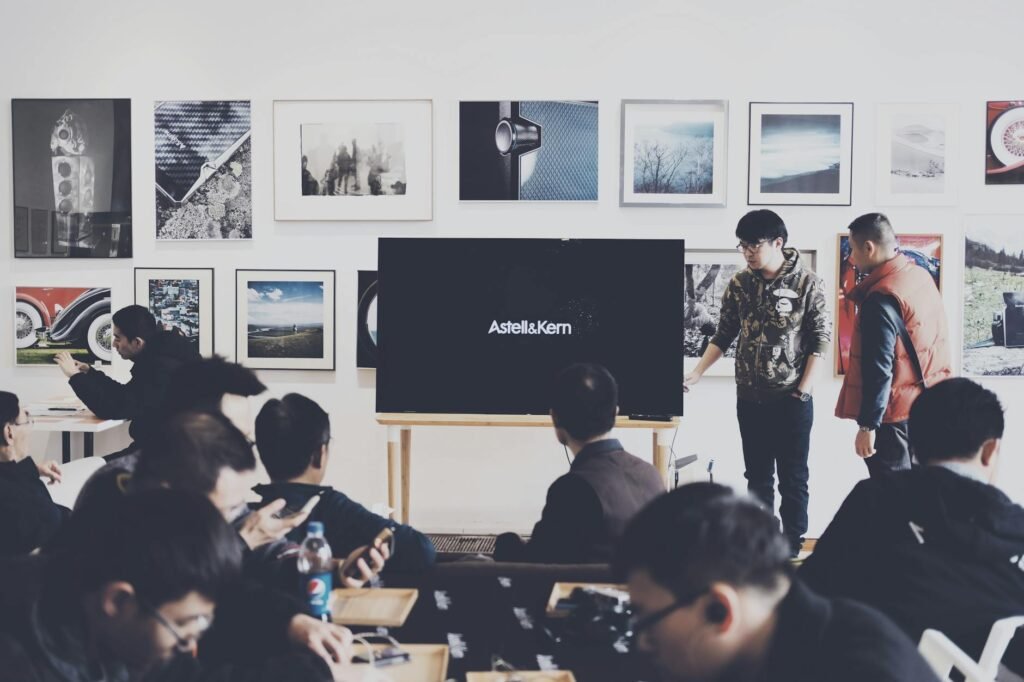
group of people in art exhibit

In the context of learning and education, the notion that “design crushes willpower” can significantly reshape how we approach student engagement, habit formation, and success. BJ Fogg, a renowned behavioral scientist from Stanford, introduced a compelling concept in his work on behavioral design that can be directly applied to the educational domain: design shapes behavior more effectively than willpower. Whether in classrooms, self-directed learning environments, or workplace education, understanding how design influences behavior is key to creating sustainable, impactful learning experiences.

Two Sides of the Design Willpower Equation

BJ Fogg identifies two meanings when he says “design crushes willpower.” The first is positive: if you design your life and behaviors thoughtfully, you don’t need to rely heavily on willpower. The second is darker: others can design things that overwhelm your willpower, and this can be detrimental to your personal or educational goals. In the context of learning, this means that an environment filled with distractions, unrealistic expectations, or unengaging content can quickly overwhelm a learner’s willpower, making it difficult to stay committed to the learning journey.

In education, just like in any other aspect of life, successful learning design has the potential to foster motivation, persistence, and long-term habit formation. But failing to acknowledge the power of design—whether it’s in a classroom setup, curriculum structure, or learning technology—can create barriers that require an enormous amount of mental energy and willpower to overcome.

The Tiny Habits Method: A Design-Driven Approach to Learning Success

BJ Fogg’s Tiny Habits Method provides an ideal framework for creating effective learning habits. According to Fogg, forcing oneself to do things you don’t enjoy and failing repeatedly is more harmful to long-term success than not attempting at all. Instead of pushing through with sheer willpower, Fogg suggests focusing on small, easy-to-achieve habits that are easy to embed into existing routines.

In an educational setting, this could translate into the following:

  1. Identify Desired Outcomes: Whether it’s mastering a skill, passing an exam, or completing a learning module, the first step is to define clear, achievable goals.
  2. Find Tiny Habits: Identify small, simple actions that will lead to success. For instance, instead of telling yourself to study for hours, start by committing to study for 5 minutes a day. Once the small habit is solidified, you can gradually increase the time and intensity.
  3. Use Triggers: Tie your new habit to an existing routine. For instance, if you want to improve reading habits, place a book on your pillow every evening, so when you go to bed, the book becomes the prompt to read a chapter or two.

In the educational landscape, where motivation can fluctuate, tiny habits can be the key to unlocking consistent progress. The power of small wins is immense: they build confidence, reinforce positive behavior, and create a ripple effect that eventually leads to achieving larger educational goals.

Expanding the Design Perspective: The Six Sources of Influence

BJ Fogg’s model can be further enhanced by integrating Al Switzler’s Six Sources of Influence, which adds an important dimension to the design of learning habits by considering the social and structural elements that shape behavior.

  1. Personal Motivation: This is the desire to succeed or engage with the learning process. The key to engaging students lies in designing learning experiences that connect with their intrinsic motivations, making the content feel relevant and inspiring.
  2. Personal Ability: Do learners feel capable of achieving their goals? Instructors and educational systems must design resources, tools, and strategies that support learners at various levels of ability, ensuring that every student feels empowered to succeed.
  3. Social Motivation: This includes the role of peers, mentors, and teachers. If students are surrounded by a supportive social network that encourages learning and growth, they are more likely to succeed. Collaborative learning environments and peer mentoring programs can enhance motivation.
  4. Social Ability: In education, this refers to providing access to help, guidance, or learning resources. When students have access to the right information and people who can assist them, they are more likely to persevere through challenges.
  5. Structural Motivation: This considers how the environment and systems in place support positive behaviors. In the classroom, this could mean creating a space conducive to focus and creativity, or designing a curriculum that rewards incremental progress.
  6. Structural Ability: This focuses on whether the environment provides the resources and support necessary to develop the desired behavior. In terms of learning, this could mean access to digital tools, libraries, or quiet spaces that promote studying.

The Impact of Learning Design on Long-Term Success

Ultimately, the design of a learning environment and the curriculum has the power to shape not just academic performance, but the development of lifelong learning habits. Instead of relying solely on the fluctuating power of willpower, effective learning design taps into both individual and collective elements that foster growth and success.

Just as Fogg’s method demonstrates, small, easy adjustments in behavior, when coupled with a supportive environment, can lead to lasting educational habits. When applied thoughtfully, learning design can become the most effective tool for fostering success in students and learners of all ages, helping them achieve their goals without the constant struggle of relying on willpower alone.

In this sense, whether in schools, colleges, or workplaces, the power of behavioral design and habit formation should be central to the conversation on how we structure learning experiences. By designing environments that make learning easier, more rewarding, and more integrated into daily life, we can unlock a world of possibilities for students and lifelong learners alike.

Continue Reading

Previous: 5 Provocative Insights from Ivan Illich on Learning and Education
Next: Contrasting as a Strategy for Learning: Deeper Understanding Across Subjects

Categories

Archives

  • September 2025
  • July 2025
  • June 2025
  • May 2025
  • April 2025
  • March 2025
  • February 2025
  • January 2025
  • December 2024
  • November 2024
  • October 2024
  • September 2024
  • August 2024
  • July 2024
  • June 2024
  • May 2024
  • April 2024
  • March 2024
  • February 2024
  • January 2024
  • December 2023
  • November 2023
  • October 2023
  • September 2023
  • August 2023
  • July 2023
  • June 2023
  • May 2023
  • April 2023
  • March 2023
  • February 2023
  • January 2023
  • December 2022
  • November 2022
  • October 2022
  • September 2022
  • August 2022
  • July 2022
  • June 2022
  • May 2022
  • April 2022
  • March 2022
  • February 2022
  • January 2022
  • December 2021
  • November 2021
  • October 2021
  • September 2021
  • August 2021
  • July 2021
  • June 2021
  • May 2021
Copy Right © 2025–2026 Learning Science Digest (lsdigest.com). All rights reserved.

Copyright © 2025-2026 LsDigest.com

Copyright © 2025-2026 LsDigest.com | MoreNews by AF themes.