We have a sacred story we tell ourselves about learning. It goes something like this: first comes understanding. You grasp the concept, you see the “why” behind the curtain, and then you achieve competence. You become able to do the thing—solve the equation, write the code, explain the phenomenon—because you have achieved a deep, rational comprehension of its inner workings.
But what if this story has it exactly backwards? What if, for most of human history—and most of human cognition—competence has consistently preceded comprehension?
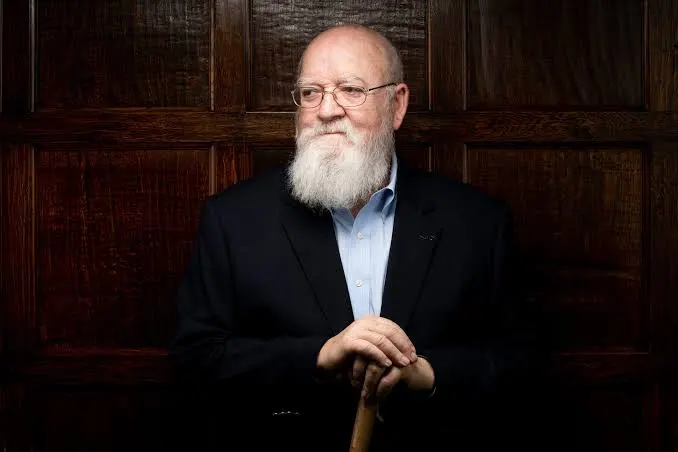
This is the unsettling premise at the heart of the work of philosopher Daniel Dennett, and it is a lens that can radically reframe how we think about modern education. By weaving together ideas from Dennett, Darwin, and Alan Turing, we can begin to see that our obsession with “understanding” as a prerequisite for “doing” might be the very thing holding our students—and our curricula—back. Ultimately, this perspective points toward revolutionary models like Conrad Wolfram’s Computer-Based Math, which finally align what we teach with how we actually learn.
The Darwinian Scaffold: Competence First
Long before there was a human brain capable of calculus or literary criticism, there was life. And life, as Darwin taught us, is the ultimate example of competence without comprehension.
A bacterium performing chemotaxis—swimming toward a higher concentration of sugar—displays remarkable competence. It navigates its environment, processes sensory data, and achieves a goal (finding food). But the bacterium has no model of chemistry. It does not understand thermodynamics or metabolic pathways. It simply does. The competence was “designed” by natural selection, a blind, algorithmic process that culls failures and replicates successes.
As Dennett argues in books like Darwin’s Dangerous Idea and From Bacteria to Bach and Back, this is the fundamental pattern of all intelligent design in nature. Comprehension—the ability to understand why a strategy works—is a late-breaking luxury. It is a “crane,” in Dennett’s terminology, that allows us to build on the “skyhooks” of prior, uncomprehending evolution.
We are born as competence machines. A toddler learns to speak with flawless grammatical intuition years before they could parse a sentence diagram. We learn to ride a bike through a messy, embodied process of trial and error—not by studying the physics of angular momentum. We achieve competence. The comprehension, if it comes at all, comes later, as a narrative we stitch together to explain our own success.
The Turing Test: Judging the Output, Not the Soul
Alan Turing, in his landmark 1950 paper “Computing Machinery and Intelligence,” proposed a radical thought experiment. He suggested we abandon the unanswerable question—“Can machines think?”—in favor of a pragmatic one: “Can a machine imitate a human so well that its responses are indistinguishable?”
The Turing Test is a celebration of competence without comprehension. A machine that passes the test would be a master of natural language, wit, and reasoning. But does it understand? Turing argued that this question was too philosophically murky to matter. If the performance—the competence—is indistinguishable, then our criteria for intelligence need to be revised.
This drives to the heart of our educational anxiety. We are constantly trying to peer into the “black box” of the student’s mind to assess whether true “comprehension” is happening. We are suspicious of students who can solve the problem but can’t explain the “why” in the way we demand. Yet Turing’s insight suggests that we may be placing too much value on the internal narrative of comprehension and not enough on the demonstrable reality of competence.
Dennett’s Stance: Taking the Intentional Stance
Dennett synthesizes these ideas into a powerful framework. He argues that we use three different “stances” to predict and understand systems:
- The Physical Stance (physics and chemistry).
- The Design Stance (it was designed to do this; a thermostat works because it’s designed to).
- The Intentional Stance (treating the system as a rational agent with beliefs and desires, predicting its behavior based on what it wants).
Dennett argues that as systems become more complex, we leap to the Intentional Stance because it works—it allows us to predict behavior with ease. But crucially, the system itself doesn’t need to have an internal narrative of “intention” for this stance to be valid.
In education, we are obsessed with forcing students to adopt the Intentional Stance toward their own learning. We demand they articulate their “beliefs” and “desires” about mathematics, to construct meta-cognitive narratives. We treat a student who can solve a differential equation but cannot explain the “conceptual meaning” of a derivative as a fraud.
But what if that student is simply operating at a more fundamental level of competence? What if, like the bacterium or the Turing machine, their ability to perform is the intelligence?
The Failure of the Comprehension-First Model
Our current education system, particularly in subjects like mathematics, is built on a comprehension-first model. We believe that one must first understand the abstract principles—the distributive property, the concept of a limit, the semantics of a variable—before one is allowed to achieve competence.
This leads to what mathematician and educator Conrad Wolfram has called the “calculus trap.” In a traditional math class, students spend 80% of their time on the calculation—the procedural, often tedious, mechanical work. They are told that they must master this low-level competence before they can ever hope to comprehend the high-level concepts that make math useful: modeling, problem formulation, and critical thinking.
But as Wolfram argues in his work on Computer-Based Math (a project championed by his company, Wolfram Research), this is backwards. Computers have rendered hand-calculation competence obsolete for most real-world applications. What students need is the competence to formulate problems, use computational tools as an extension of their cognition, and interpret results.
Wolfram’s model is a radical embrace of Turing’s philosophy. It says: let the computer handle the rote competence. Free the student to engage with the comprehension that actually matters—defining the problem, structuring the data, and validating the solution. It moves the goal of education from “perform this algorithm by hand” to “achieve a goal using all available cognitive and computational tools.”
Rethinking Learning and Education
If we accept that competence can—and often should—precede comprehension, how does this change education?
1. Embrace “Black Box” Learning: We should stop treating “I can do it but I can’t explain it” as a failure state. Instead, we should recognize it as a foundational first step. As Dennett notes, much of human expertise (think of a master chess player or a seasoned surgeon) operates at a level of intuitive competence that outstrips their ability to articulate a full logical justification. Our job is to honor that competence and then, later, help build the comprehension around it.
2. Redefine the Role of the Teacher: Teachers often see their role as transmitting comprehension. But in a competence-first model, the teacher becomes more like a coach or a natural selection mechanism. They create environments (like Wolfram’s computational notebooks) where students can do things, fail safely, iterate, and achieve competence through action. The comprehension that emerges is then earned—it is a map drawn from a territory already explored, rather than a territory described in a foreign language.
3. Leverage Computational Tools as Cognitive Prosthetics: Following Turing, we must accept that the locus of competence can be distributed. A student using a computer algebra system to solve a complex equation is not “cheating.” They are demonstrating a higher-order competence: knowing what to ask, how to frame it, and how to use the tool. This is akin to the distributed cognition that has defined human progress since we first used notches on a stick to count.
4. Reorder the Curriculum: Instead of a curriculum that moves from elementary “fundamentals” (rote comprehension) to advanced “applications” (real competence), we could invert it. Start with a compelling problem—design a bridge, model an epidemic, optimize a delivery route. Let students achieve competence in solving that problem using computational tools. Then, as questions arise organically, introduce the traditional concepts (algebra, calculus, statistics) as explanatory comprehension that helps refine their competence, not as gatekeeping prerequisites.
Conclusion: The Intelligence of Doing
Daniel Dennett, Darwin, and Alan Turing converge on a single, powerful idea: intelligence is not a mystical essence that precedes action. It is an emergent property of competence. It is the ability to navigate, predict, and control a complex world, regardless of whether one can pass a philosophy-of-mind exam on the nature of one’s own understanding.
Our educational system, built on the ghost of Enlightenment rationalism, has fetishized comprehension. We have turned it into a prerequisite for competence, creating a system where students are perpetually told they are not yet ready to do real things because they haven’t yet achieved the proper understanding.
Conrad Wolfram’s Computer-Based Math is one of the most promising models for breaking this logjam. By repositioning the computer as the engine of competence, it frees the student to focus on the distinctly human act of comprehension—the act of defining problems, interpreting outputs, and applying knowledge to the messy, unscripted world.
It is time to let students be competent. The comprehension will follow.
*What do you think? Is the goal of education to ensure students can explain their thinking, or to ensure they can *do* things effectively? Share your thoughts in the comments below.*