Skip to content

Learning-Science Digest

Fringe of Human Learning Technology and Emergence

Categories

  • 4E Cognition
  • Ability grouping
  • Accelerated learning
  • Acting/ Role play
  • Active learning
  • Active/ Action learning
  • Activities
  • Adaptive Learning
  • Administration & Leadership
  • Affordances
  • After-School Programs
  • Agency/ Autonomy
  • Analogy & Analogy based Learning
  • Anchored Instruction
  • Andragogy
  • Anthropology/ Ethnographic learning
  • Apprenticeship
  • Approaches
  • Apps
  • Artificial Intelligence
  • Assessment
  • Asynchronous Learning
  • Attitude
  • Banking model
  • Behavior Design
  • Behavioural
  • Belonging
  • Biology
  • Blended, Flipped, etc
  • books
  • Brain
  • Bricolage
  • Catholic Education
  • Causation
  • Coaching
  • Cognitive Diversity
  • Cognitive Load
  • Cognitive Science
  • Collaborative learning
  • Communities of practice
  • Competency-Based Learning
  • Complexity Theory
  • Compliance Training
  • Computational Learning
  • Computer Based Math
  • Concept Differences
  • Concept similarity
  • Connected Learning
  • Connectivism
  • Constraints
  • Constraints-Led Approach
  • Constructionism
  • Constructivism
  • Contextualized Learning
  • Contrast and Polarity
  • Courses
  • Creativity/ Innovation
  • Critical articles
  • Critical Pedagogy
  • Critical Thinking
  • Cultural Intelligence
  • Cultural Learning
  • Cumulative culture
  • Curriculum
  • Curriculum Design
  • Deliberate Practice
  • Design Science/ Approaches
  • Desirable Difficulty
  • Dialogic Learning
  • Differential learning
  • Digital Learning
  • Direct Instruction/ KLC
  • Disability and Learning
  • Discovery Learning
  • Discussion/ Debate
  • Disposition/Propensity
  • Distributed Cognition/ Learning
  • DIY learning/ Edupunk
  • Dynamics and learning
  • Early Intervention
  • Ecological Approch
  • Ecological Dynamics
  • Ed-tech
  • Education
  • Education Models
  • Education Policy
  • Education Thinkers
  • Effectuation
  • Elaboration
  • Embedded Cognition
  • Embodied Cognition
  • Emergence
  • Emergency learning
  • Emerging technology
  • Emulative learning
  • Enactive learning
  • Enskilment
  • Entangled pedagogy
  • Entrepreneurial Learning
  • Ethics and Moral learning
  • Evaluation
  • Evidence
  • Evolution and Learning
  • Exams
  • Exaptation
  • Exercise
  • Experiential Learning
  • Expertise
  • Explicit instruction
  • Extended Cognition
  • Family/ Religion
  • Feedback
  • Frameworks
  • Future Of Learning
  • Games/ Gamification
  • Generation Effect
  • Generative AI
  • Genius
  • Geragogy
  • Grading
  • Happiness and learning
  • Heuristics
  • Heutagogy
  • Higher Education
  • History Of Education
  • Home Slider
  • Home/ Home Schooling/ Learning
  • Homework
  • Human Machine Interface
  • Humor
  • Hypercorrection
  • Improvisation
  • Informal Learning
  • Innovation
  • Inquiry
  • Instructional Design
  • Instrumentalism
  • Intelligence
  • Interviews
  • Job training
  • Knowledge Rich Curriculum
  • Knowledge: Types. etc.
  • Labelling
  • Language Learning
  • Law and Legal Learning
  • Learning and Development
  • Learning Difficulties
  • Learning Environments
  • Learning for life
  • Learning in Chaos
  • Learning in complexity
  • Learning Management System
  • Learning Myths
  • Learning Programming
  • Learning Science
  • Learning Stations
  • Learning Systems
  • Learning Techniques/Methods
  • Learning Thinkers
  • Learning under anxiety/pressure/stress
  • Learning/ Teaching Strategies
  • Learning/ Understanding By Design
  • Looping effect
  • Maker Learning
  • Mastery
  • Mathew Effect
  • Maths Learning
  • Measurement
  • Medical Education/Learning
  • Memory
  • Meta-Analysis
  • Meta-Cognition
  • mindset
  • Mnemonics
  • Montessori
  • Motivation
  • Motor Learning
  • Music/ Arts and Learning
  • Mystagogy
  • Needs and Need based Learning
  • Networked Learning
  • Networks and Ecosystem
  • Neurodivergence
  • Neuroscience
  • Non Computational
  • Non-Representational
  • Nonlinear Pedagogy
  • Novelty and learning
  • Observational learning
  • On-the-Job Training
  • Online and MOOC Learning
  • outdoor-education
  • Pedagogy
  • Peer Learning
  • Personalized Learning
  • Philosophy Of Education
  • Philosophy Of Learning
  • Philosophy Of Science
  • Place-Based Learning
  • Play/ Ludic Pedagogy
  • Policy
  • Pragmatism
  • Problem-based learning
  • Productive Failures
  • Professional education
  • Professional Learning
  • Progressive Education
  • Project Based Learning
  • Proximity and Learning
  • Psychological Issues
  • Question asking/ Question design
  • Reading , Literacy , etc
  • Recognition
  • Reification/ Reductionism
  • Relational Expertise
  • Relational Learning
  • Religion
  • Research
  • Resting/ offline consolidation
  • Retrieval
  • Salience/Closeness
  • Scaffolding
  • Science Of Learning
  • self-efficacy
  • Self-Organization
  • Self-Paced Learning
  • Self-Regulated/ Self-Directed
  • Service Learning
  • Short Concept Introduction
  • Signalling
  • Simulation or Simulative Learning
  • Situated Learning
  • Skill
  • Sleep and Rest
  • Social Effects
  • Social Learning
  • Social-emotional learning
  • Society-Ecosystem etc
  • Socioeconomic Factors
  • Sociology Of Learning
  • Software And Technology Review
  • Speaking/Public Speaking
  • Spiral design
  • Sports learning
  • Sports Science
  • Story/Narrative based learning
  • Studying
  • Teacher/ teaching
  • Testing
  • Theology and learning
  • Theories
  • Tools, Aids, Artifacts
  • Training
  • Training Needs Analysis
  • Transdisciplinary/ Interdisciplinary, etc
  • Transfer Of Learning
  • Trending News
  • Uncategorized
  • Uncertainty and learning
  • Variable Practice
  • Vicarious learning
  • Video playlist
  • Virtual, Augmented, etc
  • Visible Learning/ Hattie
  • Visual Learning/Drawing
  • Vocational Education
  • Wakeful Resting
  • Work Place Learning
  • Workshop Model
  • Zone of Proximal Development (ZPD)
Primary Menu
  • Home
  • About
  • Thinkers
    • Learning Thinkers
    • Education Thinkers
  • Design For Learning
    • Design Science/ Approaches
    • Instructional Design
    • Behavior Design
    • Curriculum Design
    • Learning/ Understanding By Design
    • Motivation
    • Ecological Approch
    • Blended, Flipped, etc
    • Games/ Gamification
  • Tools/Techniques/Methods
    • Learning Techniques/Methods
    • Education Models
    • Testing
    • Retrieval
    • Blended, Flipped, etc
    • Differential learning
    • Dialogic Learning
    • Computer Based Math
    • Tools, Aids, Artifacts
    • Knowledge Rich Curriculum
    • Cognitive Load
    • Online and MOOC Learning
    • Scaffolding
    • Contrast and Polarity
    • Play/ Ludic Pedagogy
    • Problem-based learning
    • Cultural Learning
    • Direct Instruction/ KLC
    • Deliberate Practice
    • Visual Learning/Drawing
    • Games/ Gamification
    • Acting/ Role play
    • Analogy & Analogy based Learning
    • Inquiry
    • Improvisation
    • Constructionism
    • Situated Learning
    • Productive Failures
    • Anthropology/ Ethnographic learning
    • Project Based Learning
    • Connected Learning
    • Nonlinear Pedagogy
    • Personalized Learning
    • Maker Learning
    • Virtual, Augmented, etc
    • Service Learning
    • Constructivism
    • Connectivism
    • Vicarious learning
    • Active/ Action learning
    • Computational Learning
    • Relational Learning
    • Apprenticeship
    • Communities of practice
    • Home/ Home Schooling/ Learning
    • Contextualized Learning
    • DIY learning/ Edupunk
    • Constraints-Led Approach
    • Peer Learning
  • Domains
    • Language Learning
    • Entrepreneurial Learning
    • Maths Learning
    • Sports Science
    • Theology and learning
    • Sports learning
    • Professional education
    • Law and Legal Learning
    • Catholic Education
    • Higher Education
    • Medical Education/Learning
    • Work Place Learning
    • Learning Programming
    • On-the-Job Training
    • Job training
    • Compliance Training
  • Approaches
    • Neuroscience
    • Social Learning
    • Ecological Approch
    • 4E Cognition
    • Active learning
    • Transfer Of Learning
    • Cumulative culture
    • Embodied Cognition
    • Evolution and Learning
    • Embedded Cognition
    • Differential learning
    • Dialogic Learning
    • Experiential Learning
    • Learning Environments
    • Cultural Intelligence
    • Enactive learning
    • Constraints-Led Approach
    • Non-Representational
    • Self-Organization
    • Relational Learning
    • Relational Expertise
    • Enskilment
    • Extended Cognition
    • Distributed Cognition/ Learning
  • Artificial Intelligence
  • Education Policy
  • Expertise
Subscribe or Login
  • Home
  • Computer Based Math
  • Building a Math Curriculum for the AI Age: Computer-Based Math
  • Computer Based Math
  • Maths Learning

Building a Math Curriculum for the AI Age: Computer-Based Math

The educational landscape is evolving rapidly, and mathematics education must keep pace. Conrad Wolfram’s Computer-Based Math (CBM) project, launched in 2010, aims to modernize math curricula by integrating computational tools into learning. This initiative emphasizes teaching students to understand, apply, and interpret mathematical concepts using computers, leaving routine calculations to machines.
Jacob Chacko September 13, 2022
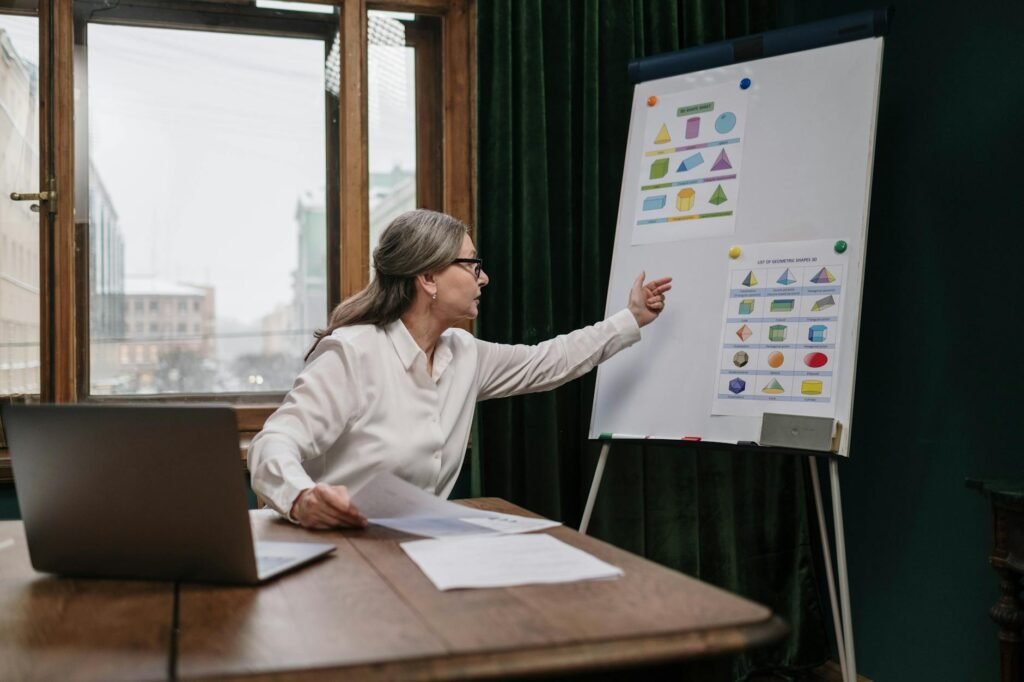
elderly woman teaching online

Photo by cottonbro studio on <a href="https://www.pexels.com/photo/elderly-woman-teaching-online-7013896/" rel="nofollow">Pexels.com</a>

The educational landscape is evolving rapidly, and mathematics education must keep pace. Conrad Wolfram’s Computer-Based Math (CBM) project, launched in 2010, aims to modernize math curricula by integrating computational tools into learning. This initiative emphasizes teaching students to understand, apply, and interpret mathematical concepts using computers, leaving routine calculations to machines.

The Problem with Traditional Math Education

Current math curricula remain heavily focused on manual computation, such as solving equations by hand or performing lengthy arithmetic. While these skills were essential in the pre-digital era, Wolfram argues that they no longer reflect the realities of how math is applied in the real world. Instead of emphasizing real-world problem-solving, today’s math instruction often reduces to teaching methods for performing calculations by hand.

Wolfram identifies three critical shortcomings in traditional math education:

  1. Overemphasis on manual computation: Students spend too much time learning steps for calculations that computers can perform.
  2. Lack of real-world context: Students rarely learn when or why they should use math.
  3. Limited focus on problem-solving: The emphasis on computation overshadows deeper conceptual understanding and practical applications.

A Curriculum That Assumes Computers Exist

Wolfram proposes a fundamental shift: design math curricula that assume the existence of computers. This approach enables students to focus on tasks that require human intelligence—such as defining problems, abstracting them into computable forms, interpreting results, and verifying their accuracy—while leveraging computers for repetitive calculations.

As Wolfram puts it:

“You don’t necessarily need to learn every step needed to solve a quadratic equation. You need to know what it is, how to set it up, verify the results, and understand its real-world applications.”

This philosophy aligns math education with modern technological realities, empowering students to tackle more complex and meaningful problems.

The Four-Step Computational Problem-Solving Process

Wolfram outlines a four-step process for computational problem-solving, which serves as the foundation for the CBM curriculum:

  1. Define the question: Identify the scope, context, and details of the problem.
  2. Abstract to computable form: Translate the problem into a precise representation (e.g., a formula, algorithm, or diagram) that a computer can solve.
  3. Compute answers: Use computational tools to solve the abstract problem.
  4. Interpret results: Contextualize the solution, validate its accuracy, and refine the approach if necessary.

This iterative process, described as a “problem-solving helix,” mirrors real-world problem-solving workflows.

Real-World Applications of Computer-Based Math

The CBM curriculum emphasizes solving real-world problems using computation. For example, a module titled How Fast Could I Cycle Stage 7 of the An Post Rás? asks students to analyze data, apply mathematical models, and use computational tools to generate solutions. Such projects illustrate the practical relevance of math and prepare students for careers in data science, engineering, and other computational fields.

Early Adopters and Global Reach

CBM has seen international interest. Estonia piloted a CBM-developed statistics course in collaboration with the University of Tartu. The African Leadership University incorporated CBM materials into its Data and Decisions curriculum. The project has also received support from organizations like UNICEF, which sponsored the 2013 Computer-Based Math Education Summit in New York.

Addressing Challenges

Transitioning to a computer-based curriculum comes with challenges, such as:

  • Integration with existing systems: Aligning CBM with traditional curricula and qualifications.
  • Teacher training: Equipping educators to teach computational problem-solving.
  • Access to technology: Ensuring students and schools have the necessary hardware and software.

Wolfram acknowledges these hurdles and emphasizes the importance of computational literacy, comparing its necessity in the AI age to the widespread need for literacy in the Industrial Age.

The Future of Math Education

In his book The Math(s) Fix (2020), Wolfram outlines his vision for a modern math curriculum designed for a world shaped by computing. He argues that computational literacy is essential for future generations and that curricula must reflect the integration of artificial intelligence and data science into daily life.

As computational disciplines like computational medicine, marketing, and agriculture continue to expand, math education must evolve to prepare students for these emerging fields. CBM offers a blueprint for aligning math instruction with the demands of the 21st century, fostering critical thinking, creativity, and practical problem-solving skills.

Conclusion

The Computer-Based Math project challenges educators, policymakers, and institutions to rethink traditional approaches to math education. By leveraging the power of computation, CBM promises to make math more relevant, engaging, and impactful for students worldwide. As Wolfram aptly states, the goal is not to abandon math but to redefine it for a digital world—teaching students not just how to calculate, but how to think.

Math Curriculum That Assumes Computers Exist@conradwolfram Speaks @EdSurge #learninghttps://t.co/CHOCTEKF9F …

— Kiran Johny (@johnywrites) April 3, 2019

Conrad Wolfram’s critique of math curriculum include the following:

  • Math instruction has become too fixated on computation (eg solving for x, for example) and removed from real-world applications and data.
  • Its necessary to have a math curriculum that assumes computers exist, and that they can calculate things for you.
  • According to Wolfram (Edsurge interview)
    “You don’t necessarily need to learn every step needed to solve a quadratic equation. You probably need to know what a quadratic equation is. You need to know how to set up the equation. You need to know how to verify the results, make sure that somehow you didn’t fooled. But most crucially, you need to know when you’re going to set up an equation, and why—which very few people coming out of school actually know.”
  • Wolfram’s Computer-based math project aims to redefine the subject based on computers doing the calculating The idea is to be able to use technology as you would in real life and solve much harder problems.
 

Continue Reading

Previous: 10 Transformative Insights on Learning and Education by Anna Julia Cooper
Next: Language-Induced Skills: How Rich Language Exposure Cultivates Mental Faculties

Categories

Archives

  • September 2025
  • July 2025
  • June 2025
  • May 2025
  • April 2025
  • March 2025
  • February 2025
  • January 2025
  • December 2024
  • November 2024
  • October 2024
  • September 2024
  • August 2024
  • July 2024
  • June 2024
  • May 2024
  • April 2024
  • March 2024
  • February 2024
  • January 2024
  • December 2023
  • November 2023
  • October 2023
  • September 2023
  • August 2023
  • July 2023
  • June 2023
  • May 2023
  • April 2023
  • March 2023
  • February 2023
  • January 2023
  • December 2022
  • November 2022
  • October 2022
  • September 2022
  • August 2022
  • July 2022
  • June 2022
  • May 2022
  • April 2022
  • March 2022
  • February 2022
  • January 2022
  • December 2021
  • November 2021
  • October 2021
  • September 2021
  • August 2021
  • July 2021
  • June 2021
  • May 2021
Copy Right © 2025–2026 Learning Science Digest (lsdigest.com). All rights reserved.

Copyright © 2025-2026 LsDigest.com

Copyright © 2025-2026 LsDigest.com | MoreNews by AF themes.