Skip to content

Learning-Science Digest

Fringe of Human Learning Technology and Emergence

Categories

  • 4E Cognition
  • Ability grouping
  • Accelerated learning
  • Acting/ Role play
  • Active learning
  • Active/ Action learning
  • Activities
  • Adaptive Learning
  • Administration & Leadership
  • Affordances
  • After-School Programs
  • Agency/ Autonomy
  • Analogy & Analogy based Learning
  • Anchored Instruction
  • Andragogy
  • Anthropology/ Ethnographic learning
  • Apprenticeship
  • Approaches
  • Apps
  • Artificial Intelligence
  • Assessment
  • Asynchronous Learning
  • Attitude
  • Banking model
  • Behavior Design
  • Behavioural
  • Belonging
  • Biology
  • Blended, Flipped, etc
  • books
  • Brain
  • Bricolage
  • Catholic Education
  • Causation
  • Coaching
  • Cognitive Diversity
  • Cognitive Load
  • Cognitive Science
  • Collaborative learning
  • Communities of practice
  • Competency-Based Learning
  • Complexity Theory
  • Compliance Training
  • Computational Learning
  • Computer Based Math
  • Concept Differences
  • Concept similarity
  • Connected Learning
  • Connectivism
  • Constraints
  • Constraints-Led Approach
  • Constructionism
  • Constructivism
  • Contextualized Learning
  • Contrast and Polarity
  • Courses
  • Creativity/ Innovation
  • Critical articles
  • Critical Pedagogy
  • Critical Thinking
  • Cultural Intelligence
  • Cultural Learning
  • Cumulative culture
  • Curriculum
  • Curriculum Design
  • Deliberate Practice
  • Design Science/ Approaches
  • Desirable Difficulty
  • Dialogic Learning
  • Differential learning
  • Digital Learning
  • Direct Instruction/ KLC
  • Disability and Learning
  • Discovery Learning
  • Discussion/ Debate
  • Disposition/Propensity
  • Distributed Cognition/ Learning
  • DIY learning/ Edupunk
  • Dynamics and learning
  • Early Intervention
  • Ecological Approch
  • Ecological Dynamics
  • Ed-tech
  • Education
  • Education Models
  • Education Policy
  • Education Thinkers
  • Effectuation
  • Elaboration
  • Embedded Cognition
  • Embodied Cognition
  • Emergence
  • Emergency learning
  • Emerging technology
  • Emulative learning
  • Enactive learning
  • Enskilment
  • Entangled pedagogy
  • Entrepreneurial Learning
  • Ethics and Moral learning
  • Evaluation
  • Evidence
  • Evolution and Learning
  • Exams
  • Exaptation
  • Exercise
  • Experiential Learning
  • Expertise
  • Explicit instruction
  • Extended Cognition
  • Family/ Religion
  • Feedback
  • Frameworks
  • Future Of Learning
  • Games/ Gamification
  • Generation Effect
  • Generative AI
  • Genius
  • Geragogy
  • Grading
  • Happiness and learning
  • Heuristics
  • Heutagogy
  • Higher Education
  • History Of Education
  • Home Slider
  • Home/ Home Schooling/ Learning
  • Homework
  • Human Machine Interface
  • Humor
  • Hypercorrection
  • Improvisation
  • Informal Learning
  • Innovation
  • Inquiry
  • Instructional Design
  • Instrumentalism
  • Intelligence
  • Interviews
  • Job training
  • Knowledge Rich Curriculum
  • Knowledge: Types. etc.
  • Labelling
  • Language Learning
  • Law and Legal Learning
  • Learning and Development
  • Learning Difficulties
  • Learning Environments
  • Learning for life
  • Learning in Chaos
  • Learning in complexity
  • Learning Management System
  • Learning Myths
  • Learning Programming
  • Learning Science
  • Learning Stations
  • Learning Systems
  • Learning Techniques/Methods
  • Learning Thinkers
  • Learning under anxiety/pressure/stress
  • Learning/ Teaching Strategies
  • Learning/ Understanding By Design
  • Looping effect
  • Maker Learning
  • Mastery
  • Mathew Effect
  • Maths Learning
  • Measurement
  • Medical Education/Learning
  • Memory
  • Meta-Analysis
  • Meta-Cognition
  • mindset
  • Mnemonics
  • Montessori
  • Motivation
  • Motor Learning
  • Music/ Arts and Learning
  • Mystagogy
  • Needs and Need based Learning
  • Networked Learning
  • Networks and Ecosystem
  • Neurodivergence
  • Neuroscience
  • Non Computational
  • Non-Representational
  • Nonlinear Pedagogy
  • Novelty and learning
  • Observational learning
  • On-the-Job Training
  • Online and MOOC Learning
  • outdoor-education
  • Pedagogy
  • Peer Learning
  • Personalized Learning
  • Philosophy Of Education
  • Philosophy Of Learning
  • Philosophy Of Science
  • Place-Based Learning
  • Play/ Ludic Pedagogy
  • Policy
  • Pragmatism
  • Problem-based learning
  • Productive Failures
  • Professional education
  • Professional Learning
  • Progressive Education
  • Project Based Learning
  • Proximity and Learning
  • Psychological Issues
  • Question asking/ Question design
  • Reading , Literacy , etc
  • Recognition
  • Reification/ Reductionism
  • Relational Expertise
  • Relational Learning
  • Religion
  • Research
  • Resting/ offline consolidation
  • Retrieval
  • Salience/Closeness
  • Scaffolding
  • Science Of Learning
  • self-efficacy
  • Self-Organization
  • Self-Paced Learning
  • Self-Regulated/ Self-Directed
  • Service Learning
  • Short Concept Introduction
  • Signalling
  • Simulation or Simulative Learning
  • Situated Learning
  • Skill
  • Sleep and Rest
  • Social Effects
  • Social Learning
  • Social-emotional learning
  • Society-Ecosystem etc
  • Socioeconomic Factors
  • Sociology Of Learning
  • Software And Technology Review
  • Speaking/Public Speaking
  • Spiral design
  • Sports learning
  • Sports Science
  • Story/Narrative based learning
  • Studying
  • Teacher/ teaching
  • Testing
  • Theology and learning
  • Theories
  • Tools, Aids, Artifacts
  • Training
  • Training Needs Analysis
  • Transdisciplinary/ Interdisciplinary, etc
  • Transfer Of Learning
  • Trending News
  • Uncategorized
  • Uncertainty and learning
  • Variable Practice
  • Vicarious learning
  • Video playlist
  • Virtual, Augmented, etc
  • Visible Learning/ Hattie
  • Visual Learning/Drawing
  • Vocational Education
  • Wakeful Resting
  • Work Place Learning
  • Workshop Model
  • Zone of Proximal Development (ZPD)
Primary Menu
  • Home
  • About
  • Thinkers
    • Learning Thinkers
    • Education Thinkers
  • Design For Learning
    • Design Science/ Approaches
    • Instructional Design
    • Behavior Design
    • Curriculum Design
    • Learning/ Understanding By Design
    • Motivation
    • Ecological Approch
    • Blended, Flipped, etc
    • Games/ Gamification
  • Tools/Techniques/Methods
    • Learning Techniques/Methods
    • Education Models
    • Testing
    • Retrieval
    • Blended, Flipped, etc
    • Differential learning
    • Dialogic Learning
    • Computer Based Math
    • Tools, Aids, Artifacts
    • Knowledge Rich Curriculum
    • Cognitive Load
    • Online and MOOC Learning
    • Scaffolding
    • Contrast and Polarity
    • Play/ Ludic Pedagogy
    • Problem-based learning
    • Cultural Learning
    • Direct Instruction/ KLC
    • Deliberate Practice
    • Visual Learning/Drawing
    • Games/ Gamification
    • Acting/ Role play
    • Analogy & Analogy based Learning
    • Inquiry
    • Improvisation
    • Constructionism
    • Situated Learning
    • Productive Failures
    • Anthropology/ Ethnographic learning
    • Project Based Learning
    • Connected Learning
    • Nonlinear Pedagogy
    • Personalized Learning
    • Maker Learning
    • Virtual, Augmented, etc
    • Service Learning
    • Constructivism
    • Connectivism
    • Vicarious learning
    • Active/ Action learning
    • Computational Learning
    • Relational Learning
    • Apprenticeship
    • Communities of practice
    • Home/ Home Schooling/ Learning
    • Contextualized Learning
    • DIY learning/ Edupunk
    • Constraints-Led Approach
    • Peer Learning
  • Domains
    • Language Learning
    • Entrepreneurial Learning
    • Maths Learning
    • Sports Science
    • Theology and learning
    • Sports learning
    • Professional education
    • Law and Legal Learning
    • Catholic Education
    • Higher Education
    • Medical Education/Learning
    • Work Place Learning
    • Learning Programming
    • On-the-Job Training
    • Job training
    • Compliance Training
  • Approaches
    • Neuroscience
    • Social Learning
    • Ecological Approch
    • 4E Cognition
    • Active learning
    • Transfer Of Learning
    • Cumulative culture
    • Embodied Cognition
    • Evolution and Learning
    • Embedded Cognition
    • Differential learning
    • Dialogic Learning
    • Experiential Learning
    • Learning Environments
    • Cultural Intelligence
    • Enactive learning
    • Constraints-Led Approach
    • Non-Representational
    • Self-Organization
    • Relational Learning
    • Relational Expertise
    • Enskilment
    • Extended Cognition
    • Distributed Cognition/ Learning
  • Artificial Intelligence
  • Education Policy
  • Expertise
Subscribe or Login
  • Home
  • Analogy & Analogy based Learning
  • Analogy as Exaptive Intelligence in Human Learning and Cultural Evolution
  • Analogy & Analogy based Learning
  • Cultural Intelligence
  • Cultural Learning
  • Cumulative culture
  • Exaptation

Analogy as Exaptive Intelligence in Human Learning and Cultural Evolution

Jacob Chacko April 2, 2022
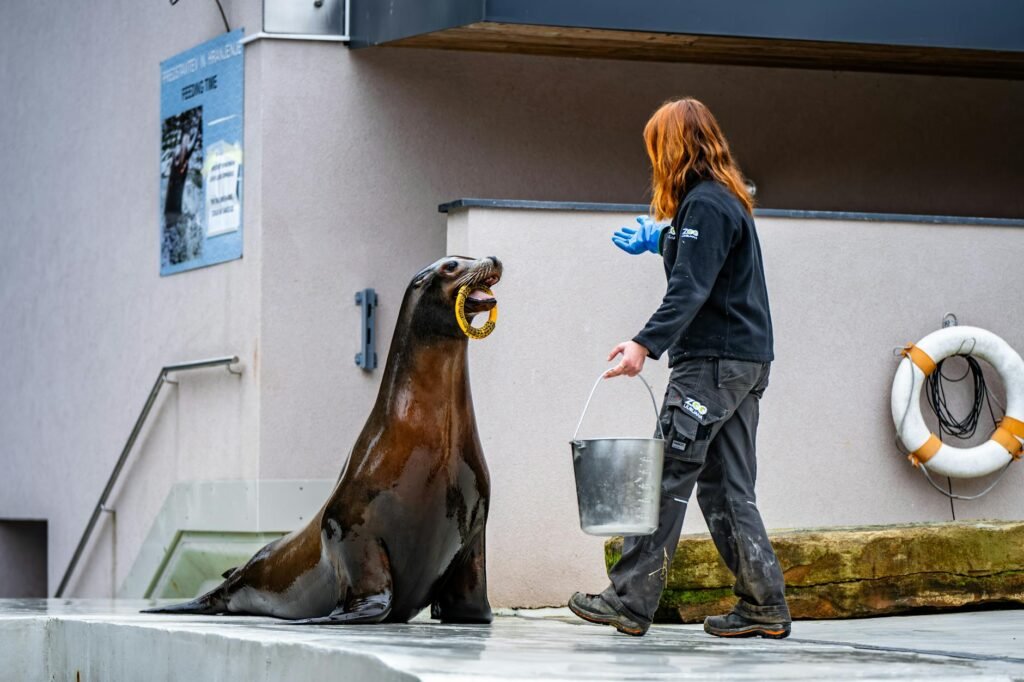
seal training session at ljubljana zoo

Photo by Matej Bizjak on <a href="https://www.pexels.com/photo/seal-training-session-at-ljubljana-zoo-30466581/" rel="nofollow">Pexels.com</a>

In the vast landscape of human cognition, analogy stands as a remarkable mechanism that not only facilitates understanding but also drives innovation and cultural evolution. Essentially, analogy is a form of exaptive intelligence—a cognitive process that repurposes existing knowledge structures to solve new problems. By drawing connections between seemingly disparate concepts, analogies enable humans to build upon prior knowledge, create new meanings, and accelerate learning.

The Role of Analogy in Human Cognition

Analogies function as powerful cognitive shortcuts, allowing individuals to grasp unfamiliar concepts by linking them to known experiences. The ability to recognize similarities between different domains enables problem-solving, conceptual development, and knowledge transfer. Unlike computational models of cognition that rely on rule-based processing, human thinking is deeply shaped by pattern recognition and analogy-building, making it a dynamic and adaptive process.

The Catalyst for Cumulative Cultural Evolution

The paper Analogy as a Catalyst for Cumulative Cultural Evolution by Brand et al. provides compelling evidence for the foundational role of analogy in the progression of human culture. The authors argue that analogy-building is not merely a cognitive trick but a fundamental mechanism that enables the transmission and refinement of cultural knowledge. They highlight how analogies have historically served as scaffolding for complex ideas, contributing to the evolution of communication, science, and education.

Analogies and the Evolution of Language

One of the most fascinating insights from Brand et al. is that analogy-building may have preceded modern language. Before fully developed linguistic structures emerged, early humans might have relied on analogical thinking to convey ideas and share experiences. By associating new concepts with familiar sensory experiences, early humans could communicate effectively even with limited vocabulary. This suggests that analogy played a crucial role in the evolution of human intelligence and linguistic expression.

Storytelling as a Communal Analogy Pool

Another key idea from the paper is that storytelling functions as a communal analogy pool. Shared narratives—ranging from folklore to religious parables—serve as repositories of knowledge that can be adapted and applied across generations. These stories encode cultural wisdom in a way that makes it easily accessible and transferable.

For example, Aboriginal “dreamtime” stories encapsulate survival strategies, environmental knowledge, and social values through rich analogical narratives. By embedding practical lessons within engaging tales, these cultures ensure that essential knowledge persists across generations without requiring direct experience.

Analogies in Science and Education

Brand et al. also highlight how analogies serve as essential tools in science communication. Scientific concepts often involve abstract or counterintuitive ideas, making them difficult to grasp without proper framing. Analogies bridge this gap by connecting scientific phenomena to familiar concepts.

For example:

  • The structure of an atom is often described as a miniature solar system.
  • Enzymes are compared to locks and keys to explain molecular interactions.
  • Electrical circuits are likened to flowing water to illustrate voltage and resistance.

These metaphors make complex ideas more comprehensible and facilitate cumulative knowledge building in both formal education and scientific discovery.

The Dual Nature of Analogies in Learning

While analogies aid in the early stages of understanding, they also pose a challenge. Oversimplified analogies may become limiting as knowledge deepens. For instance, while the solar system analogy for atoms is useful, it becomes misleading when considering quantum mechanics. Thus, analogy-driven learning must be complemented by refinement and revision to ensure continued cognitive development.

The Future of Analogy Research in Cultural Transmission

Brand et al. propose further research into the role of analogy in cumulative cultural evolution. They suggest designing experimental studies to test how analogies facilitate the transmission of complex skills and knowledge. Such research could illuminate the cognitive and neural mechanisms underlying cultural learning and innovation.

Conclusion: The Exaptive Power of Analogies

By positioning analogies as a form of exaptive intelligence, we gain a deeper appreciation of their role in human cognition. Analogies allow us to repurpose existing knowledge, accelerate learning, and drive cultural evolution. From ancient storytelling traditions to modern scientific breakthroughs, analogical reasoning remains at the heart of human intellectual progress.

As society continues to evolve, understanding and refining the use of analogies in education, communication, and problem-solving will be essential for fostering innovation and expanding human knowledge. The work of Brand et al. offers a powerful reminder that the ability to see connections where others see divisions is what makes human intelligence so uniquely adaptive and transformative.

Continue Reading

Previous: 10 Insights from Robert Morant on Learning and Education
Next: Mathew Effect In Learning

Categories

Archives

  • September 2025
  • July 2025
  • June 2025
  • May 2025
  • April 2025
  • March 2025
  • February 2025
  • January 2025
  • December 2024
  • November 2024
  • October 2024
  • September 2024
  • August 2024
  • July 2024
  • June 2024
  • May 2024
  • April 2024
  • March 2024
  • February 2024
  • January 2024
  • December 2023
  • November 2023
  • October 2023
  • September 2023
  • August 2023
  • July 2023
  • June 2023
  • May 2023
  • April 2023
  • March 2023
  • February 2023
  • January 2023
  • December 2022
  • November 2022
  • October 2022
  • September 2022
  • August 2022
  • July 2022
  • June 2022
  • May 2022
  • April 2022
  • March 2022
  • February 2022
  • January 2022
  • December 2021
  • November 2021
  • October 2021
  • September 2021
  • August 2021
  • July 2021
  • June 2021
  • May 2021
Copy Right © 2025–2026 Learning Science Digest (lsdigest.com). All rights reserved.

Copyright © 2025-2026 LsDigest.com

Copyright © 2025-2026 LsDigest.com | MoreNews by AF themes.