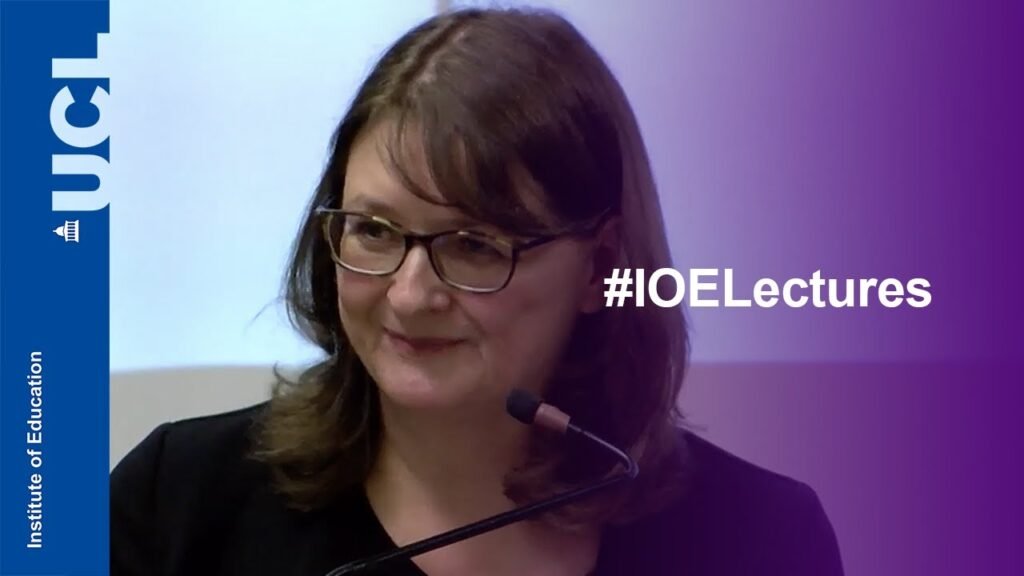
In her 2020 paper “A Problem for Cognitive Load Theory—the Distinctively Human Life-form”, Professor Jan Derry of UCL uses philosopher Robert Brandom’s Inferentialism to critically assess the core assumptions underlying Cognitive Load Theory (CLT) and, more broadly, constructivist pedagogies. Derry challenges the assumptions about knowledge, learning, and human cognition that have shaped these educational paradigms. She critiques the representationalist framework implicit in CLT, proposing an alternative perspective grounded in human action, mediation, and normativity. This post reviews Derry’s arguments through the lens of Brandom’s inferentialist philosophy, exploring the implications of this critique for education and learning, while also considering how it might fit with ecological and enactive perspectives.
Cognitive Load Theory: A Quick Overview
Cognitive Load Theory (CLT), developed by John Sweller, posits that human working memory has limited capacity and that instructional designs should aim to minimize extraneous cognitive load to enhance learning. It emphasizes structured, teacher-guided instruction to optimize learning processes by reducing the cognitive burden on learners. However, Derry identifies a major flaw in CLT’s approach: its reliance on a representationalist view of cognition, where knowledge is seen as a mere internal representation of the world.
This view assumes a sharp separation between mind and world—where the mind stores mental representations that mirror external states of affairs. CLT, according to Derry, makes the error of presupposing that the mind functions primarily by representing things, and that these representations can be isolated from the social, communicative, and normative contexts in which they arise.
Brandom’s Inferentialism: A New Lens on Cognition
At the heart of Derry’s critique is her adoption of Robert Brandom’s Inferentialism, a philosophical framework that emphasizes the social and normative nature of cognition. According to Brandom, meaning is not derived from static representations of the world, but from the inferential connections we make in discourse and social practice. In this view, the mind and the world are not distinct; rather, our cognitive structures emerge and evolve through inferences made within a social context.
Brandom’s Inferentialism proposes that the meanings of concepts and words are grounded in the roles they play within a network of inferences—how terms and concepts relate to one another in practical, communicative, and social contexts. For example, to understand the concept of “dog,” one must be involved in a web of inferences involving both the word dog and experiences, relationships, and practices surrounding dogs. Knowledge is not merely about mental representations; it is about engaging with others through reasoned discourse and shared practices.
Derry applies this philosophy to critique both CLT and constructivist approaches. While CLT emphasizes direct guidance and structured instruction to help learners acquire representations, and constructivism celebrates self-discovery and inquiry-based learning, both fail to account for the deeper social, normative, and inferential processes that constitute meaningful learning.
Possessive Individualism and the Disconnect in Pedagogy
One of the core issues Derry highlights in her critique is the notion of possessive individualism. Drawing from C.B. Macpherson’s critique of liberal philosophy, Derry argues that both CLT and some constructivist models presuppose that individuals possess cognitive capacities, beliefs, and desires as private possessions, rather than seeing them as interdependent with social contexts. In other words, these models fail to recognize that cognitive capacities are socially mediated and normatively structured.
For Derry, this critique means that both pedagogical approaches fail to see the importance of engaging students in the inferential relationships that make concepts meaningful. In CLT, learners are viewed as passive recipients of information, their minds burdened by cognitive overload. In constructivism, learners are encouraged to construct knowledge independently, but without enough consideration for the inferential connections that help learners engage with the broader community of knowledge.
The Role of Mediation and Normativity in Learning
By invoking inferentialism, Derry pushes educators to rethink the role of mediation and normativity in learning. She argues that instead of treating representations as the primary units of cognition, we should focus on how learners engage in inferential relations that mediate meaning. In this view, a learner’s cognitive development isn’t just about acquiring representations of the world, but about entering into the inferential network that constitutes meaning and knowledge.
This shift has significant implications for pedagogy. Instruction should not merely aim to transmit information or foster independent discovery, but to bring learners into the social and normative practices that underpin inferential thinking. This reorientation places emphasis on how learners interact with each other, the teacher, and the community of knowledge to form connections and meaning.
Connecting Inferentialism with Ecological and Enactive Perspectives
As someone deeply interested in the diversities of ideas in education, this critique offers an exciting opportunity to connect Derry’s ideas with ecological and enactive perspectives on learning. Both these perspectives emphasize the importance of purpose, intention, and meaning in learning—key themes that resonate with Derry’s critique of CLT and constructivism.
Ecological psychology, as proposed by scholars like James Gibson, focuses on how perception and action are situated in a specific environment. In this view, knowledge isn’t just internalized; it’s grounded in interactions with the world. Similarly, enactivism (associated with thinkers like Francisco Varela) posits that cognition is embodied and situated in real-world contexts. These perspectives align closely with Brandom’s inferentialism, which stresses the social and contextual dimensions of meaning.
Both ecological and enactive theories, much like Derry’s critique of CLT, challenge the static and isolated notion of cognition. Rather than thinking of knowledge as a private representation stored in the mind, these theories emphasize how knowledge is embodied in action and constructed through social interaction and engagement with the world. Thus, Derry’s critique invites us to think about how educational practices can foster not just the acquisition of knowledge but the capacity for inferential thinking, deeply grounded in social, environmental, and cultural contexts.
The Experiment of Martin Hughes and Margaret Donaldson
One compelling piece of evidence Derry draws upon is the experiment by Martin Hughes and Margaret Donaldson, which reexamined Piaget and Inhelder’s famous mountain task experiment. Originally, Piaget’s task demonstrated that young children struggled to understand a different perspective, but Hughes and Donaldson showed that when the children were asked to engage with the task in a way that was relevant to their own goals or intentions, they could succeed.
This experiment highlights the importance of purpose and intention in human cognition, a key insight of inferentialism. It shows that cognition cannot be reduced to mere representations of objects or perspectives; rather, it is about the dynamic and inferential relationships between agents, their intentions, and the world around them.
Conclusion: A Call for a New Educational Paradigm
Derry’s paper presents a profound critique of two dominant educational paradigms: Cognitive Load Theory and certain strands of constructivism. By drawing on Brandom’s Inferentialism, she challenges the representationalist view that underpins both approaches and calls for a more relational, socially grounded understanding of cognition.
For educators and researchers, this perspective provides a valuable framework for rethinking instructional design and pedagogy. It calls for a shift away from passive reception of information or isolated discovery and toward an active engagement in the inferential networks that constitute meaning. In doing so, it also invites connections with ecological and enactive approaches, which highlight the embodied, situated nature of learning.
Ultimately, Derry’s critique encourages us to rethink not just how we teach, but what it means to truly understand and engage with knowledge. This rethinking is essential for fostering more meaningful, contextually aware, and socially responsible learning environments.
Watch Jan Derry discuss these core themes in the video Knowledge in Education: Why Philosophy Matters.