
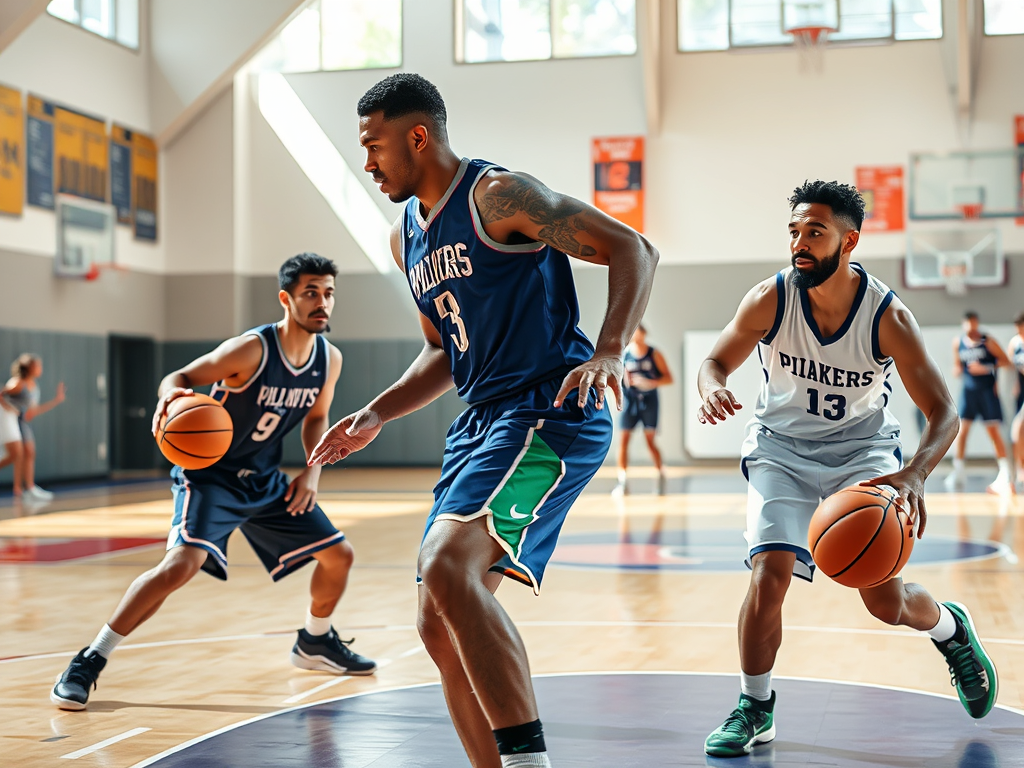
When it comes to skill development, especially in high-stakes fields like sports, education, or professional growth, the debate between block practice and randomized practice continues to captivate experts and learners alike. To truly understand how to master a skill and ensure it transfers effectively to real-world scenarios, it is essential to delve into the science behind these two training approaches.
Block Practice: Laying the Foundation for Mastery
Block practice refers to the method of practicing a single skill repeatedly without variations. Imagine a basketball player taking 50 free throws in a row. This approach is straightforward and allows for concentrated focus on refining a specific skill. Block practice is particularly effective for:
- Building Muscle Memory: Repetition ingrains the mechanics of a skill, making it second nature.
- Reducing Cognitive Load: Since the task remains constant, learners can focus purely on execution without distraction.
- Immediate Feedback Loops: Mistakes can be quickly identified and corrected within the repetitive cycle.
However, block practice has its limitations. While it is an excellent tool for mastering a skill in isolation, it often fails to replicate the variability and unpredictability of real-life situations.
Randomized Practice: Bridging the Gap to Real-World Application
Randomized practice, on the other hand, involves practicing a skill in a more variable and dynamic environment. For instance, instead of taking 50 free throws consecutively, a basketball player might alternate between free throws, three-point shots, and layups. This approach mimics the unpredictability of game conditions and enhances:
- Contextual Adaptation: Learners are forced to adapt to changing scenarios, which better prepares them for real-world application.
- Cognitive Flexibility: Switching tasks requires constant mental engagement, fostering better decision-making under pressure.
- Skill Transfer: By practicing under conditions that resemble actual performance environments, skills are more likely to transfer seamlessly to games or real-world tasks.
Despite its advantages, randomized practice can feel chaotic and less structured, making it challenging for beginners who have not yet mastered the foundational elements of a skill.
The Mastery-Transfer Continuum
The distinction between block and randomized practice aligns closely with two key stages of skill development: mastering the skill and transferring the skill.
- Mastering a Skill: Block practice excels during this phase. It allows learners to isolate and refine individual components of a skill until they become automatic. For example, a basketball player learning the perfect shooting form benefits from repetitive, uninterrupted practice to establish consistency and confidence.
- Transferring a Skill: Once a skill is mastered, randomized practice becomes essential. Transferring a skill involves applying it in dynamic, unpredictable situations—exactly the kind of conditions that randomized practice replicates. A player who can shoot perfectly in practice but struggles under game pressure has not fully transferred their skill.
The Pitfall of Premature Randomization
Transitioning to randomized practice too early can undermine skill development. Without a solid foundation, learners risk transferring skills that are incomplete or inconsistent. This often leads to frustration and suboptimal performance. The key is to strike a balance: ensure mastery through block practice before integrating variability through randomized practice.
Applying the Science of Basketball Skill Development
Basketball provides a compelling example of how these principles work in tandem. Here’s a practical framework:
- Early Stages: Block Practice
- Focus on mastering individual skills like dribbling, shooting, or passing through repetition.
- Prioritize consistency and proper form.
- Intermediate Stages: Introduce Randomization
- Begin to add variability, such as changing shooting spots or integrating defenders during drills.
- Emphasize adaptability while maintaining foundational mechanics.
- Advanced Stages: Full Randomization
- Simulate real-game conditions with scrimmages, time constraints, and decision-making challenges.
- Encourage creativity and strategic thinking.
Striking the Right Balance
Both block and randomized practice are indispensable for skill development, but their effectiveness depends on the learner’s stage and goals. Block practice builds the foundation; randomized practice brings that foundation to life. By understanding when and how to apply these approaches, coaches, educators, and learners can optimize performance and ensure long-term success.
B
About the Author
