
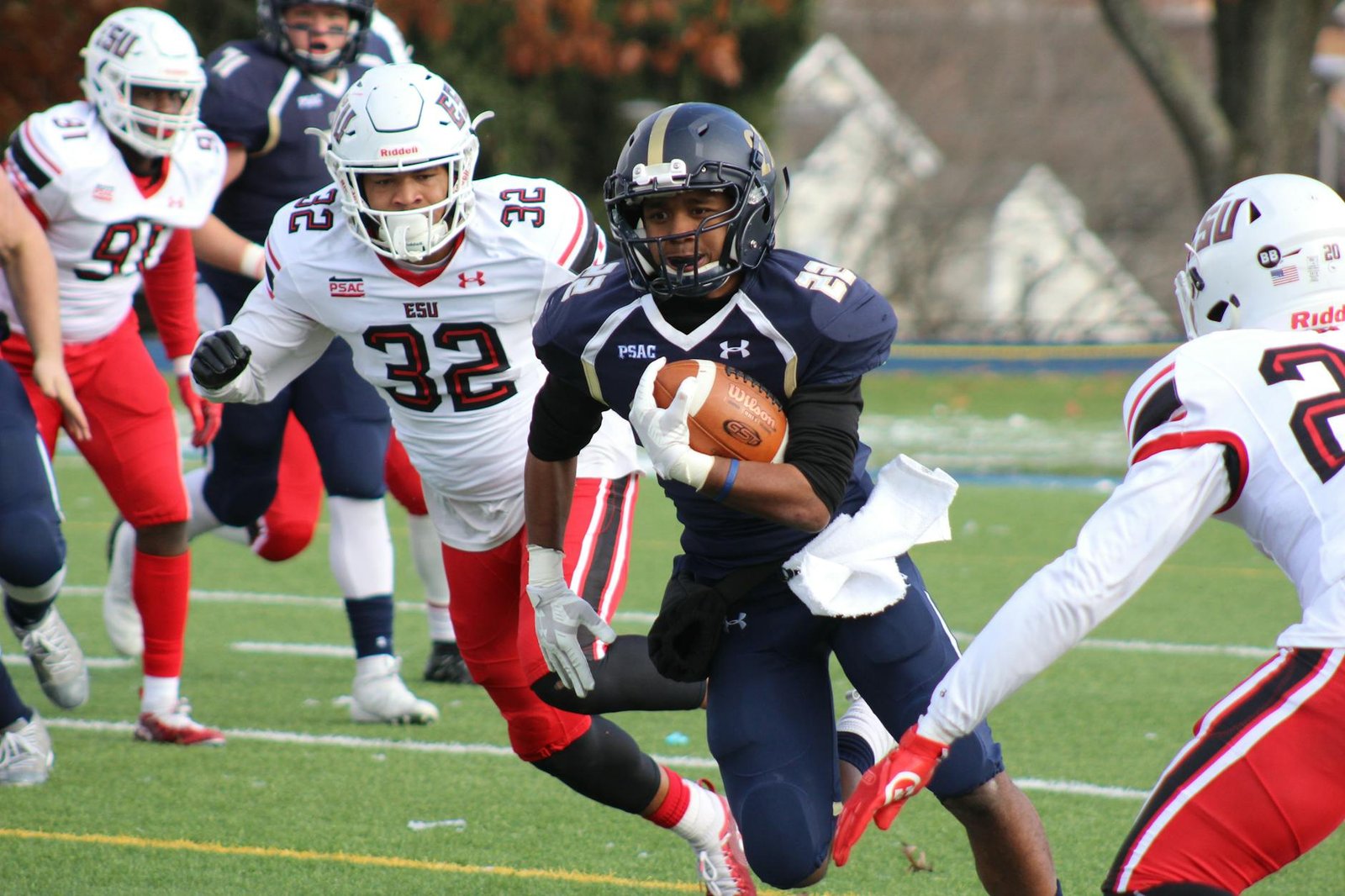
Traditional sports coaching often relies on linear, repetitive drills—isolating a single technique, perfecting it in a static environment, and hoping it transfers to the chaos of competition. Yet real sports rarely unfold in predictable sequences. Athletes must constantly perceive shifting cues, adapt to unpredictable opponents, and coordinate movements under pressure.
To bridge the gap between practice and competition, modern skill acquisition has turned toward complexity-friendly frameworks. Rooted in dynamical systems theory and ecological psychology, these approaches treat the athlete and the sporting environment as a single, coupled system rather than a machine executing pre-programmed commands.
Below is a curated overview of four foundational frameworks and the key academic works that define them.
1. The Constraints-Led Approach (CLA)
Grounded in Karl Newell’s (1986) seminal model of motor coordination—which proposed that movement emerges from the interaction of organismic, environmental, and task constraints—the Constraints-Led Approach was spearheaded and popularized in sports science primarily by Keith Davids and colleagues. Rather than prescribing a single “ideal” movement template, the CLA shifts the coach’s role from technical instructor to environment designer.
By systematically manipulating three categories of boundary conditions, coaches channel athletes toward functional movement solutions:
- Organismic (Performer) constraints: Individual structural and functional characteristics such as height, strength, fatigue, anxiety, or tactical experience.
- Environmental constraints: External physical and social conditions, including weather, playing surface, lighting, and crowd noise.
- Task constraints: Rules of the game, playing area dimensions, equipment scaling, and specific session goals.
Through continuous interaction with these constraints, athletes engage in self-organization, discovering adaptable ways to solve movement problems on their own.
Key Literature:
- Newell, K. M. (1986). Constraints on the development of coordination. In M. G. Wade & H. T. A. Whiting (Eds.), Motor Development in Children: Aspects of Coordination and Control (pp. 341–360). Martinus Nijhoff.
- Davids, K., Button, C., & Bennett, S. (2008). Dynamics of Skill Acquisition: A Constraints-Led Approach. Human Kinetics.
- Renshaw, I., Davids, K., Newcombe, D., & Roberts, W. (2019). The Constraints-Led Approach: Principles for Sports Coaching and Practice Design. Routledge.
2. Ecological Dynamics
Where the Constraints-Led Approach provides the practical methodology for practice design, Ecological Dynamics supplies the overarching theoretical framework. Formulated in sports science by Duarte Araújo, Keith Davids, and Robert Hristovski, this perspective integrates ecological psychology (specifically James Gibson’s theory of direct perception) with dynamical systems theory to explain how perception, action, and decision-making operate at the performer–environment scale.
From an ecological dynamics perspective, decisions are not computed in isolation inside the athlete’s head and then executed by the body. Instead, athletes perceive affordances—opportunities for action offered by the environment—in real time as they move. Consequently, effective practice requires representative learning design: structuring training tasks so that the informational cues and action fidelity mirror those of actual competition.
Key Literature:
- Araújo, D., Davids, K., & Hristovski, R. (2006). The ecological dynamics of decision making in sport. Psychology of Sport and Exercise, 7(6), 653–676.
- Pinder, R. A., Davids, K., Renshaw, I., & Araújo, D. (2011). Representative learning design and functionality of research and practice in sport. Journal of Sport and Exercise Psychology, 33(1), 146–155.
3. Nonlinear Pedagogy
Translating ecological dynamics and the constraints-led model directly into physical education and coaching pedagogy, Jia Yi Chow, working closely with Keith Davids, Chris Button, Rick Shuttleworth, Ian Renshaw, and Duarte Araújo, formalized Nonlinear Pedagogy. This framework addresses a fundamental reality of complex biological systems: skill acquisition does not progress in a neat, linear progression. Learners experience plateaus, sudden breakthroughs, and regressions as they explore new coordination patterns.
Nonlinear Pedagogy embraces this variability. Instead of enforcing uniform, repetitive drills for every learner, it advocates for flexible teaching strategies that manipulate task constraints, reduce excessive verbal instruction, and encourage exploratory learning. By embracing functional movement variability, coaches help athletes develop resilient movement solutions capable of withstanding competitive pressure.
Key Literature:
- Chow, J. Y., Davids, K., Button, C., Shuttleworth, R., Renshaw, I., & Araújo, D. (2006). Nonlinear pedagogy: A constraints-led framework for understanding emergence of game play and movement skills. Nonlinear Dynamics, Psychology, and Life Sciences, 10(1), 71–103.
- Chow, J. Y., Davids, K., Button, C., Shuttleworth, R., Renshaw, I., & Araújo, D. (2007). The role of nonlinear pedagogy in physical education. Review of Educational Research, 77(3), 251–278.
- Chow, J. Y., Davids, K., Button, C., & Renshaw, I. (2016). Nonlinear Pedagogy in Skill Acquisition: An Introduction. Routledge.
4. Differential Learning
Introduced by German movement scientist Wolfgang Schöllhorn in the late 1990s, Differential Learning offers a radical, systems-dynamics-driven challenge to traditional repetition and error correction. Classic motor learning assumes that repeating an “ideal” technique grooves a stable motor program. Drawing on Nikolai Bernstein’s principle of “repetition without repetition” and the physics concept of stochastic resonance, Schöllhorn argues that because no two movements are ever identical, fluctuations and “noise” act as essential drivers of learning rather than errors to be eliminated.
In Differential Learning, coaches intentionally introduce continuous, wide-ranging movement variations from trial to trial—without giving corrective feedback on which execution is “right”. By forcing the athlete’s neuro-muscular system to constantly interpolate across diverse movement boundaries, the athlete develops heightened self-organization, adaptability, and resilience when novel, unpredictable situations arise in competition.
Key Literature:
- Schöllhorn, W. I. (1999). Individualität – ein vernachlässigter Parameter? [Individuality – a neglected parameter?]. Leistungssport, 29(2), 5–12.
- Schöllhorn, W. I., Hegen, P., & Davids, K. (2012). The nonlinear nature of learning – A differential learning approach. The Open Sports Sciences Journal, 5(1), 100–112.
Bringing Complexity into Practice
Together, these four frameworks point toward a unified paradigm shift in sports education: moving away from rigid, coach-centered prescription toward dynamic, learner-centered exploration. By engaging with the foundational research of Newell, Davids, Araújo, Chow, Renshaw, and Schöllhorn, coaches and educators can design practice environments that respect the true complexity of athletic performance—preparing athletes not merely to repeat a skill in isolation, but to adapt when the game demands it.
About the Author
