
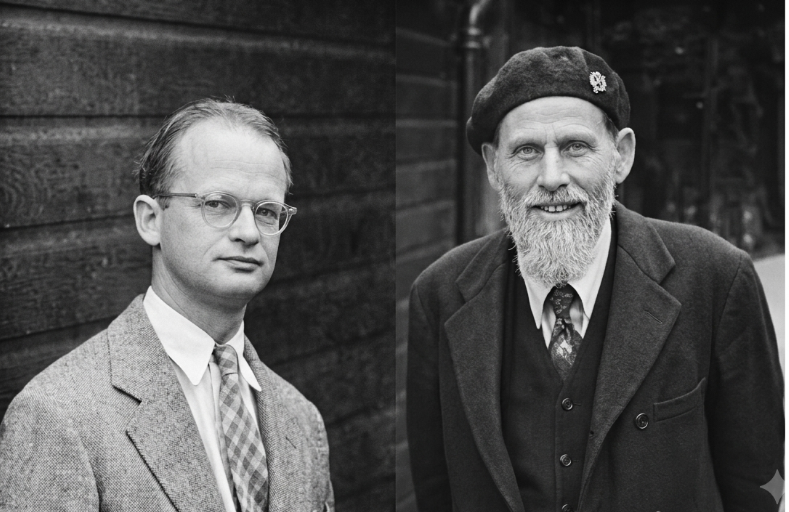
Continuing the Cognitive Science sub-series with the paper that turned neurons into logic gates—and gave the cognitive science its first computational model of the mind.
Key Takeaway for Learning Science and Design
What this paper means for learning: McCulloch and Pitts demonstrated that the brain can be modeled as a logical machine—a network of all-or-none units whose activity can be described by propositions and computed by formal rules. For learning science and design, this is the moment the mind became a computable system. It provided the first rigorous justification for treating learning as a process of information processing rather than a mysterious change in an immaterial soul. It gave later researchers—Hebb, Rosenblatt, the connectionists, and modern AI—the vocabulary of neural networks, thresholds, activation, and computation. And for learning design, it established a foundational principle: if the learner is a computational system, then instruction can be designed by understanding the inputs, representations, and transformations that system performs. The paper does not say how learning happens, but it says what kind of thing a learner is—and that, in turn, shapes everything that follows about how to design for learning.
10 Key Insights from the Paper
- The neuron is an all-or-none device. Because a neuron either fires or does not fire, its activity can be treated as a proposition—true or false.
- Nervous nets can be described by propositional logic. The relations among neural events correspond to logical relations among propositions: conjunction, disjunction, negation.
- Every logical expression can be realized by a neural net. For any logical expression satisfying certain conditions, one can construct a net of neurons that behaves exactly as the expression describes.
- Nets without circles are simple. Nets with no feedback loops can be solved in terms of temporal propositional expressions—logical formulas that refer to past states.
- Nets with circles are complex. Feedback loops allow activity to reverberate indefinitely, so the behavior of such nets may depend on events indefinitely far in the past.
- Inhibition can be treated as logical negation. An inhibitory synapse prevents firing, which is equivalent to negating a proposition.
- Many physiological assumptions are equivalent. Relative and absolute inhibition, facilitation and spatial summation, extinction and inhibition—all can be replaced by equivalent nets that produce the same results, perhaps with different timing.
- Learning can be modeled as structural change. The formation of new synapses, or equivalent changes in threshold, can be represented by circles in the net—feedback loops that alter the net’s behavior permanently.
- The theory provides a psychological justification for computability. Any number computable by an organism is computable by a Turing machine, and vice versa. The theory thus connects neural nets to the formal theory of computation.
- The mind is immanent in the net. Mental events—perception, memory, reasoning—are not ghostly additions to the nervous system but the activity of the net itself, specified by its structure and connections.
A Paper That Changed What a Brain Could Be
In 1943, Warren S. McCulloch, a neurophysiologist at the University of Illinois, and Walter Pitts, a young logician with no formal academic position, published a paper in the Bulletin of Mathematical Biophysics that would become one of the founding documents of cognitive science and artificial intelligence. The title is forbidding: A Logical Calculus of the Ideas Immanent in Nervous Activity. The argument is not. It is that the brain, because of the all-or-none character of nervous activity, can be modeled as a logical machine.
The paper opens with a sentence that states the thesis in miniature: “Because of the ‘all-or-none’ character of nervous activity, neural events and the relations among them can be treated by means of propositional logic.” A neuron either fires or it does not. That binary character makes it a natural candidate for logical representation. The firing of a neuron can be treated as a proposition—true if it fires, false if it does not. And the relations among neurons—excitation, inhibition, summation—can be treated as logical relations among propositions: conjunction, disjunction, negation.
This is not merely an analogy. McCulloch and Pitts show that the correspondence is exact. For any logical expression satisfying certain conditions, one can construct a net of neurons that behaves in the fashion the expression describes. Conversely, the behavior of any net can be described in logical terms. The brain, in other words, is a logic machine. And a logic machine, as Turing had shown a few years earlier, is a computer.
The Assumptions
The paper rests on five physical assumptions, stated plainly in Section II:
- The activity of the neuron is an all-or-none process.
- A certain fixed number of synapses must be excited within the period of latent addition to excite a neuron at any time, and this number is independent of previous activity and position on the neuron.
- The only significant delay within the nervous system is synaptic delay.
- The activity of any inhibitory synapse absolutely prevents excitation of the neuron at that time.
- The structure of the net does not change with time.
These assumptions are simplifications. McCulloch and Pitts know this. They note that facilitation, extinction, and learning involve changes in threshold or connectivity that the model does not capture. But they argue that for nets undergoing such changes, “we can substitute equivalent fictitious nets composed of neurons whose connections and thresholds are unaltered.” The equivalence is formal, not factual. They are explicit that they do not regard “the formal equivalence to be a factual explanation.” But the equivalence is enough for their purposes: it shows that the logical relations among neural events are invariant under the physiological details.
The assumptions allow McCulloch and Pitts to define a temporal propositional expression (TPE)—a logical formula that refers to the firing of neurons at particular times. A TPE is built up from elementary propositions of the form “neuron *i* fires at time *t*” by means of negation, disjunction, conjunction, implication, and equivalence, with the addition of a temporal operator S that shifts the time index by one synaptic delay. The central theorems then state:
- Theorem I: Every net of order zero (no feedback loops) can be solved in terms of TPEs.
- Theorem II: Every TPE is realizable by a net of order zero.
- Theorem III: A complex sentence is a TPE if and only if it is false when all its elementary constituents are false—or, equivalently, if its truth table has no tautology.
These theorems establish a precise correspondence between logical formulas and neural nets. The correspondence is not merely descriptive; it is constructive. Given a logical expression, one can build a net that realizes it. Given a net, one can write a logical expression that describes it. The brain and the logic machine are, in this sense, the same kind of thing.
Nets With Circles: Memory and the Past
The first part of the paper deals with nets without circles—nets, that is, with no feedback loops. These are relatively simple. Their behavior can be described by TPEs, and every TPE can be realized by such a net. But the nervous system contains many circular paths. Activity can be set up in a circuit and continue reverberating around it indefinitely. This is the neural basis of memory, and it is what makes the behavior of the brain so much more complex than that of a simple logic circuit.
McCulloch and Pitts treat nets with circles in Section III. The treatment is mathematically intricate, but the central idea is simple. A net with circles can be in a cyclic set of states—a set of neurons whose activity regenerates itself. The behavior of such a net may depend on events indefinitely far in the past, because the reverberating activity carries information about those events forward in time. The authors show that the behavior of such nets can still be described by logical expressions, but the expressions involve recursive functions—functions that refer to their own previous values. This is the formal counterpart of memory: the net’s present state depends on its past states, and the dependence can be represented by a recursive function.
The paper’s conclusion is striking: “It is easily shown: first, that every net, if furnished with a tape, scanners connected to afferents, and suitable efferents to perform the necessary motor-operations, can compute only such numbers as can a Turing machine; second, that each of the latter numbers can be computed by such a net; and that nets with circles can compute, without scanners and a tape, some of the numbers the machine can, but no others, and not all of them.” This is the first explicit statement of the equivalence between neural nets and Turing machines. It is the foundation of the computational theory of mind.
The Consequences: Mind Without Ghosts
The final section of the paper, “Consequences,” is brief but ambitious. McCulloch and Pitts draw out the implications of their calculus for epistemology, psychology, and psychiatry.
On causality: “Causality, which requires description of states and a law of necessary connection relating them, has appeared in several forms in several sciences, but never, except in statistics, has it been as irrepirical as in this theory.” The specification of the net provides the law of necessary connection; the specification of afferent stimulation and neuronal activity determines the state. But the inclusion of disjunctive relations prevents complete determination of the one before, and the regenerative activity of circles renders reference indefinite as to time past. “Thus our knowledge of the world, including ourselves, is incomplete as to space and indefinite as to time.”
On the “thing in itself”: “With determination of the net, the unknowable object of knowledge, the ‘thing in itself,’ ceases to be unknowable.” This is a remarkable claim. The Kantian noumenon—the thing as it is in itself, independent of our perception—is dissolved by the theory. What we can know is the activity of the net; what we cannot know is anything beyond it. The “thing in itself” is not a mysterious realm beyond experience; it is simply the limit of what the net can represent.
On psychology: “To psychology, however defined, specification of the net would contribute all that could be achieved in that field—even if the analysis were pushed to ultimate psychic units or ‘psychons,’ for a psychon can be no less than the activity of a single neuron.” This is a direct challenge to psychological theories that posit entities beyond the neuron. The “psychon” is a fiction; the neuron is the real unit. And since “activity is inherently propositional, all psychic events have an intentional, or ‘semiotic,’ character.” The relations among psychons are the relations of two-valued logic. “Thus in psychology, introspective, behavioristic or physiological, the fundamental relations are those of two-valued logic.”
On psychiatry: “The psychiatrist may take comfort from the obvious conclusion concerning causality—that, for prognosis, history is never necessary. He can take little from the equally valid conclusion that his observables are explicable only in terms of nervous activities which, until recently, have been beyond his ken.” The theory does not give the psychiatrist a diagnostic tool, but it does give him a framework. “Certainly for the psychiatrist it is more to the point that in such systems ‘Mind’ no longer ‘goes more ghostly than a ghost.’ Instead, diseased mentality can be understood without loss of scope or rigor, in the scientific terms of neurophysiology.”
This is the paper’s most famous phrase: “Mind no longer goes more ghostly than a ghost.” The mind is not a ghost in the machine; it is the activity of the machine. And that activity is computational.
Why This Paper Matters for the Science of Learning
McCulloch and Pitts did not write about learning in any detail. Their paper is about the logical structure of nervous activity, not about how that structure changes with experience. But the paper is foundational for the science of learning in several ways.
First, it provided the first rigorous computational model of the neuron. The “McCulloch-Pitts neuron”—a binary threshold unit that fires when the weighted sum of its inputs exceeds a threshold—is the ancestor of the artificial neuron, the perceptron, and the deep learning networks of today. Every neural network model in modern machine learning traces its lineage to this paper.
Second, it established the computational theory of mind. The claim that mental processes are computational processes—that the brain is a kind of computer—is the central premise of cognitive science. McCulloch and Pitts gave that premise its first precise formulation. Without their demonstration that neural nets can compute, the cognitive revolution’s appeal to computation as a model of mind would have been much less compelling.
Third, it connected learning to computation. The paper’s treatment of nets with circles—nets that can remember—shows how a physical system can carry information about its past into its present. This is the formal basis for any computational theory of learning. Learning, in such a theory, is a change in the net’s structure or weights that alters its computational behavior. The details would be worked out by Hebb, Rosenblatt, and the connectionists, but the framework was established here.
Fourth, it made the study of mind scientific. The paper’s insistence that mental events are the activity of the net, and that the net can be described in precise logical terms, was a powerful antidote to the vague mentalism that had dominated psychology before behaviorism—and to the equally vague anti-mentalism of the behaviorists. McCulloch and Pitts showed that one could talk about “ideas” and “psychic events” without abandoning scientific rigor. The mind was not a ghost to be exorcised; it was a computation to be analyzed.
Conclusion
McCulloch and Pitts’s 1943 paper is a landmark in the history of cognitive science. It is not a paper about learning, but it is a paper about what kind of thing a learner is: a logical machine, a computational system, a net of neurons whose activity can be described by propositions. The paper’s famous phrase—”Mind no longer goes more ghostly than a ghost”—captures its significance. The mind is not a mysterious substance added to the brain; it is the brain’s activity, understood as computation.
The paper is also a reminder of how much can be achieved by a small number of simplifying assumptions and a powerful mathematical formalism. McCulloch and Pitts did not need to know the details of synaptic transmission or the anatomy of the cortex. They needed only the all-or-none law and the logic of propositions. From these they built a theory that would shape the next eighty years of research on mind and learning.
The neuron as logic gate, the brain as computer, the mind as computation—these are the legacies of a paper that is barely twenty pages long. It is one of the most consequential papers in the history of science, and it is still being read, cited, and built upon today.
About the Author
