Skip to content

Learning-Science Digest

Fringe of Human Learning Technology and Emergence

Categories

  • 4E Cognition
  • Ability grouping
  • Accelerated learning
  • Acting/ Role play
  • Active learning
  • Active/ Action learning
  • Activities
  • Adaptive Learning
  • Administration & Leadership
  • Affordances
  • After-School Programs
  • Agency/ Autonomy
  • Analogy & Analogy based Learning
  • Anchored Instruction
  • Andragogy
  • Anthropology/ Ethnographic learning
  • Apprenticeship
  • Approaches
  • Apps
  • Artificial Intelligence
  • Assessment
  • Asynchronous Learning
  • Attitude
  • Banking model
  • Behavior Design
  • Behavioural
  • Belonging
  • Biology
  • Blended, Flipped, etc
  • books
  • Brain
  • Bricolage
  • Catholic Education
  • Causation
  • Coaching
  • Cognitive Diversity
  • Cognitive Load
  • Cognitive Science
  • Collaborative learning
  • Communities of practice
  • Competency-Based Learning
  • Complexity Theory
  • Compliance Training
  • Computational Learning
  • Computer Based Math
  • Concept Differences
  • Concept similarity
  • Connected Learning
  • Connectivism
  • Constraints
  • Constraints-Led Approach
  • Constructionism
  • Constructivism
  • Contextualized Learning
  • Contrast and Polarity
  • Courses
  • Creativity/ Innovation
  • Critical articles
  • Critical Pedagogy
  • Critical Thinking
  • Cultural Intelligence
  • Cultural Learning
  • Cumulative culture
  • Curriculum
  • Curriculum Design
  • Deliberate Practice
  • Design Science/ Approaches
  • Desirable Difficulty
  • Dialogic Learning
  • Differential learning
  • Digital Learning
  • Direct Instruction/ KLC
  • Disability and Learning
  • Discovery Learning
  • Discussion/ Debate
  • Disposition/Propensity
  • Distributed Cognition/ Learning
  • DIY learning/ Edupunk
  • Dynamics and learning
  • Early Intervention
  • Ecological Approch
  • Ecological Dynamics
  • Ed-tech
  • Education
  • Education Models
  • Education Policy
  • Education Thinkers
  • Effectuation
  • Elaboration
  • Embedded Cognition
  • Embodied Cognition
  • Emergence
  • Emergency learning
  • Emerging technology
  • Emulative learning
  • Enactive learning
  • Enskilment
  • Entangled pedagogy
  • Entrepreneurial Learning
  • Ethics and Moral learning
  • Evaluation
  • Evidence
  • Evolution and Learning
  • Exams
  • Exaptation
  • Exercise
  • Experiential Learning
  • Expertise
  • Explicit instruction
  • Extended Cognition
  • Family/ Religion
  • Feedback
  • Frameworks
  • Future Of Learning
  • Games/ Gamification
  • Generation Effect
  • Generative AI
  • Genius
  • Geragogy
  • Grading
  • Happiness and learning
  • Heuristics
  • Heutagogy
  • Higher Education
  • History Of Education
  • Home Slider
  • Home/ Home Schooling/ Learning
  • Homework
  • Human Machine Interface
  • Humor
  • Hypercorrection
  • Improvisation
  • Informal Learning
  • Innovation
  • Inquiry
  • Instructional Design
  • Instrumentalism
  • Intelligence
  • Interviews
  • Job training
  • Knowledge Rich Curriculum
  • Knowledge: Types. etc.
  • Labelling
  • Language Learning
  • Law and Legal Learning
  • Learning and Development
  • Learning Difficulties
  • Learning Environments
  • Learning for life
  • Learning in Chaos
  • Learning in complexity
  • Learning Management System
  • Learning Myths
  • Learning Programming
  • Learning Science
  • Learning Stations
  • Learning Systems
  • Learning Techniques/Methods
  • Learning Thinkers
  • Learning under anxiety/pressure/stress
  • Learning/ Teaching Strategies
  • Learning/ Understanding By Design
  • Looping effect
  • Maker Learning
  • Mastery
  • Mathew Effect
  • Maths Learning
  • Measurement
  • Medical Education/Learning
  • Memory
  • Meta-Analysis
  • Meta-Cognition
  • mindset
  • Mnemonics
  • Montessori
  • Motivation
  • Motor Learning
  • Music/ Arts and Learning
  • Mystagogy
  • Needs and Need based Learning
  • Networked Learning
  • Networks and Ecosystem
  • Neurodivergence
  • Neuroscience
  • Non Computational
  • Non-Representational
  • Nonlinear Pedagogy
  • Novelty and learning
  • Observational learning
  • On-the-Job Training
  • Online and MOOC Learning
  • outdoor-education
  • Pedagogy
  • Peer Learning
  • Personalized Learning
  • Philosophy Of Education
  • Philosophy Of Learning
  • Philosophy Of Science
  • Place-Based Learning
  • Play/ Ludic Pedagogy
  • Policy
  • Pragmatism
  • Problem-based learning
  • Productive Failures
  • Professional education
  • Professional Learning
  • Progressive Education
  • Project Based Learning
  • Proximity and Learning
  • Psychological Issues
  • Question asking/ Question design
  • Reading , Literacy , etc
  • Recognition
  • Reification/ Reductionism
  • Relational Expertise
  • Relational Learning
  • Religion
  • Research
  • Resting/ offline consolidation
  • Retrieval
  • Salience/Closeness
  • Scaffolding
  • Science Of Learning
  • self-efficacy
  • Self-Organization
  • Self-Paced Learning
  • Self-Regulated/ Self-Directed
  • Service Learning
  • Short Concept Introduction
  • Signalling
  • Simulation or Simulative Learning
  • Situated Learning
  • Skill
  • Sleep and Rest
  • Social Effects
  • Social Learning
  • Social-emotional learning
  • Society-Ecosystem etc
  • Socioeconomic Factors
  • Sociology Of Learning
  • Software And Technology Review
  • Speaking/Public Speaking
  • Spiral design
  • Sports learning
  • Sports Science
  • Story/Narrative based learning
  • Studying
  • Teacher/ teaching
  • Testing
  • Theology and learning
  • Theories
  • Tools, Aids, Artifacts
  • Training
  • Training Needs Analysis
  • Transdisciplinary/ Interdisciplinary, etc
  • Transfer Of Learning
  • Trending News
  • Uncategorized
  • Uncertainty and learning
  • Variable Practice
  • Vicarious learning
  • Video playlist
  • Virtual, Augmented, etc
  • Visible Learning/ Hattie
  • Visual Learning/Drawing
  • Vocational Education
  • Wakeful Resting
  • Work Place Learning
  • Workshop Model
  • Zone of Proximal Development (ZPD)
Primary Menu
  • Home
  • About
  • Thinkers
    • Learning Thinkers
    • Education Thinkers
  • Design For Learning
    • Design Science/ Approaches
    • Instructional Design
    • Behavior Design
    • Curriculum Design
    • Learning/ Understanding By Design
    • Motivation
    • Ecological Approch
    • Blended, Flipped, etc
    • Games/ Gamification
  • Tools/Techniques/Methods
    • Learning Techniques/Methods
    • Education Models
    • Testing
    • Retrieval
    • Blended, Flipped, etc
    • Differential learning
    • Dialogic Learning
    • Computer Based Math
    • Tools, Aids, Artifacts
    • Knowledge Rich Curriculum
    • Cognitive Load
    • Online and MOOC Learning
    • Scaffolding
    • Contrast and Polarity
    • Play/ Ludic Pedagogy
    • Problem-based learning
    • Cultural Learning
    • Direct Instruction/ KLC
    • Deliberate Practice
    • Visual Learning/Drawing
    • Games/ Gamification
    • Acting/ Role play
    • Analogy & Analogy based Learning
    • Inquiry
    • Improvisation
    • Constructionism
    • Situated Learning
    • Productive Failures
    • Anthropology/ Ethnographic learning
    • Project Based Learning
    • Connected Learning
    • Nonlinear Pedagogy
    • Personalized Learning
    • Maker Learning
    • Virtual, Augmented, etc
    • Service Learning
    • Constructivism
    • Connectivism
    • Vicarious learning
    • Active/ Action learning
    • Computational Learning
    • Relational Learning
    • Apprenticeship
    • Communities of practice
    • Home/ Home Schooling/ Learning
    • Contextualized Learning
    • DIY learning/ Edupunk
    • Constraints-Led Approach
    • Peer Learning
  • Domains
    • Language Learning
    • Entrepreneurial Learning
    • Maths Learning
    • Sports Science
    • Theology and learning
    • Sports learning
    • Professional education
    • Law and Legal Learning
    • Catholic Education
    • Higher Education
    • Medical Education/Learning
    • Work Place Learning
    • Learning Programming
    • On-the-Job Training
    • Job training
    • Compliance Training
  • Approaches
    • Neuroscience
    • Social Learning
    • Ecological Approch
    • 4E Cognition
    • Active learning
    • Transfer Of Learning
    • Cumulative culture
    • Embodied Cognition
    • Evolution and Learning
    • Embedded Cognition
    • Differential learning
    • Dialogic Learning
    • Experiential Learning
    • Learning Environments
    • Cultural Intelligence
    • Enactive learning
    • Constraints-Led Approach
    • Non-Representational
    • Self-Organization
    • Relational Learning
    • Relational Expertise
    • Enskilment
    • Extended Cognition
    • Distributed Cognition/ Learning
  • Artificial Intelligence
  • Education Policy
  • Expertise
Subscribe or Login
  • Home
  • Cognitive Science
  • The Myth of Cognitive Intelligence and the Power of Cumulative Cultural Intelligence
  • Cognitive Science
  • Cumulative culture

The Myth of Cognitive Intelligence and the Power of Cumulative Cultural Intelligence

kiran Johny July 3, 2025
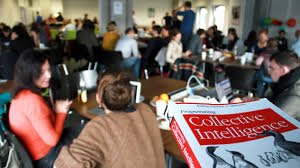
imagesdf

We are obsessed with the brain.

For over a century, we have been trying to measure it, rank it, and optimize it. We give our children IQ tests to predict their future. We venerate the “lone genius”—the Einstein-like figure who conjures revolutionary ideas from the ether. We structure our workplaces to reward the sharpest individual mind in the room.

This is the myth of cognitive intelligence: the belief that human progress is driven primarily by the raw, individual processing power of the human brain.

But what if we’ve been looking at the wrong thing? What if the secret to our species’ dominance isn’t the isolated IQ score of a single person, but something far more profound, ancient, and collective?

Let’s call it Cumulative Cultural Intelligence.

The Illusion of the Lone Genius

The myth of cognitive intelligence is seductive because it’s simple. It fits neatly into our Western ideal of rugged individualism. We love the story of Newton and the apple, or Archimedes and his bath—the idea that a single, superior mind can, through a flash of solitary insight, change the world.

But these stories are fiction. Newton famously said, “If I have seen further, it is by standing on the shoulders of giants.” He wasn’t being modest; he was being literal. His Principia Mathematica wasn’t born in a vacuum. It was built on the work of Copernicus, Galileo, Kepler, and a vast network of thinkers who came before him.

The “lone genius” is actually the final, visible node in a vast, invisible network of accumulated knowledge spanning centuries.

What is Cumulative Cultural Intelligence?

In anthropology and evolutionary biology, Cumulative Cultural Intelligence (CCI) refers to a species’ ability to build upon the knowledge of previous generations, leading to innovations too complex for any single individual to invent on their own.

Think about the device you are reading this on. Could you build it?

Not just the silicon chip or the battery, but the glass screen, the operating system, the underlying programming languages, the wireless protocols, the global supply chain that mined the rare earth minerals? Of course not. Neither could I. Neither could the CEO of Apple.

And yet, the smartphone exists. It is a product of cumulative culture. It represents the aggregated, refined, and transmitted knowledge of thousands of minds across hundreds of years.

This is the power we consistently undervalue. A single human being, stripped of culture and raised in isolation, is remarkably unimpressive compared to a chimpanzee. But a human being embedded in a society with 10,000 years of accumulated knowledge is the most dominant force on the planet. Our power isn’t in our individual CPU; it’s in our ability to access a shared, ever-expanding cloud.

Why This Myth Harms Us

Our failure to recognize the primacy of CCI over individual cognitive intelligence has real-world consequences.

1. It creates a narrow definition of “smart.”
We have built an entire education system designed to sort children by their individual cognitive horsepower—their memory, their speed at solving abstract problems. We neglect to teach the skills that actually fuel cultural intelligence: collaboration, empathy, the ability to synthesize disparate ideas, and the humility to learn from the past.

2. It blinds us to the source of innovation.
Companies pour billions into hiring “A-players”—the highest individual performers—only to trap them in toxic cultures where knowledge is hoarded rather than shared. True innovation doesn’t come from a room full of geniuses competing for airtime. It comes from a psychologically safe environment where ideas can flow, merge, and mutate across a collective.

3. It fosters arrogance and isolation.
When we believe success comes solely from our own cognitive prowess, we stop listening. We ignore the wisdom of elders, the insights of other disciplines, and the lessons of history. We become trapped in the limits of our own skulls.

The Shift: From “Me” to “We”

If we want to solve the big problems—climate change, pandemics, interstellar exploration—we need to stop worshiping the myth of the lone genius and start investing in the infrastructure of cumulative culture.

This means shifting our focus:

  • From Memorization to Connection: Instead of asking, “What can you recall?” we should ask, “Can you connect this idea to that one? Can you see the pattern?”
  • From Hoarding to Sharing: We must create systems (in schools and workplaces) that reward knowledge transfer, mentorship, and open-source collaboration over individual heroics.
  • From Short-Term to Long-Term: Cumulative intelligence is a multi-generational project. It requires us to think beyond our own lifespan. We need to honor the role of the curator and the archivist as much as the inventor.

The Genius is the System

Your individual mind is a miracle of biology. But its true potential is only unlocked when it connects to the collective mind of humanity.

The smartphone, modern medicine, democracy, classical music—none of these were invented by a single person. They evolved. They were refined. They were passed down, improved, lost, and rediscovered.

The myth of cognitive intelligence tells us to look for the smartest person in the room. But the reality of cumulative cultural intelligence tells us something far more empowering: the room itself is the genius.


Continue Reading

Previous: Attuning to Action Affordances: Learning and Finding Through 4E Cognition
Next: Attuning to Action Affordances: Learning and Finding Through 4E Cognition

Categories

Archives

  • July 2025
  • June 2025
  • May 2025
  • April 2025
  • March 2025
  • February 2025
  • January 2025
  • December 2024
  • November 2024
  • October 2024
  • September 2024
  • August 2024
  • July 2024
  • June 2024
  • May 2024
  • April 2024
  • March 2024
  • February 2024
  • January 2024
  • December 2023
  • November 2023
  • October 2023
  • September 2023
  • August 2023
  • July 2023
  • June 2023
  • May 2023
  • April 2023
  • March 2023
  • February 2023
  • January 2023
  • December 2022
  • November 2022
  • October 2022
  • September 2022
  • August 2022
  • July 2022
  • June 2022
  • May 2022
  • April 2022
  • March 2022
  • February 2022
  • January 2022
  • December 2021
  • November 2021
  • October 2021
  • September 2021
  • August 2021
  • July 2021
  • June 2021
  • May 2021
Copy Right © 2025–2026 Learning Science Digest (lsdigest.com). All rights reserved.

Copyright © 2025-2026 LsDigest.com

Copyright © 2025-2026 LsDigest.com | MoreNews by AF themes.