
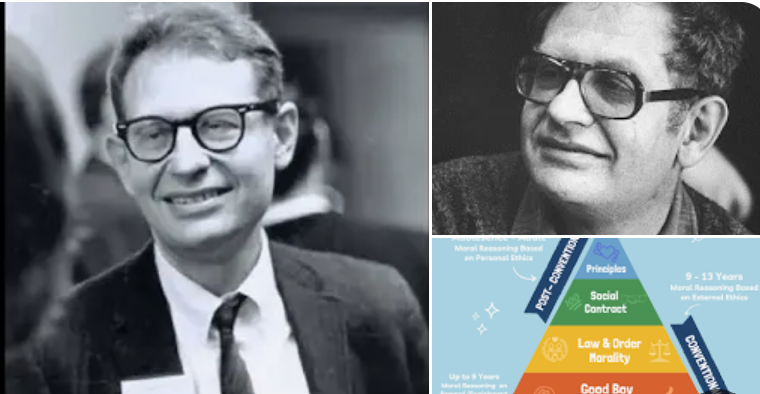
Lawrence Kohlberg (1927-1987) remains one of the most influential figures in the fields of psychology, education, and philosophy. Known for his groundbreaking work on moral development, Kohlberg bridged disciplines to offer insights into how individuals think about morality and justice. His theories not only shaped educational practices but also left a lasting impact on our understanding of human growth across the lifespan. In this blog post, we’ll explore Kohlberg’s life, contributions, and enduring legacy.
The Genesis of Kohlberg’s Interest in Morality
Kohlberg’s fascination with morality was deeply rooted in his personal experiences during some of history’s darkest moments. Growing up in an era marked by Nazi tyranny, he witnessed firsthand the devastating consequences of moral failure. This experience fueled his lifelong quest to understand how societies could foster moral reasoning and prevent atrocities like the Holocaust.
His academic journey began at the University of Chicago, where he immersed himself in Kantian ethics and political philosophies advocating universal human rights. Inspired by thinkers such as Jean Piaget and John Dewey, Kohlberg developed his theory of moral development—a framework that would revolutionize how educators and psychologists approached ethical education.
Kohlberg’s Theory of Moral Development
At the heart of Kohlberg’s work lies his theory of moral development, which outlines six stages grouped into three levels:
Preconventional Level: At this stage, moral reasoning is driven by external rewards or punishments.
- Stage 1: Obedience and punishment orientation (“It’s wrong because I’ll get caught.”)
- Stage 2: Instrumental relativism (“What’s right benefits me personally.”)
Conventional Level: Here, individuals conform to societal norms and expectations.
- Stage 3: Interpersonal concordance (“Being good means being liked and trusted.”)
- Stage 4: Law and order orientation (“Following rules maintains social order.”)
Postconventional Level: The highest level involves abstract principles of justice and fairness.
- Stage 5: Social contract orientation (“Laws can be changed if they don’t serve the greater good.”)
- Stage 6: Universal ethical principles (“Moral decisions are guided by universal values like equality and dignity.”)
This progression reflects a shift from self-centered thinking to broader considerations of justice and humanity. According to Kohlberg, not everyone reaches the higher stages, but those who do demonstrate more sophisticated ways of resolving moral dilemmas.
The Just Community Approach
Beyond theoretical frameworks, Kohlberg was committed to putting his ideas into practice. He championed the Just Community Approach, which sought to create democratic environments in schools, prisons, and communities. These settings emphasized principles of fairness, mutual respect, and collective decision-making. By fostering dialogue and collaboration, Kohlberg believed institutions could nurture moral growth and empower individuals to contribute meaningfully to society.
Impact Beyond Education
While Kohlberg’s work primarily focused on moral development in children and adolescents, its implications extend far beyond the classroom. His research has influenced areas such as:
- Community-Based Education: Programs designed to promote civic engagement and social responsibility.
- Religious Education: Encouraging reflection on universal ethical principles.
- Prison Reform: Advocating rehabilitative approaches over punitive measures.
- Professional Ethics: Helping professionals navigate complex moral challenges in their fields.
By integrating empirical data with philosophical inquiry, Kohlberg demonstrated the interconnectedness of cognitive and moral development. For him, logical reasoning wasn’t just about solving problems—it was about building a just and equitable world.
Critiques and Controversies
Like any pioneering thinker, Kohlberg faced criticism. Some argued that his model was too Western-centric or overly focused on justice at the expense of other virtues like compassion. Others questioned whether moral development truly followed a fixed sequence. Despite these critiques, Kohlberg welcomed dialogue, believing that intellectual conflict was essential for growth. As one commentator noted, even his critics found value in engaging with his ideas, using them as a springboard for new perspectives.
Why Kohlberg Matters Today
In today’s polarized world, Kohlberg’s emphasis on moral reasoning feels more relevant than ever. From debates about climate change and social justice to discussions around artificial intelligence and bioethics, we face increasingly complex moral dilemmas. Kohlberg’s work reminds us that moral development isn’t static—it requires ongoing reflection, dialogue, and action.
Educators, policymakers, and leaders can draw inspiration from Kohlberg’s vision of a society grounded in democratic values. By creating spaces for open discussion and critical thinking, we can help individuals move toward higher levels of moral reasoning.
Final Thoughts
Lawrence Kohlberg’s legacy endures because he dared to ask profound questions: Can virtue be taught? How do we cultivate moral judgment? What does it mean to live justly? His answers—rooted in rigorous research and unwavering optimism—continue to guide us as we strive to build a better world.
About the Author
