
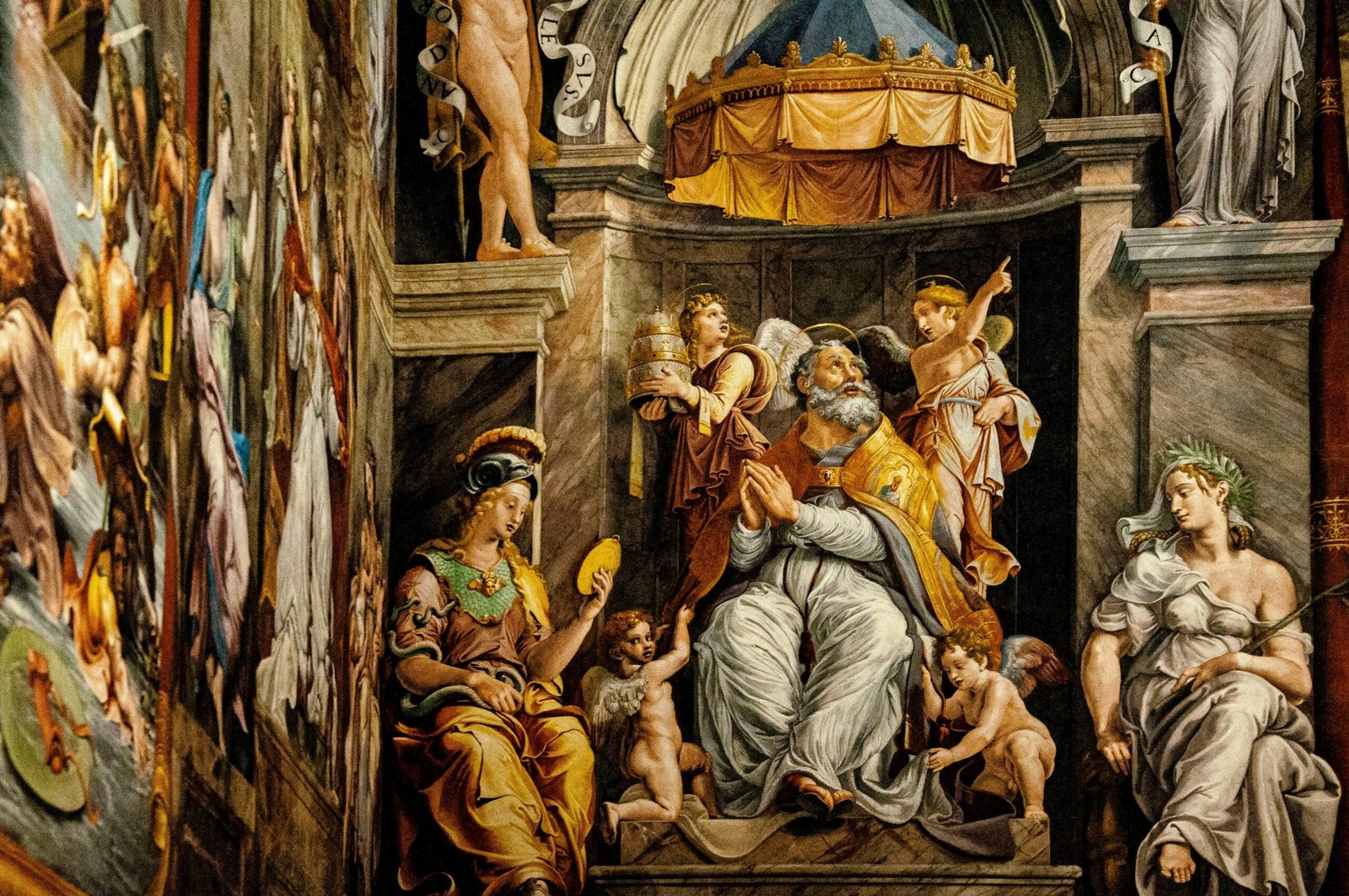
When Pope Leo XIV recently addressed Eastern Catholics during the Jubilee of Eastern Churches, his words stirred a quiet but powerful current across the theological and educational landscapes. In his speech, he emphasized the need to “rediscover… the importance of mystagogy” within the Christian West. By lifting up the spiritual riches of Eastern traditions—notably mystagogy, constant intercession, fasting, and the weeping for one’s sins (penthos)—Pope Leo signaled a call not just to liturgical renewal, but to a deeper way of engaging with mystery, formation, and human development.
To many outside theological circles, the word mystagogy may sound arcane or esoteric. Yet, this ancient term has much to say not only to the Church, but also to educators, learners, and leaders grappling with meaning in a fast-paced, fragmented world.
Mystagogy: Origins and Historical Depth
The term mystagogy originates from the Greek word mystagogia, meaning “to lead through the mysteries.” In early Christianity, mystagogy referred to a distinct phase of initiation that came after baptism, primarily during the Easter season. This was not a time for teaching doctrine per se, but for deepening understanding through experiential reflection on the sacraments already received.
Church Fathers like St. Cyril of Jerusalem, St. Ambrose of Milan, and St. John Chrysostom gave powerful mystagogical sermons. They spoke to newly baptized believers (neophytes) about the inner significance of their participation in the sacraments, especially the Eucharist. These reflections were not abstract theology, but profound invitations to perceive, from within, the grace they had received.
For the early Church, mystagogy was less about knowing propositions and more about entering a transformed way of seeing. As theologian Louis-Marie Chauvet put it, mystagogy involves “an experience that gives rise to understanding, not understanding that gives rise to experience.”
Mystagogy in the Contemporary Church
In the modern Roman Catholic Church, especially since the Second Vatican Council, mystagogy has re-emerged through the Rite of Christian Initiation of Adults (RCIA). It is recognized as the final stage of the initiation process, one that occurs after the reception of the sacraments of initiation.
Here, mystagogy is a time of:
- Liturgical participation: Regular attendance at Eucharist.
- Community immersion: Growing within the life of the parish.
- Personal reflection: Revisiting the meaning of Baptism, Confirmation, and the Eucharist in daily life.
Yet, many contemporary theologians argue that mystagogy should not be confined to the weeks after Easter or to neophytes. Instead, it should be a lifelong process for all believers: a continual deepening of our understanding of faith through lived experience, liturgy, community, and contemplation.
In Eastern Catholic and Orthodox traditions, this sense of mystagogy as a way of life is even more pronounced. Here, theology is often described as mystical, grounded not in argument but in worship, silence, and transformation. Pope Leo XIV, by invoking mystagogy in the context of Eastern spirituality, invites the wider Church to embrace mystery not as a problem to solve, but a presence to dwell in.
Beyond the Church: Mystagogy as a Framework for Learning and Teaching
Mystagogy has profound implications for education and human development. At its heart, mystagogy suggests a way of leading others into mystery through experience, reflection, and transformation. This stands in contrast to models of education that prioritize information transfer or standardization.
In educational philosophy, particularly in the works of thinkers like Paulo Freire and Parker Palmer, there are echoes of mystagogical insight:
- Freire speaks of conscientization: awakening to deeper awareness through reflection on experience.
- Palmer speaks of teaching from the inner self, where knowledge arises from authenticity, relationships, and inner searching.
Applying mystagogy to education might involve:
- Ritual and Rhythm: Creating structured, meaningful rhythms in learning environments that allow reflection and transformation.
- Embodied Learning: Encouraging learning not only through the intellect, but through the body, emotion, and community.
- Initiatory Stages: Recognizing that deep learning often happens through stages: preparation, experience, reflection, and integration.
- Space for Mystery: Allowing uncertainty, paradox, and silence to play roles in learning, rather than rushing toward closure.
In this view, teachers become mystagogues: not deliverers of content, but facilitators of journeys. Learners become initiates, not passive recipients but active seekers entering deeper relationships with the subjects, with each other, and with life itself.
Conclusion: Recovering the Art of Depth
Pope Leo XIV’s invocation of mystagogy is timely. In an age hungry for quick answers and scalable systems, mystagogy offers something different: a pedagogy of mystery, rooted in experience and directed toward transformation.
In both Church and society, we are invited to recover the art of depth. Whether in catechesis or classrooms, boardrooms or liturgies, mystagogy challenges us to move beyond information and into formation.
For Christians, this means entering more fully into the sacraments, the liturgy, and the mystery of Christ. For educators and leaders, it means shaping environments where wonder, reflection, and growth are not side effects but central goals.
Mystagogy is not just a stage. It is a way. And in rediscovering it, we might just rediscover ourselves.
About the Author
