
Skip to content

Learning-Science Digest

Fringe of Human Learning Technology and Emergence

Categories

  • 4E Cognition
  • Ability grouping
  • Accelerated learning
  • Acting/ Role play
  • Active learning
  • Active/ Action learning
  • Activities
  • Adaptive Learning
  • Administration & Leadership
  • Affordances
  • After-School Programs
  • Agency/ Autonomy
  • Analogy & Analogy based Learning
  • Anchored Instruction
  • Andragogy
  • Anthropology/ Ethnographic learning
  • Apprenticeship
  • Approaches
  • Apps
  • Artificial Intelligence
  • Assessment
  • Asynchronous Learning
  • Attitude
  • Banking model
  • Behavior Design
  • Behavioural
  • Belonging
  • Biology
  • Blended, Flipped, etc
  • books
  • Brain
  • Bricolage
  • Catholic Education
  • Causation
  • Coaching
  • Cognitive Diversity
  • Cognitive Load
  • Cognitive Science
  • Collaborative learning
  • Communities of practice
  • Competency-Based Learning
  • Complexity Theory
  • Compliance Training
  • Computational Learning
  • Computer Based Math
  • Concept Differences
  • Concept similarity
  • Connected Learning
  • Connectivism
  • Constraints
  • Constraints-Led Approach
  • Constructionism
  • Constructivism
  • Contextualized Learning
  • Contrast and Polarity
  • Courses
  • Creativity/ Innovation
  • Critical articles
  • Critical Pedagogy
  • Critical Thinking
  • Cultural Intelligence
  • Cultural Learning
  • Cumulative culture
  • Curriculum
  • Curriculum Design
  • Deliberate Practice
  • Design Science/ Approaches
  • Desirable Difficulty
  • Dialogic Learning
  • Differential learning
  • Digital Learning
  • Direct Instruction/ KLC
  • Disability and Learning
  • Discovery Learning
  • Discussion/ Debate
  • Disposition/Propensity
  • Distributed Cognition/ Learning
  • DIY learning/ Edupunk
  • Dynamics and learning
  • Early Intervention
  • Ecological Approch
  • Ecological Dynamics
  • Ed-tech
  • Education
  • Education Models
  • Education Policy
  • Education Thinkers
  • Effectuation
  • Elaboration
  • Embedded Cognition
  • Embodied Cognition
  • Emergence
  • Emergency learning
  • Emerging technology
  • Emulative learning
  • Enactive learning
  • Enskilment
  • Entangled pedagogy
  • Entrepreneurial Learning
  • Ethics and Moral learning
  • Evaluation
  • Evidence
  • Evolution and Learning
  • Exams
  • Exaptation
  • Exercise
  • Experiential Learning
  • Expertise
  • Explicit instruction
  • Extended Cognition
  • Family/ Religion
  • Feedback
  • Frameworks
  • Future Of Learning
  • Games/ Gamification
  • Generation Effect
  • Generative AI
  • Genius
  • Geragogy
  • Grading
  • Happiness and learning
  • Heuristics
  • Heutagogy
  • Higher Education
  • History Of Education
  • Home Slider
  • Home/ Home Schooling/ Learning
  • Homework
  • Human Machine Interface
  • Humor
  • Hypercorrection
  • Improvisation
  • Informal Learning
  • Innovation
  • Inquiry
  • Instructional Design
  • Instrumentalism
  • Intelligence
  • Interviews
  • Job training
  • Knowledge Rich Curriculum
  • Knowledge: Types. etc.
  • Labelling
  • Language Learning
  • Law and Legal Learning
  • Learning and Development
  • Learning Difficulties
  • Learning Environments
  • Learning for life
  • Learning in Chaos
  • Learning in complexity
  • Learning Management System
  • Learning Myths
  • Learning Programming
  • Learning Science
  • Learning Stations
  • Learning Systems
  • Learning Techniques/Methods
  • Learning Thinkers
  • Learning under anxiety/pressure/stress
  • Learning/ Teaching Strategies
  • Learning/ Understanding By Design
  • Looping effect
  • Maker Learning
  • Mastery
  • Mathew Effect
  • Maths Learning
  • Measurement
  • Medical Education/Learning
  • Memory
  • Meta-Analysis
  • Meta-Cognition
  • mindset
  • Mnemonics
  • Montessori
  • Motivation
  • Motor Learning
  • Music/ Arts and Learning
  • Mystagogy
  • Needs and Need based Learning
  • Networked Learning
  • Networks and Ecosystem
  • Neurodivergence
  • Neuroscience
  • Non Computational
  • Non-Representational
  • Nonlinear Pedagogy
  • Novelty and learning
  • Observational learning
  • On-the-Job Training
  • Online and MOOC Learning
  • outdoor-education
  • Pedagogy
  • Peer Learning
  • Personalized Learning
  • Philosophy Of Education
  • Philosophy Of Learning
  • Philosophy Of Science
  • Place-Based Learning
  • Play/ Ludic Pedagogy
  • Policy
  • Pragmatism
  • Problem-based learning
  • Productive Failures
  • Professional education
  • Professional Learning
  • Progressive Education
  • Project Based Learning
  • Proximity and Learning
  • Psychological Issues
  • Question asking/ Question design
  • Reading , Literacy , etc
  • Recognition
  • Reification/ Reductionism
  • Relational Expertise
  • Relational Learning
  • Religion
  • Research
  • Resting/ offline consolidation
  • Retrieval
  • Salience/Closeness
  • Scaffolding
  • Science Of Learning
  • self-efficacy
  • Self-Organization
  • Self-Paced Learning
  • Self-Regulated/ Self-Directed
  • Service Learning
  • Short Concept Introduction
  • Signalling
  • Simulation or Simulative Learning
  • Situated Learning
  • Skill
  • Sleep and Rest
  • Social Effects
  • Social Learning
  • Social-emotional learning
  • Society-Ecosystem etc
  • Socioeconomic Factors
  • Sociology Of Learning
  • Software And Technology Review
  • Speaking/Public Speaking
  • Spiral design
  • Sports learning
  • Sports Science
  • Story/Narrative based learning
  • Studying
  • Teacher/ teaching
  • Testing
  • Theology and learning
  • Theories
  • Tools, Aids, Artifacts
  • Training
  • Training Needs Analysis
  • Transdisciplinary/ Interdisciplinary, etc
  • Transfer Of Learning
  • Trending News
  • Uncategorized
  • Uncertainty and learning
  • Variable Practice
  • Vicarious learning
  • Video playlist
  • Virtual, Augmented, etc
  • Visible Learning/ Hattie
  • Visual Learning/Drawing
  • Vocational Education
  • Wakeful Resting
  • Work Place Learning
  • Workshop Model
  • Zone of Proximal Development (ZPD)
Primary Menu
  • Home
  • About
  • Thinkers
    • Learning Thinkers
    • Education Thinkers
  • Design For Learning
    • Design Science/ Approaches
    • Instructional Design
    • Behavior Design
    • Curriculum Design
    • Learning/ Understanding By Design
    • Motivation
    • Ecological Approch
    • Blended, Flipped, etc
    • Games/ Gamification
  • Tools/Techniques/Methods
    • Learning Techniques/Methods
    • Education Models
    • Testing
    • Retrieval
    • Blended, Flipped, etc
    • Differential learning
    • Dialogic Learning
    • Computer Based Math
    • Tools, Aids, Artifacts
    • Knowledge Rich Curriculum
    • Cognitive Load
    • Online and MOOC Learning
    • Scaffolding
    • Contrast and Polarity
    • Play/ Ludic Pedagogy
    • Problem-based learning
    • Cultural Learning
    • Direct Instruction/ KLC
    • Deliberate Practice
    • Visual Learning/Drawing
    • Games/ Gamification
    • Acting/ Role play
    • Analogy & Analogy based Learning
    • Inquiry
    • Improvisation
    • Constructionism
    • Situated Learning
    • Productive Failures
    • Anthropology/ Ethnographic learning
    • Project Based Learning
    • Connected Learning
    • Nonlinear Pedagogy
    • Personalized Learning
    • Maker Learning
    • Virtual, Augmented, etc
    • Service Learning
    • Constructivism
    • Connectivism
    • Vicarious learning
    • Active/ Action learning
    • Computational Learning
    • Relational Learning
    • Apprenticeship
    • Communities of practice
    • Home/ Home Schooling/ Learning
    • Contextualized Learning
    • DIY learning/ Edupunk
    • Constraints-Led Approach
    • Peer Learning
  • Domains
    • Language Learning
    • Entrepreneurial Learning
    • Maths Learning
    • Sports Science
    • Theology and learning
    • Sports learning
    • Professional education
    • Law and Legal Learning
    • Catholic Education
    • Higher Education
    • Medical Education/Learning
    • Work Place Learning
    • Learning Programming
    • On-the-Job Training
    • Job training
    • Compliance Training
  • Approaches
    • Neuroscience
    • Social Learning
    • Ecological Approch
    • 4E Cognition
    • Active learning
    • Transfer Of Learning
    • Cumulative culture
    • Embodied Cognition
    • Evolution and Learning
    • Embedded Cognition
    • Differential learning
    • Dialogic Learning
    • Experiential Learning
    • Learning Environments
    • Cultural Intelligence
    • Enactive learning
    • Constraints-Led Approach
    • Non-Representational
    • Self-Organization
    • Relational Learning
    • Relational Expertise
    • Enskilment
    • Extended Cognition
    • Distributed Cognition/ Learning
  • Artificial Intelligence
  • Education Policy
  • Expertise
Subscribe or Login
  • Home
  • Education Thinkers
  • Rediscovering Education Through the Lens of Elliot Eisner: A Visionary for the Arts and Beyond
  • Education Thinkers
  • Learning Thinkers

Rediscovering Education Through the Lens of Elliot Eisner: A Visionary for the Arts and Beyond

kiran Johny February 12, 2024
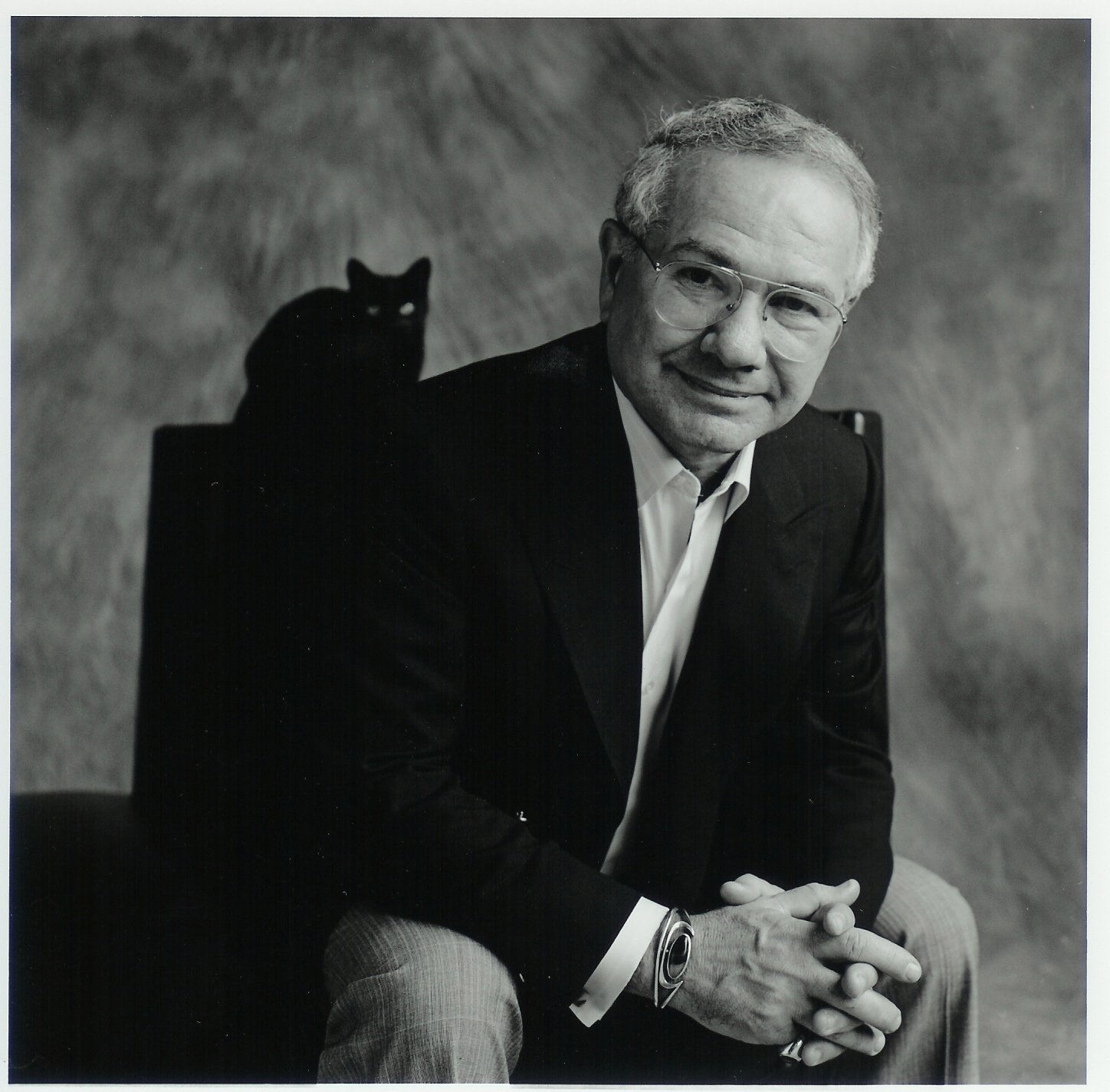
elliot_promotional_photo

In a world where reality TV shows like Family Feud draw larger audiences than classical music concerts, it’s no surprise that the arts often find themselves relegated to the margins of our cultural priorities. Yet, as Elliot Eisner—one of education’s most prolific thinkers—reminds us, this marginalization need not define the future of learning. Eisner devoted his life to advocating for the transformative power of the arts in education, challenging conventional paradigms, and reshaping how we think about teaching, curriculum design, and human potential.

Who Was Elliot Eisner?

Elliot Eisner (1933–2014) was an intellectual giant whose contributions spanned decades and disciplines. As the Lee Jacks Professor of Education and Art at Stanford University, he authored 285 articles and 15 books, earning numerous accolades along the way, including honorary degrees, prestigious fellowships, and leadership roles in scholarly organizations worldwide. But beyond these achievements lies a deeper legacy: Eisner’s unwavering belief in the centrality of the arts to human development and educational reform.

Born and raised on Chicago’s west side, Eisner discovered his passion for art early in life when his third-grade teacher recognized his talent. Encouraged by his mother to pursue commercial art as a viable career path, he instead found himself drawn to art education after teaching African-American boys at a community organization during college. This pivotal experience shifted his focus from creating art to fostering artistic sensibilities in others—a shift that would ultimately influence educators around the globe.

Redefining Education: From Technocracy to Imagination

Eisner entered the field of education at a time when quantitative methods dominated research and evaluation. Curriculum work was rooted in behavioral objectives, emphasizing scientific precision over creativity. The arts were dismissed as mere emotional outlets, devoid of cognitive value. Eisner challenged this narrow view, arguing that conceptions of cognition lacking artistic modes of thinking were incomplete. He believed that schools omitting the arts provided an unbalanced, inequitable education.

Through works such as The Educational Imagination, Cognition and Curriculum Reconsidered, and The Enlightened Eye, Eisner redefined what it means to educate. He advocated for a biological metaphor informed by aesthetic theories, suggesting that human beings interact with their environment through their senses, forming concepts from sensory material before language even enters the picture. This insight led him to propose that literacy should extend beyond reading words to encompass the ability to encode and decode information across various forms of representation—visual, musical, linguistic, and more.

Discipline-Based Art Education: A Lasting Impact

One of Eisner’s most significant contributions is the development of discipline-based art education (DBAE), which emerged from his groundbreaking Kettering Project in 1967. DBAE emphasizes not only the production of art but also its historical, critical, and aesthetic dimensions. Today, this approach underpins art education programs in the United States, Australia, and the UK, thanks in large part to Eisner’s advocacy and leadership on advisory boards like the Getty Center for Education in the Arts.

By championing DBAE, Eisner helped transform art education into a content-oriented discipline, moving away from outdated notions that children naturally develop artistic sensibilities without guidance or structure. He stressed that environment shapes aptitude and that art education has unique contributions to make to a child’s growth.

Educational Connoisseurship and Criticism: Seeing Schools Differently

Another hallmark of Eisner’s work is his introduction of educational connoisseurship and criticism—a qualitative approach to evaluating what happens in classrooms. Drawing inspiration from art criticism, Eisner argued that understanding education requires appreciation, description, interpretation, evaluation, and thematic reflection. This method allows educators to capture the richness of classroom experiences, going beyond standardized metrics to reveal the nuances of teaching and learning.

Today, educational connoisseurship and criticism are widely used for both research and evaluation, offering a powerful alternative to traditional quantitative methods. By focusing on the lived realities of schools, this approach highlights the importance of context, intention, and impact.

Arts-Based Inquiry: Expanding the Boundaries of Knowledge

Eisner’s ideas have also inspired the growing movement of arts-based inquiry, which embraces multiple forms of representation to explore educational contexts. Whether through paintings, installations, or performances, practitioners use creative mediums to express insights that words alone cannot convey. Eisner legitimized these approaches, reminding us that different forms of representation reveal distinct aspects of reality—and that true understanding demands a plurality of perspectives.

School Reform: Beyond Slogans and Fads

Eisner’s vision extended far beyond art education. He was a vocal critic of technocratic and behavioristic models of schooling, urging educators to move beyond rigid lesson plans and embrace the unexpected discoveries that arise in dynamic classrooms. He warned against relying on slogans or fleeting trends, instead calling for a return to fundamentals: What is basic in education? What does it mean to be literate? How do we cultivate minds capable of imagining new possibilities?

For Eisner, education was about more than transmitting knowledge—it was about nurturing “productive idiosyncrasies,” helping each child realize their unique potential. He envisioned schools as places where students could engage with diverse forms of representation, exercise their imaginations, and create meaning from their experiences.

The Bigger Picture: Life as a Work of Art

At its core, Eisner’s philosophy challenges us to see education—and life itself—as an ongoing process of creation. In his own words:

“The arts inform as well as stimulate, they challenge as well as satisfy. Their location is not limited to galleries, concert halls, and theatres. Their home can be found whenever humans choose to have attentive and vital intercourse with life itself.”

Eisner believed that the arts hold lessons essential for personal and cultural growth. They teach us to envision possibilities, to reimagine the familiar, and to lead lives marked by creativity and purpose. For him, education wasn’t just preparation for life—it was life.

Why Eisner Matters Today

As we grapple with questions of equity, engagement, and relevance in modern education, Eisner’s ideas remain profoundly relevant. His call to integrate the arts into every aspect of schooling reminds us that learning is not merely cerebral; it is sensory, imaginative, and deeply human. His emphasis on cognitive pluralism challenges us to honor multiple ways of knowing and expressing, ensuring that no child’s voice goes unheard.

Elliot Eisner dared to dream of schools that nurtured the whole person, where the arts were not an afterthought but a cornerstone of education. His work invites us to join him in this vision—to reimagine what education could be if we truly valued creativity, diversity, and the boundless potential of the human spirit.

Continue Reading

Previous: 10 Transformative Insights from Lawrence A. Cremin on Learning and Education
Next: 10 Transformative Insights by Michael W. Apple on Learning and Education

Categories

Archives

  • September 2025
  • July 2025
  • June 2025
  • May 2025
  • April 2025
  • March 2025
  • February 2025
  • January 2025
  • December 2024
  • November 2024
  • October 2024
  • September 2024
  • August 2024
  • July 2024
  • June 2024
  • May 2024
  • April 2024
  • March 2024
  • February 2024
  • January 2024
  • December 2023
  • November 2023
  • October 2023
  • September 2023
  • August 2023
  • July 2023
  • June 2023
  • May 2023
  • April 2023
  • March 2023
  • February 2023
  • January 2023
  • December 2022
  • November 2022
  • October 2022
  • September 2022
  • August 2022
  • July 2022
  • June 2022
  • May 2022
  • April 2022
  • March 2022
  • February 2022
  • January 2022
  • December 2021
  • November 2021
  • October 2021
  • September 2021
  • August 2021
  • July 2021
  • June 2021
  • May 2021
Copy Right © 2025–2026 Learning Science Digest (lsdigest.com). All rights reserved.

Copyright © 2025-2026 LsDigest.com

Copyright © 2025-2026 LsDigest.com | MoreNews by AF themes.