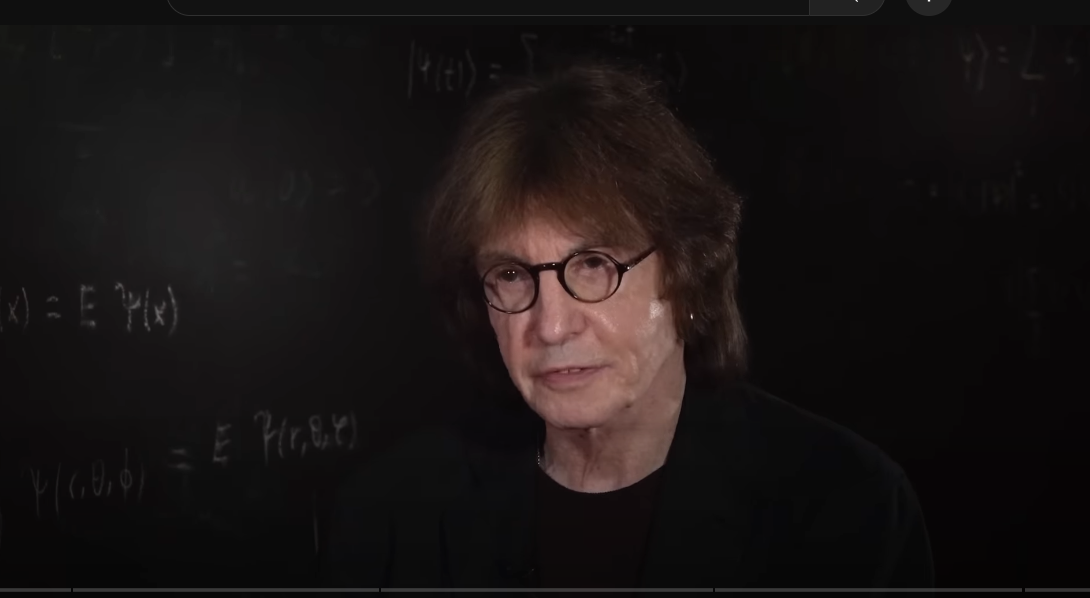
In an era where education systems are increasingly shaped by market-driven ideologies, standardized testing, and economic efficiency, the work of Henry Giroux stands as a beacon of hope for those who believe in the transformative power of education. A towering figure in critical pedagogy, Giroux has spent decades advocating for an educational vision that transcends the confines of traditional schooling to embrace a radical commitment to equality, democracy, and human dignity.
Who is Henry Giroux?
Born in 1943, Henry Giroux received his doctorate from Carnegie-Mellon University in 1977 and has since become one of the most influential voices in contemporary educational theory. His academic journey includes teaching positions at Boston University, Miami University, and currently, Penn State University, where he holds the Waterbury Chair Professorship in Secondary Education. Over the years, Giroux has produced a vast body of work that critiques dominant educational paradigms while offering alternative visions rooted in critical pedagogy.
Giroux’s scholarship draws heavily on the Frankfurt School, particularly the works of Horkheimer, Adorno, Marcuse, and Habermas. However, he moves beyond their often-pessimistic outlooks to articulate what he calls a “language of possibility.” For Giroux, education is not merely a site of cultural reproduction but a space for resistance, contestation, and transformation—a place where individuals and communities can challenge oppressive structures and imagine new possibilities for society.
The Core Tenets of Giroux’s Critical Pedagogy
At the heart of Giroux’s philosophy lies the belief that education must break free from its insular focus on schools alone. Instead, it should be understood as part of the broader public sphere, deeply intertwined with cultural production, politics, and social justice. Here are some key principles that define his approach:
- Education as Cultural Politics
Giroux argues that schools are not neutral spaces; they are saturated with ideologies that reflect existing power dynamics in society. By interrogating whose knowledge is valued and whose voices are silenced within curricula, educators can expose these asymmetries and advocate for more inclusive representations. This process involves questioning the legitimacy of dominant narratives and amplifying marginalized perspectives. - Teachers as Transformative Intellectuals
In Giroux’s view, teachers are not passive transmitters of information but active agents of change. As “transformative intellectuals,” they play a crucial role in raising students’ awareness about contested issues such as inequality, exploitation, and systemic oppression. By encouraging students to critically engage with their own experiences and societal structures, teachers help foster a sense of agency and empowerment among learners. - Border Pedagogy and the Celebration of Difference
One of Giroux’s most innovative contributions is the concept of “border pedagogy,” which challenges traditional boundaries—whether epistemological, cultural, or institutional—that reinforce domination. By crossing these borders, both teachers and students can interrogate how power operates across different contexts and redefine what counts as legitimate knowledge. Importantly, this framework celebrates difference not as an abstract ideal but as a means to address real inequalities embedded in society. - Critical Democracy and Emancipatory Citizenship
For Giroux, democracy is not just a political system but a way of life that embraces diversity, pluralism, and participatory engagement. He envisions schools as laboratories for cultivating democratic values, where students learn to exercise their rights, challenge injustices, and contribute meaningfully to public discourse. Through this process, education becomes a tool for promoting emancipatory citizenship that empowers individuals and communities alike. - A Postmodern Turn
While Giroux’s early work was firmly grounded in modernist critical theory, his later writings reveal a shift toward postmodernism. This move allows him to embrace multiple narratives, reject grand theories, and highlight the fluidity of identity and power. By doing so, Giroux provides a richer account of how subordinate groups can reclaim their agency and resist Eurocentric rationalities that perpetuate inequality.
Why Does Giroux Matter Today?
In a world grappling with rising authoritarianism, widening inequality, and the erosion of democratic norms, Giroux’s ideas feel more urgent than ever. His call to make the pedagogical more political—and vice versa—reminds us that education is inherently tied to struggles for social justice. Whether addressing racism, sexism, classism, or other forms of oppression, Giroux insists that educators have a moral responsibility to confront these issues head-on.
Moreover, his emphasis on popular culture and media underscores the importance of engaging with the diverse ways young people experience the world today. From analyzing films and television shows to exploring the impact of digital technologies, Giroux demonstrates how educators can harness these cultural artifacts to spark meaningful dialogue and critique.
Challenges and Criticisms
Despite his profound influence, Giroux’s work has faced criticism. Some argue that his ideas, while inspiring, may lack practical applicability in everyday classrooms. Others question whether his postmodern leanings risk undermining the very emancipatory goals he seeks to achieve. These debates highlight the ongoing tension between visionary ideals and tangible action—a tension that Giroux himself acknowledges but refuses to shy away from.
Conclusion: A Vision Worth Pursuing
Henry Giroux reminds us that education is never neutral—it either reinforces the status quo or challenges it. His unwavering commitment to radical pedagogy offers a roadmap for creating schools and societies that prioritize equality, democracy, and humanity. While the road ahead may be fraught with obstacles, Giroux’s work holds out the hope of a better future—one where education serves as a catalyst for genuine liberation.
As we navigate the complexities of our time, let us heed Giroux’s call to reimagine education not as a mechanism of control but as a force for transformation. After all, if we are to build a world that truly celebrates difference and upholds justice, we need visionaries like Giroux lighting the way.
About the Author
