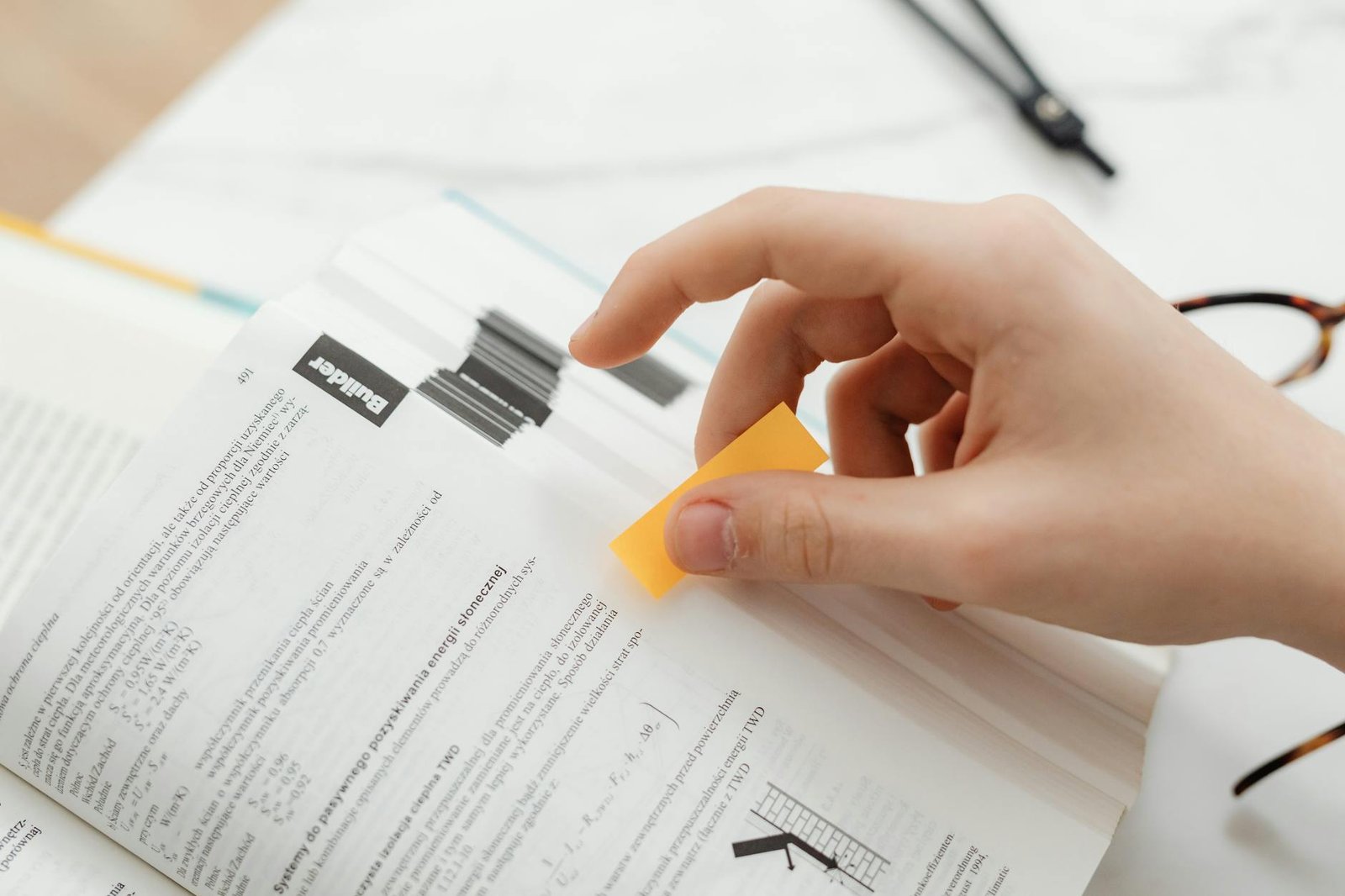
Photo by Photo By: Kaboompics.com on <a href="https://www.pexels.com/photo/close-up-of-a-person-putting-a-sticky-note-on-a-textbook-page-6958523/" rel="nofollow">Pexels.com</a>
Imagine this: You’re faced with a critical challenge at work. Perhaps you’re tasked with creating a marketing strategy for a new product, diagnosing a technical problem, or drafting a legal brief. What’s the first thing you do? You turn to your resources: research reports, online databases, colleagues, and reference materials. In the real world, success isn’t about having all the answers in your head. It’s about knowing where to find the right information and how to apply it effectively.
Yet, our education system often doesn’t reflect this reality. Traditional testing methods reward rote memorization rather than the skills needed to navigate the complexities of real-world challenges. It’s time to rethink our approach. If we want tests to be true indicators of how students will perform in life, we need to make them open book.
Why Memorization Falls Short
In an era where information is abundant and accessible, memorization as a core skill is increasingly outdated. Memorizing formulas, dates, or definitions might help you ace a test, but it doesn’t necessarily prepare you for problem-solving, critical thinking, or decision-making—skills that are crucial in professional and personal settings.
Consider professions like engineering, medicine, law, or even entrepreneurship. Professionals in these fields are not expected to recall every detail from memory. Instead, they’re evaluated based on their ability to find, interpret, and apply relevant information to solve problems. Why should academic testing be any different?
Open-Book Tests: A Step Toward Real-World Relevance
Open-book tests shift the focus from “what do you know” to “what can you do with what you know.” Here’s why they’re a better reflection of real-world skills:
- Encourages Critical Thinking: Open-book tests require students to analyze, synthesize, and apply information rather than simply recall it. This mirrors the kind of problem-solving expected in real-world scenarios.
- Reduces Test Anxiety: Knowing that they can access resources can alleviate the pressure students feel to memorize vast amounts of information, allowing them to focus on understanding concepts.
- Promotes Lifelong Learning: Open-book assessments instill habits of resourcefulness and continuous learning, skills that are invaluable in an ever-changing world.
- Levels the Playing Field: Students with strong memorization skills often have an advantage in traditional tests. Open-book tests provide a fairer measure of understanding and application, catering to diverse learning styles.
Addressing Common Concerns
Critics of open-book tests often argue that they make exams too easy or fail to challenge students. However, this depends on how the tests are designed. Effective open-book tests require:
- Complex, Application-Based Questions: Rather than asking for definitions or straightforward answers, questions should require students to apply concepts to real-world scenarios or solve novel problems.
- Time Constraints: Limiting the time available ensures that students can’t simply look up every answer but must still have a solid grasp of the material.
- Integration of Knowledge: Questions can encourage students to draw connections between different concepts, demonstrating a deeper understanding.
A Vision for the Future
Transitioning to open-book tests is not just a change in assessment; it’s a shift in mindset. It reflects a recognition that education should prepare students for life beyond the classroom. In a world where Google can answer most factual queries, the true value lies in the ability to ask the right questions, evaluate sources, and apply knowledge creatively.
By making tests open book, we signal to students that success is not about what you memorize but about how you think, learn, and adapt. Isn’t that the ultimate goal of education?
About the Author
