
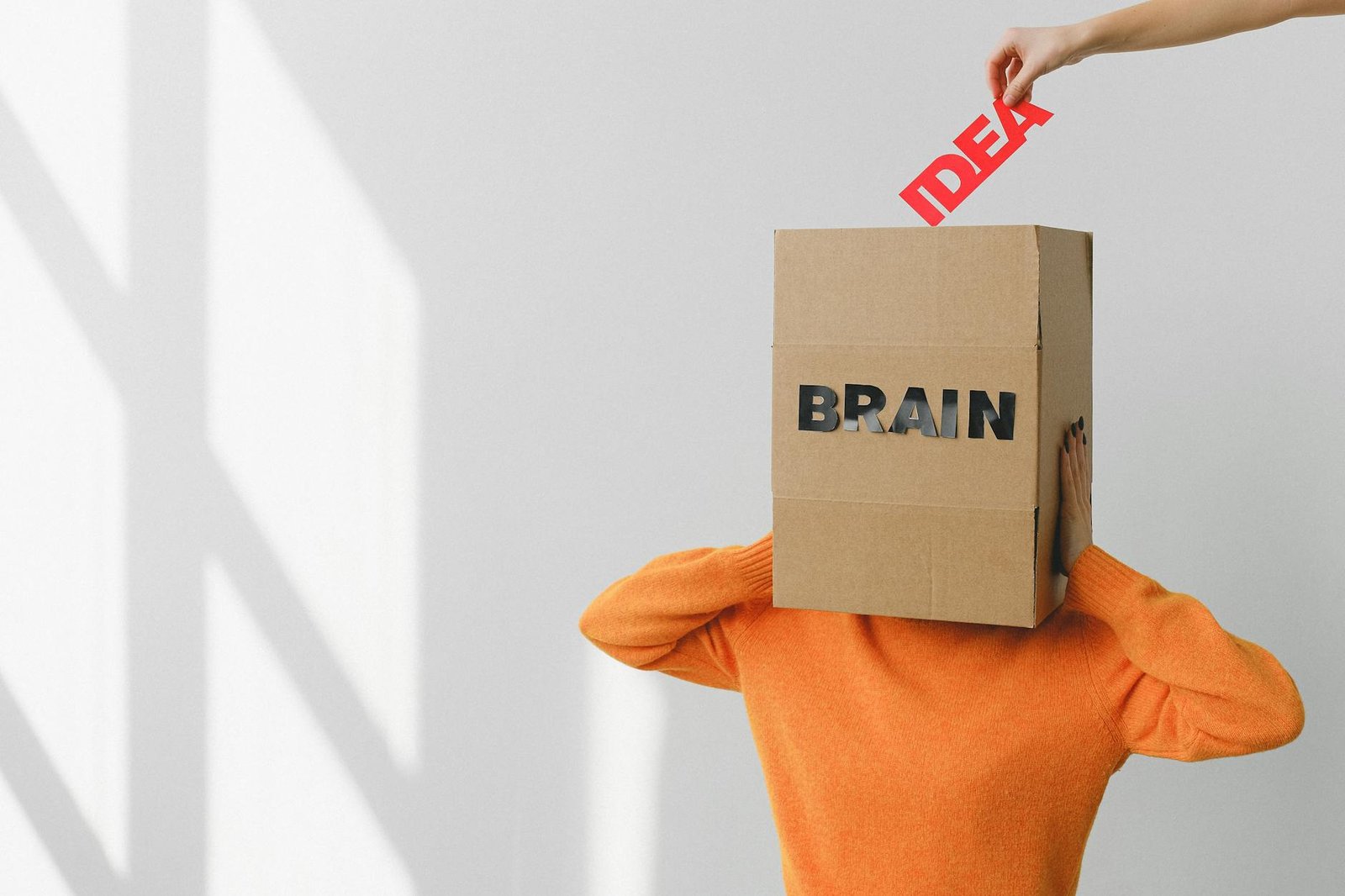
Photo by SHVETS production on <a href="https://www.pexels.com/photo/box-with-brain-inscription-on-head-of-anonymous-woman-7203727/" rel="nofollow">Pexels.com</a>
In the world of academic debates, especially in the realms of education and learning science, two powerful camps dominate the conversation: neuroscience and cognitive science. Both wield the “science” tag proudly and are often used to critique progressive educational models, particularly constructivism. However, as the discussions unfold, a crucial flaw in both disciplines emerges: reductionism. While the neuro-reductionism debate is gaining ground, it’s time we also challenge the cognitive reductionism that is often overlooked.
Neuro-Reductionism: Overselling the Brain
Neuro-reductionism refers to the oversimplified view that complex learning processes can be directly understood and explained by brain science alone. Proponents of this view tend to believe that insights from brain imaging, like fMRI, are all we need to design effective educational practices. But this is far from the truth.
Several experts have pointed out the dangers of this approach. Daniel Ansari, a cognitive neuroscientist, has argued that neuroscience cannot directly determine the effectiveness of pedagogical approaches. Neural data, although informative, only provides a snapshot of the brain’s response to different tasks; it does not directly speak to what is effective in teaching or how to improve pedagogy. Neuroscience, in its current state, can inform us about the neural correlates of learning, such as intervention-specific gains in reading, but it cannot tell us what works in the classroom.
Mirjam Neelen and Paul A. Kirschner have similarly warned against the overuse of brain imaging techniques in educational contexts. They emphasize that, on their own, brain scans offer little practical insight into learning outcomes. At best, these tools should be paired with behavioral research to understand the underlying processes of learning—neuroscience alone cannot dictate instructional practices.
Steven Pinker has also weighed in, stating that claims about neural plasticity are often dressed up in “neurospeak” and treated as groundbreaking revelations when they are really just basic facts about learning and development. This phenomenon distorts the practical value of neuroscience and contributes to the rise of pseudoscience in education.
Cognitive Reductionism: Ignoring the Bigger Picture
While neuroscience is being called out for reductionism, cognitive science also carries its own baggage of oversimplification. Cognitive reductionism refers to the tendency to break down complex cognitive processes—such as memory, decision-making, or problem-solving—into isolated components, often neglecting the broader, interactive dynamics of learning.
Many cognitive science-driven models focus heavily on individual cognition, disregarding the social, cultural, and contextual factors that play a pivotal role in learning. This reductionist view leads to an emphasis on standardized tests, metrics, and quantifiable measures of learning, such as PISA scores, which fail to capture the full complexity of real-world skills and life success.
For example, standardized tests are often used as a measure of educational success, but these tests fail to account for the diversity of human cognition and the variety of skills required in real life. They emphasize narrow skills—like rote memorization or basic problem-solving—that may be irrelevant to thriving in dynamic, complex environments. Cognitive science models that center these tests risk reinforcing social inequalities, shaping educational systems that reward conformity while punishing creativity and critical thinking.
This view often misses the point that cognitive development is deeply embedded in social contexts, and cognitive science alone cannot account for the richness of learning that occurs in diverse environments. The social construction of knowledge, values, and power dynamics is a critical element that reductionist models often ignore.
The Dangers of Reductionism in Educational Science
The allure of reductionism in both neuroscience and cognitive science lies in its simplicity. By breaking down learning into basic components—whether it’s neural activity or individual cognitive processes—these fields promise a clear and easily digestible solution to educational challenges. However, this simplicity comes at a cost. The reduction of complex, dynamic systems into isolated parts limits our understanding and risks ignoring crucial aspects of learning, such as the interplay between individuals, environments, and culture.
One of the consequences of reductionism is the over-reliance on “one-size-fits-all” solutions. For example, cognitive load theory has gained widespread popularity in educational circles, offering valuable insights into how information is processed and retained. Yet, as with many educational theories, the tendency to apply it universally can be problematic. Cognitive load theory can be beneficial, but it should not be used to sanction a single approach, like rote instruction, while dismissing all others. The real world of learning is far too complex to be reduced to one model or methodology.
Moreover, the focus on narrow metrics—such as test scores or specific cognitive measures—can lead to what sociologists call Goodhart’s Law and Campbell’s Law: when a metric becomes the target, it loses its value. Educational systems that focus too heavily on standardized testing, for instance, often end up “teaching to the test,” creating an artificial environment that doesn’t truly measure or foster learning. This can be damaging in the long run, as it shapes educational policies and practices based on flawed assumptions about how learning works.
Cognitive Science and Neuroscience: Complementary, Not Dominant
Both neuroscience and cognitive science offer valuable insights, but they should be understood as complementary, not as the ultimate answers to the complexities of learning. The key is to recognize the bounded applicability of these tools and theories. As Dave Snowden points out, ideas, theories, and methods are useful only within specific contexts and should not be universally applied.
In the world of education, the ultimate goal should be to design systems and practices that support diverse learners, acknowledging the interplay of cognitive, social, emotional, and environmental factors. Rather than relying on narrow, reductionist models, we should embrace a holistic view that integrates insights from neuroscience, cognitive science, behavioral science, and educational psychology.
Conclusion: Embrace Complexity, Reject Reductionism
While both cognitive science and neuroscience have contributed valuable tools and frameworks to our understanding of learning, we must be cautious of falling into the trap of reductionism. Education is too complex, dynamic, and context-dependent to be reduced to a simple formula based on brain scans or cognitive models. Learning is shaped by the interaction of cognitive, social, emotional, and cultural factors, and any approach that ignores this complexity is bound to fail.
Instead of adhering to rigid, reductionist models, we should embrace the complexity of human learning and seek integrative, multifaceted approaches that respect the diversity of learners. Both cognitive science and neuroscience have important roles to play, but they must be part of a broader, more nuanced understanding of how people learn and grow.
The future of education lies not in oversimplified models or dogmatic adherence to one approach, but in our ability to see the big picture—the intricate web of cognitive, neural, social, and environmental factors that come together to shape the learning process. Let’s move beyond reductionism and start addressing education as the complex, dynamic system it truly is.
About the Author
