
Intro:
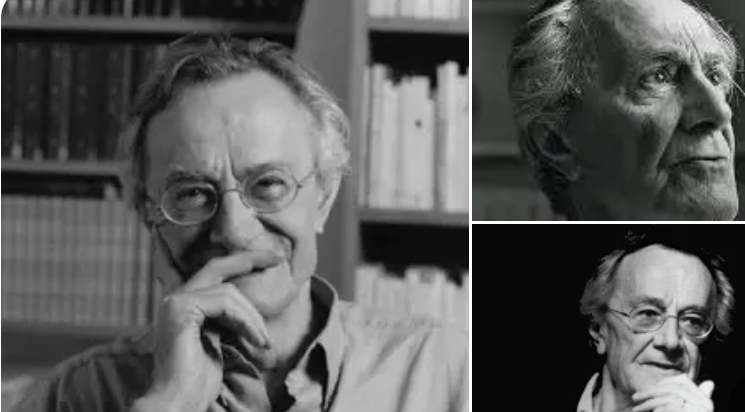
Jean-François Lyotard, one of the most influential philosophers of the 20th century, revolutionized how we think about knowledge, learning, and education in a rapidly changing world. His seminal work, The Postmodern Condition, critiques traditional systems of education and offers profound insights into the shifting paradigms of knowledge in postindustrial societies. As we navigate an era dominated by technology, commercialization, and fragmented narratives, Lyotard’s ideas remain strikingly relevant. Here are 10 key insights from Lyotard that challenge conventional approaches to education and inspire new ways of thinking about learning.
1. The Collapse of “Grand Narratives” in Education
Lyotard famously argued that modern education is built on “Grand Narratives”—universal stories like progress, emancipation, and truth—that no longer hold sway. He believed these metanarratives suppress diversity and difference, calling for their replacement with smaller, localized narratives (“petits récits”) that celebrate multiplicity.
2. Knowledge as a Commodity
In the postmodern age, Lyotard warned that knowledge is increasingly treated as a product to be bought and sold, losing its intrinsic value. This commodification of education prioritizes exchange value over use value, reducing learning to a tool for economic efficiency.
3. The Principle of Performativity
Lyotard criticized the dominance of performativity in education—a system where all knowledge is judged solely by its efficiency and utility. He argued this approach stifles creativity, imagination, and the plurality of language games essential for meaningful learning.
4. Legitimation Through Paralogy, Not Consensus
Instead of seeking universal consensus or efficiency, Lyotard proposed “paralogy” as the basis for legitimating knowledge. Paralogy celebrates dissensus, innovation, and the constant generation of new ideas, making it a cornerstone of postmodern education.
5. Embracing Instability and Difference
For Lyotard, the goal of education is not stability or agreement but the celebration of instability and difference. By fostering environments that embrace the unknowable and irreducible, educators can cultivate intellectual agility and openness to change.
6. Critique of Technological Determinism
Lyotard warned against allowing technological demands to dictate what is taught in schools. When education becomes subservient to the needs of the system, it risks losing sight of beauty, truth, and ethical considerations.
7. The Role of Little Narratives (“Petits Récits”)
Lyotard championed “little narratives” as a way to resist totalizing systems of thought. These micro-stories allow individuals to bear witness to their unique experiences, promoting variation and resisting global categorization.
8. Education Beyond Economic Utility
Rejecting the neoliberal model of education as a driver of economic growth, Lyotard emphasized the importance of viewing education as a space for critical inquiry, creativity, and ethical reflection—not merely workforce preparation.
9. The Ethical Obligation to Bear Witness
Lyotard viewed education as an ethical practice rooted in bearing witness to differences and multiplicities. For him, teaching was less about imparting fixed truths and more about celebrating the richness of human experience.
10. A Call to Resist Totalizing Systems
Finally, Lyotard urged educators and learners alike to resist systems that seek to homogenize knowledge and culture. By challenging oppressive structures and embracing radical differences, education can become a transformative force for societal change.
Conclusion:
Jean-François Lyotard’s insights into learning and education challenge us to rethink the purpose and practice of education in a postmodern world. By rejecting rigid frameworks and embracing multiplicity, creativity, and ethical responsibility, we can reimagine education as a dynamic process that empowers individuals and honors the complexity of human life. In doing so, we honor Lyotard’s enduring legacy and contribute to a more just and inclusive future.
About the Author
