
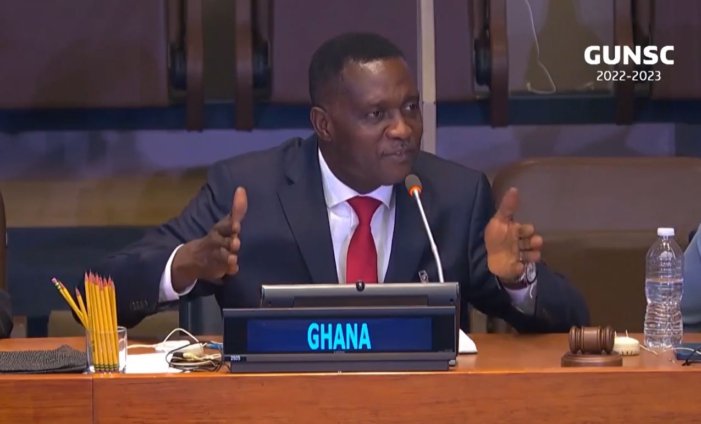
“You cannot memorize your way out of poverty” Dr. Yaw Osei Adutwum, Minister of Education in Ghana
Professor Michael Young’s concept of “powerful knowledge” has become a cornerstone of discussions around the Knowledge-Rich Curriculum. However, Young himself is critical of how his ideas have been co-opted, often aligning with traditionalist or elitist agendas, as highlighted in a recent TES article.
This critique resonates with a statement by Ghana’s Education Minister, who asserted, “You cannot memorize your way out of poverty.” When viewed alongside Young’s reflections, this presents an opportunity to rethink the purpose of education, especially in contexts of inequality.
1. The Misuse of “Powerful Knowledge”
- Young introduced powerful knowledge to emphasize the value of disciplinary knowledge that students wouldn’t encounter in everyday life.
- Yet, it has often been misinterpreted as a defense of rote memorization and traditional curriculums that prioritize elitism over accessibility.
- Young argues that the curriculum should empower students to think critically, not just reproduce knowledge for tests.
2. Lessons from South Africa: Young’s Turning Point
- Young’s ideas evolved significantly during his work in post-apartheid South Africa.
- The shift from a top-down curriculum to a democratic, constructivist approach exposed teachers’ lack of preparation for radical educational change.
- This experience revealed the dual role of education: while it can reproduce societal inequalities, it also holds the potential to transform lives by providing access to empowering knowledge.
3. Ghana’s Minister: Memorization vs. Transformation
- Ghana’s Education Minister challenges the reliance on rote memorization in education systems.
- His statement underscores a global issue: memorization alone does not equip students to break free from cycles of poverty.
- Like Young, the minister advocates for an education that fosters understanding, creativity, and the ability to apply knowledge in real-world contexts.
4. Bridging Perspectives: Toward a Transformative Curriculum
- Both Young’s and the minister’s critiques highlight the importance of how knowledge is taught, not just what is taught.
- A transformative curriculum must:
- Move beyond rote learning to emphasize critical thinking and application.
- Ensure accessibility of powerful knowledge to all students, regardless of socioeconomic background.
- Recognize the socio-political context of education, balancing the reproduction of knowledge with opportunities for empowerment.
5. What Can We Learn?
- Education must be more than a tool for preserving tradition or meeting political agendas.
- A truly knowledge-rich curriculum is one that equips students to think, innovate, and engage in the communities of knowledge that shape their world.
- Policymakers, educators, and institutions must collaborate to ensure education becomes a vehicle for transformation, not just memorization.
Conclusion
Professor Michael Young’s evolving ideas remind us that the true power of education lies not in reproducing knowledge but in enabling learners to use it. Ghana’s Education Minister’s statement complements this vision, calling for a global reevaluation of education systems that still prioritize memorization over empowerment.
Together, these perspectives challenge us to build curriculums that are not only knowledge-rich but also transformative, ensuring every student has the opportunity to think, act, and change their circumstances.
Watch: Ghana’s Minister of Education on why “You cannot memorize your way out of poverty” [ https://x.com/therealdaddymo1/status/1575008667606274048?mx=2 ]
Further Reading:
TES Article: Michael Young on What We’ve Got Wrong About Knowledge and Curriculum [Insert link]
Professor Michael Young’s work has been widely cited as a key reference for Knowledge Rich Curriculum and Memory brigade. He is not happy about it according to a new TES article(link).
About the Author
