
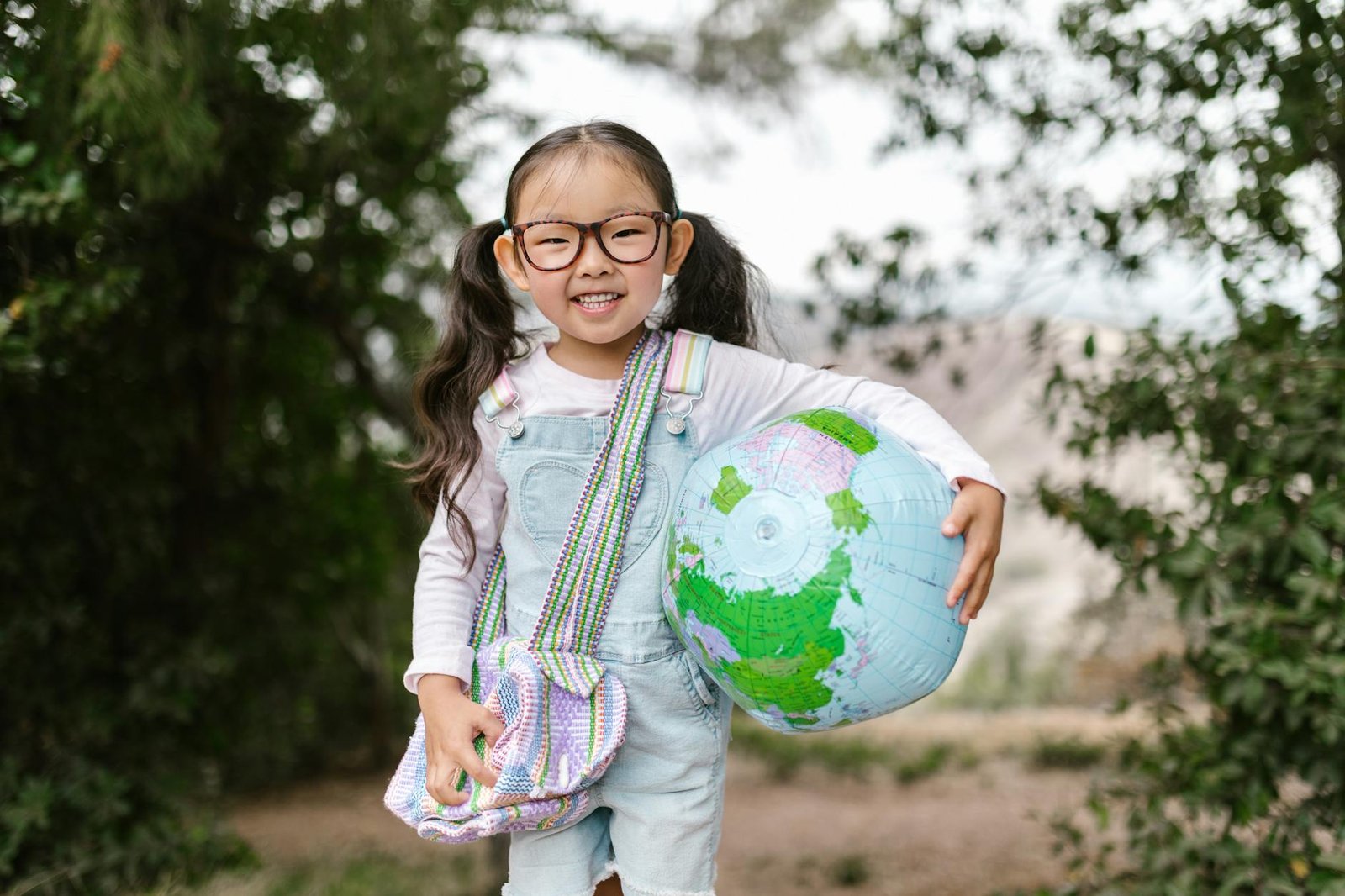
Photo by RDNE Stock project on <a href="https://www.pexels.com/photo/smiling-girl-holding-an-inflatable-globe-8083738/" rel="nofollow">Pexels.com</a>
Gert Biesta, a leading voice in educational philosophy, critiques conventional approaches to education and offers a transformative alternative: world-centered education. Here’s a brief look at how these paradigms differ:
1. Child-Centered Education
- Focus: The individual learner—their needs, interests, and developmental stages.
- Goal: Foster personal growth, self-expression, and autonomy.
- Critique by Biesta: Overemphasizing the child risks isolating them from broader societal and world concerns. It can create a “bubble” where desires and preferences go unchallenged, missing opportunities for growth through encountering the otherness of the world.
2. Curriculum-Centered Education
- Focus: The subject matter and predefined knowledge to be transmitted.
- Goal: Equip students with a structured body of knowledge and skills to meet societal and economic demands.
- Critique by Biesta: A rigid focus on curriculum often reduces education to a mechanical process, sidelining the relational and existential dimensions. It risks treating students as passive recipients, ignoring the dynamic interaction between individuals and the world.
3. World-Centered Education
- Focus: The relational dynamic between students, teachers, and the world.
- Goal: Help students encounter and engage with the world as it is, encouraging maturity, responsibility, and meaningful participation.
- Biesta’s Vision: Education must balance the individual and the curriculum by situating learning in the context of the shared world. Teaching is not about catering to desires but challenging and expanding them, fostering “grown-up” freedom through meaningful engagement with reality.
Why World-Centered Education?
Biesta argues that neither child-centered nor curriculum-centered approaches fully address the existential purpose of education: preparing individuals to live responsibly and relationally in the world. By placing the world at the center, education becomes a transformative process—one that respects individuality, honors knowledge, and prioritizes meaningful participation in a shared human project.
About the Author
