
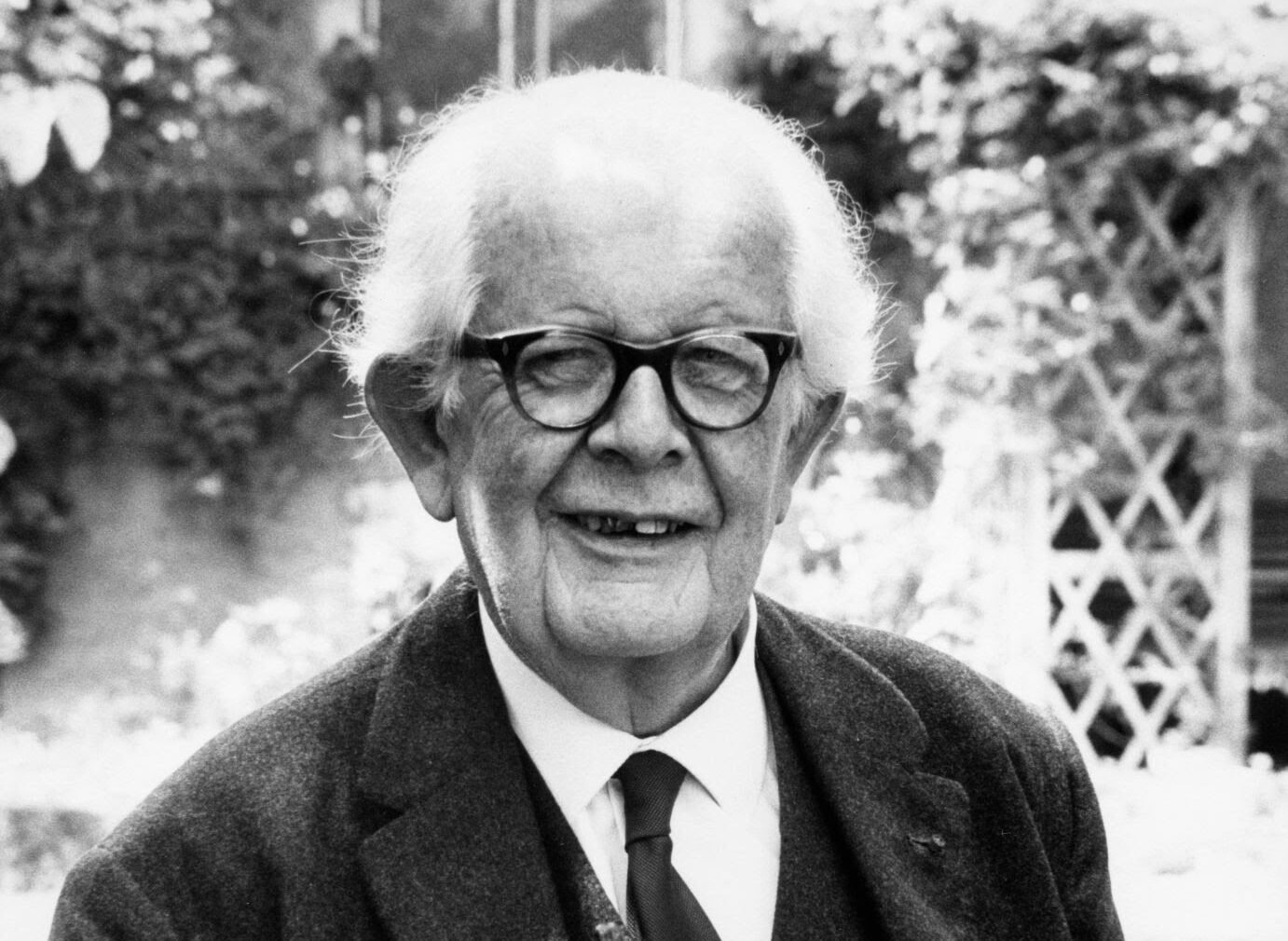
Jean Piaget (1896-1980) Swiss psychologist known for his work in child development in the garden of his Geneva home, July 5th, 1969. (Photo by Ben Martin/Getty Images)
Jean Piaget, one of the most influential thinkers in developmental psychology and education, revolutionized our understanding of how children learn and grow intellectually. His groundbreaking work on epistemology, creativity, and the role of norms in learning continues to shape modern educational practices. In this blogpost, we’ll explore 10 key insights from Piaget that highlight his profound contributions to the field of education.
1. Learning is Not Just About Resembling Adults
Piaget challenged the traditional view of education, which often aims to mold children into replicas of adult societal norms. Instead, he emphasized fostering creativity, even if it means nurturing only a few creators. For Piaget, education was about enabling individuals to think independently and contribute meaningfully to knowledge.
2. Knowledge Develops Through Norms
According to Piaget, true knowledge doesn’t emerge ready-made in a child’s mind. Intellectual norms—such as truth, objectivity, and universality—are developed over time through active engagement with the world. These norms guide the growth of knowledge and are central to his epistemological framework.
3. Action is the Basis of Knowledge
Piaget argued that action—whether physical, social, or intellectual—is foundational to learning. This includes hands-on exploration, reasoning, and interaction with others. He believed that knowledge develops through active participation rather than passive absorption.
4. Equilibration Drives Development
For Piaget, equilibration—the process of balancing assimilation (integrating new information) and accommodation (modifying existing schemas)—is the mechanism behind cognitive development. It explains how learners adapt to new challenges and construct novel knowledge.
5. Autonomy is Key to Learning
Piaget championed autonomy in education. He believed that learners should want to engage in their learning process rather than simply conforming to external expectations. True learning happens when individuals take ownership of their intellectual journey.
6. Group Learning Requires Individualization
While Piaget advocated for group learning as a standard classroom practice, he also stressed the importance of individualization within groups. Without personal reflection and critical thinking, group settings can lead to unthinking conformity, stifling creativity and intellectual growth.
7. Transmission Alone Isn’t Enough
Teaching involves more than transmitting facts; it requires transformation. Piaget highlighted that effective learning occurs when students reconstruct knowledge themselves, moving beyond rote memorization to genuine understanding.
8. Creativity is Central to Education
Whether it’s the genius inventing groundbreaking ideas or an ordinary person reconstructing collective wisdom, creativity plays a vital role in education. Piaget saw every human mind as capable of advancing knowledge through thoughtful rethinking and innovation.
9. Norms Evolve Through Use
Intellectual norms aren’t static—they evolve as they’re used. Better norms emerge through continuous refinement, allowing learners to construct increasingly sophisticated understandings of the world. This dynamic process underscores the “miracle” of human creativity.
10. Teaching Should Empower, Not Disable
For Piaget, good teaching empowers learners by designing tasks that trigger transformative experiences. Rather than enforcing obedience, educators should encourage rational disobedience—helping students critically evaluate what they’ve been taught and develop their own reasoned perspectives.
Jean Piaget’s insights remind us that education is not merely about imparting information but about cultivating creative, autonomous thinkers who can navigate and contribute to an ever-changing world. By embracing these principles, educators and learners alike can unlock the full potential of the learning process.
About the Author
