
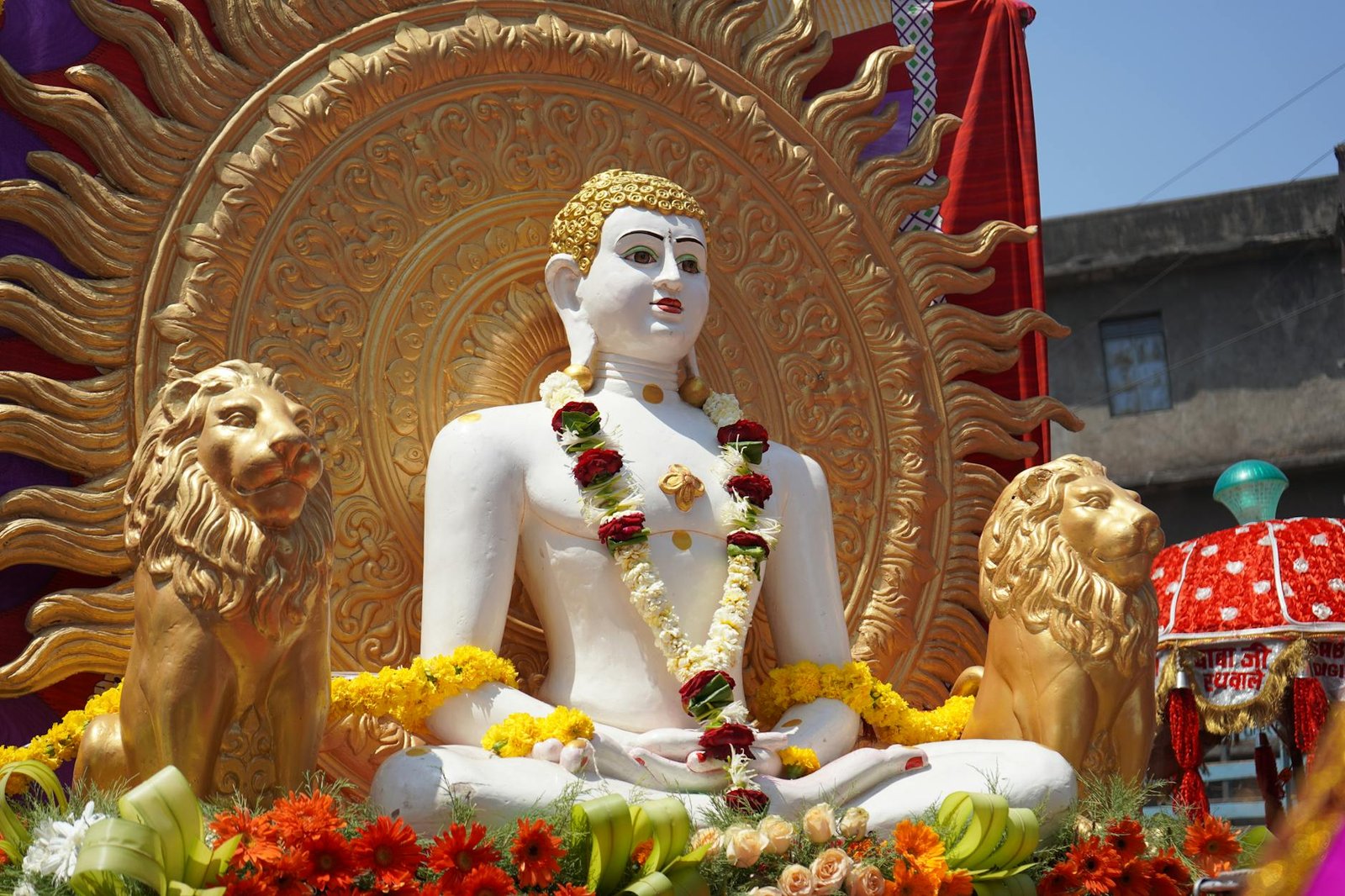
Photo by Chirag Gudhka on <a href="https://www.pexels.com/photo/a-statue-of-a-buddha-in-a-garden-with-flowers-16226968/" rel="nofollow">Pexels.com</a>
Mahavir (Vardhaman Mahaveer), the 24th Tirthankara of Jainism, emphasized values like non-violence (Ahimsa), truth (Satya), and self-discipline. His teachings offer several insights for education and teaching:
- Non-Violence (Ahimsa) in Teaching:
- Compassionate Education: Mahavir’s principle of Ahimsa emphasizes avoiding harm in thought, word, and deed. In the context of education, this suggests creating a safe, supportive, and non-judgmental learning environment where students feel valued and respected.
- Empathy for Diverse Learners: Recognizing the varied abilities and experiences of students, teaching should accommodate and nurture the diversity of learners rather than impose a one-size-fits-all approach.
- Self-Discipline and Self-Realization:
- Encouraging Autonomy: Mahavir’s teachings stress self-discipline and personal responsibility. In education, this translates to fostering student autonomy and self-directed learning, encouraging them to take ownership of their learning and strive for personal growth.
- Holistic Education: Mahavir emphasized the pursuit of inner peace and self-realization, suggesting that education should not focus only on academic achievement but also on the emotional, spiritual, and ethical development of students.
- Truth (Satya) and Integrity:
- Honesty in Learning: Mahavir valued truthfulness, which can be integrated into teaching by encouraging students to seek the truth, be honest in their inquiries, and approach learning with integrity.
- Critical Thinking: Promoting the value of truth can encourage critical thinking and open-mindedness in students, helping them question assumptions and explore different perspectives.
- Detachment from Materialism:
- Value of Knowledge over Wealth: Mahavir believed in detachment from material possessions. In the context of education, this suggests prioritizing knowledge, personal development, and ethical growth over material success, fostering an attitude of lifelong learning and intrinsic motivation.
- Focus on Purposeful Learning: Education should cultivate the pursuit of knowledge and wisdom that serves a higher purpose, rather than simply preparing students for a competitive or materialistic world.
- Non-Attachment and Emotional Balance:
- Balanced Mindset in Education: Mahavir taught the importance of non-attachment, which can be applied to education by helping students develop emotional balance, manage stress, and approach challenges with resilience. This supports mental well-being and emotional intelligence in learners.
- Teaching to Handle Failures: The focus on detachment from outcomes helps students see failures as learning opportunities rather than setbacks, encouraging perseverance and personal growth.
- Environmental Awareness:
- Respect for Nature: Jainism emphasizes living in harmony with nature. In teaching, this can inspire environmental education that instills values of sustainability, respect for the environment, and an understanding of interconnectedness between all living beings.
Mahavir’s teachings suggest that education should nurture not only intellectual growth but also ethical and emotional development, fostering a well-rounded, compassionate, and self-aware individual.
About the Author
