
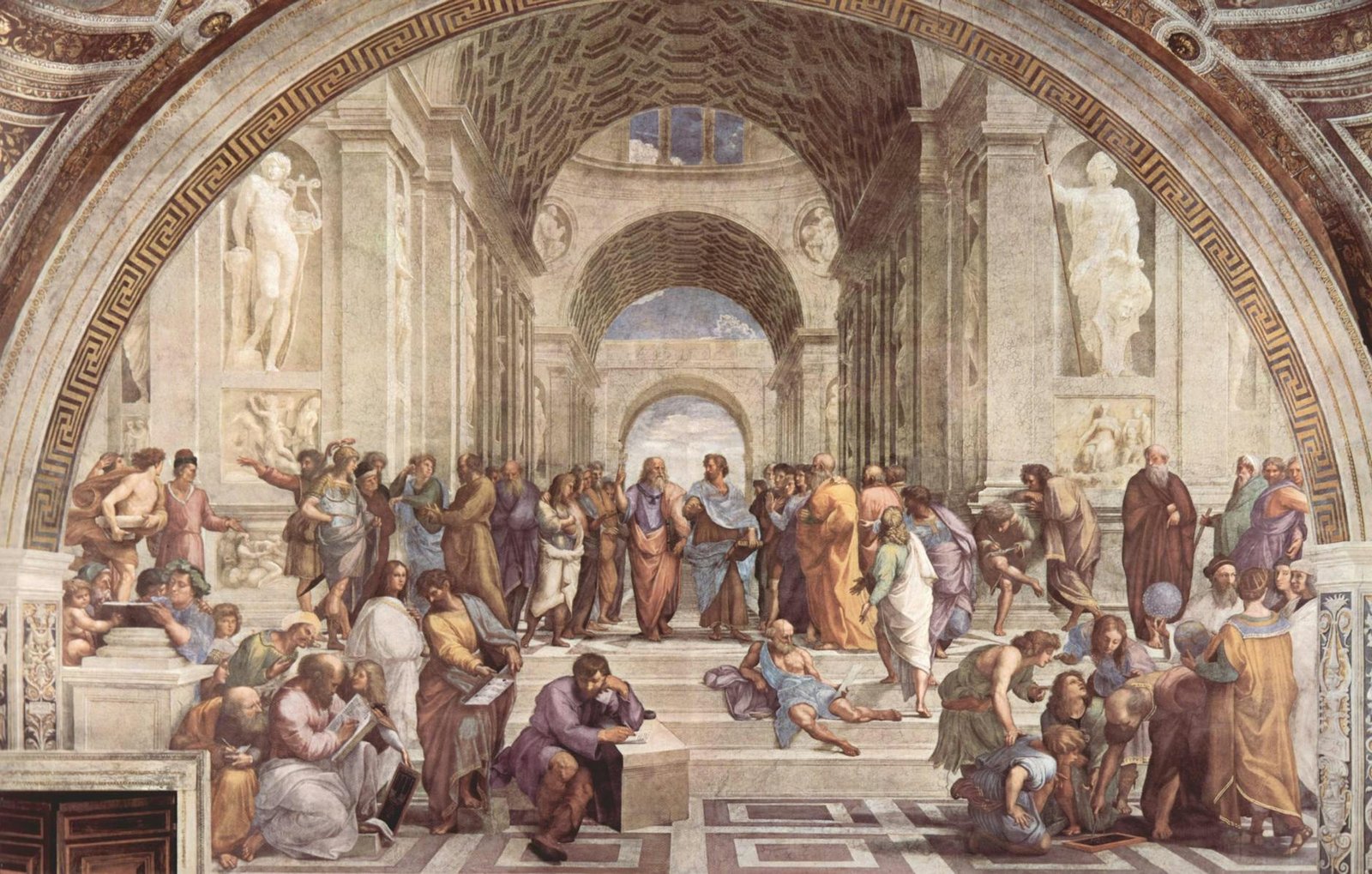
Photo by Pixabay on <a href="https://www.pexels.com/photo/nativity-painting-of-people-inside-a-dome-159862/" rel="nofollow">Pexels.com</a>
Plato was a groundbreaking ancient Greek philosopher who fundamentally transformed our understanding of knowledge, learning, and human potential. Born around 427-423 BCE, he emerged as one of the most influential thinkers in Western philosophical tradition.
The Philosophical Foundation of Learning
Plato’s approach to education and learning was revolutionary for his time. He believed that true learning transcends mere information acquisition and instead involves a profound journey of understanding ideal forms and developing rational thinking[3][5].
Key Philosophical Principles of Learning:
- Learning is a process of uncovering objective truths
- Critical thinking and logical analysis are essential
- Knowledge exists beyond sensory perception
- Education should cultivate reason and virtue
The Academy: A Pioneering Educational Model
In 388 BCE, Plato founded the Academy in Athens, which became one of the earliest recognized institutions of higher education[5]. This wasn’t just a school, but an intellectual sanctuary where:
- Philosophical discussions and debates were encouraged
- Students engaged through lectures and interactive dialogues
- Multiple disciplines were explored, including mathematics, astronomy, ethics, and metaphysics
Pedagogical Approach
Plato’s pedagogical method was deeply influenced by his mentor Socrates. He championed the dialectic method, which involves:
- Using questions to dig deeper into truths
- Challenging preconceived notions
- Encouraging critical examination of ideas[5]
Fundamental Educational Beliefs
Plato believed that education should:
- Develop rational thinking
- Harmonize emotional responses
- Create virtuous individuals capable of contributing to society[3]
His philosophy emphasized that true education is about developing the whole person – not just accumulating knowledge, but cultivating wisdom, character, and understanding.
Lasting Impact
Plato’s influence on Western philosophy and education is immense. As Alfred North Whitehead famously remarked, “the safest characterization of the European philosophical tradition is that it consists of a series of footnotes to Plato”[1].
Modern educators can learn from Plato’s core principles:
- Prioritize critical thinking over rote memorization
- Create learning environments that encourage dialogue
- View education as a holistic process of personal transformation
- Recognize that true knowledge goes beyond surface-level understanding
Plato reminds us that education is not just about what we learn, but how we learn – a timeless insight that continues to inspire educators and philosophers worldwide.
Citations:
[1] https://iep.utm.edu/platopol/
[2] https://docs.lib.purdue.edu/cgi/viewcontent.cgi?article=3201&context=open_access_dissertations
[3] https://www.britannica.com/biography/Plato
[4] https://lsolum.typepad.com/legal_theory_lexicon/
[5] https://www.thecollector.com/plato-complete-overview-life-work-philosophy/
[6] https://www.researchgate.net/topic/Language-Teaching
[7] https://en.wikipedia.org/wiki/Plato
About the Author
