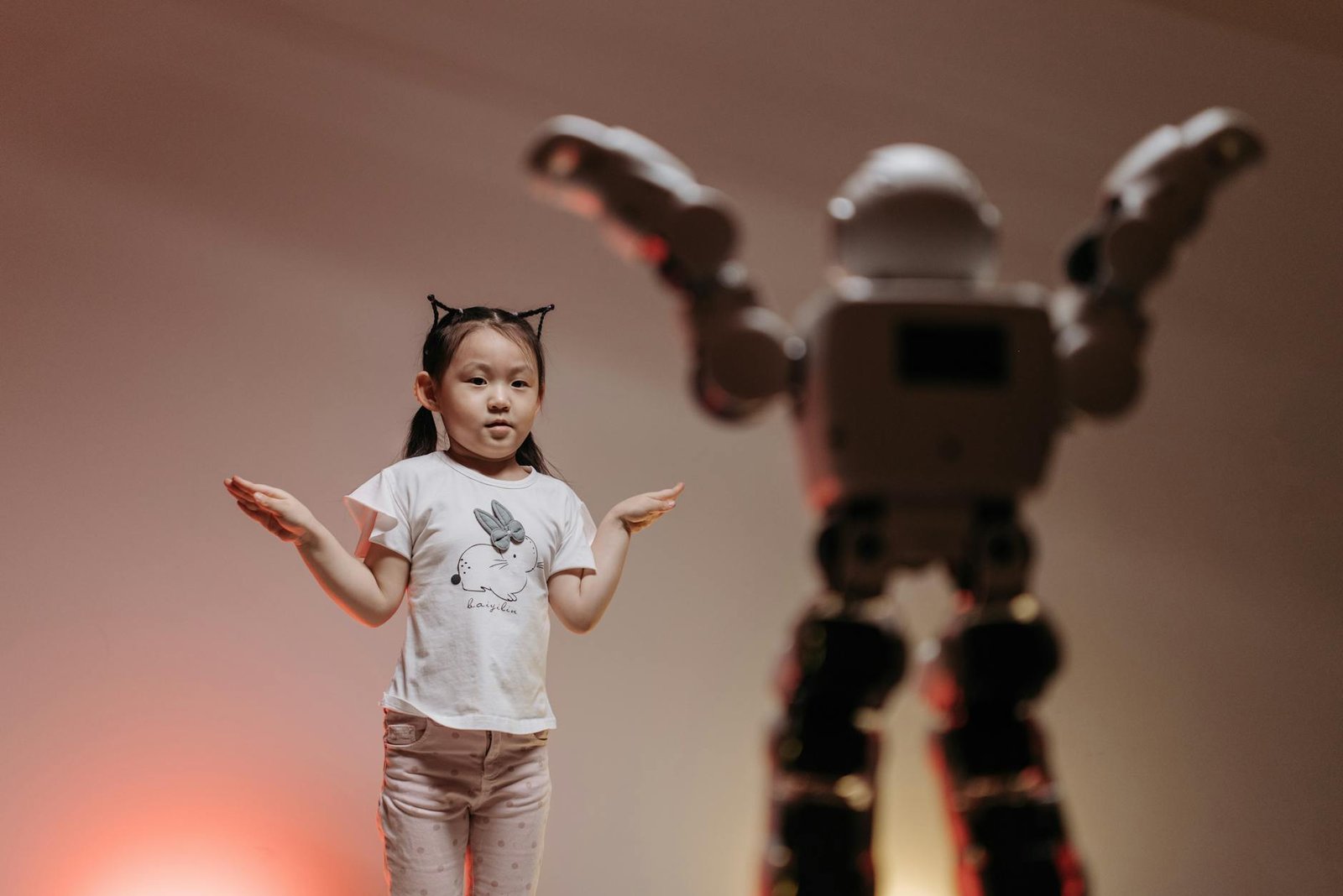
Photo by Pavel Danilyuk on <a href="https://www.pexels.com/photo/a-robot-imitating-a-girl-s-movement-8294811/" rel="nofollow">Pexels.com</a>
In the dynamic landscape of education, one concept stands out as a game-changer: personalized learning. By tailoring educational experiences to individual student needs, personalized learning offers a pathway to enhance engagement, improve outcomes, and address the unique challenges of each learner. At the forefront of this transformation is artificial intelligence (AI), an innovation poised to reshape how we learn and teach.
The Power of Personalization in Education
Traditional education systems often employ a one-size-fits-all approach, delivering uniform content to students regardless of their individual capabilities, interests, or learning styles. While this model has its merits, it often overlooks the diverse needs of students, leading to disengagement and uneven progress.
Personalized learning, on the other hand, recognizes that every student learns differently. It adapts teaching methods, content, and pacing to suit the learner’s unique requirements. This approach fosters greater engagement, as students feel more connected to material that resonates with their personal experiences and capabilities.
How AI Enables Personalized Learning
AI is the driving force behind personalized learning, enabling educators to move beyond traditional methods. Here’s how AI achieves this:
- Adaptive Learning Platforms AI-powered platforms like DreamBox, Khan Academy, and Smart Sparrow analyze student performance in real time. By identifying patterns and areas of struggle, these systems adapt content delivery to match the learner’s pace and comprehension level. For instance, a student excelling in mathematics might be offered advanced problem sets, while another needing foundational reinforcement is provided targeted exercises.
- Understanding Learning Styles AI tools can assess and adapt to individual learning styles. Visual learners might be presented with infographics and videos, while auditory learners receive podcast-style lessons. Kinesthetic learners could engage with interactive simulations and hands-on activities, ensuring content is delivered in the most effective format.
- Real-Time Feedback and Assessment Unlike traditional exams that provide delayed feedback, AI systems offer instant insights. Tools like Gradescope and Century Tech can evaluate assignments and quizzes promptly, highlighting areas for improvement. This allows students to correct mistakes and reinforce concepts in real-time, fostering a continuous learning loop.
- Customized Learning Paths AI can generate personalized curricula based on a student’s goals, interests, and academic performance. For example, platforms like Coursera and Edmentum create tailored pathways that align with career aspirations or specific skill development, helping learners stay motivated and focused.
- Enhanced Engagement By using gamification, interactive content, and immersive experiences such as virtual reality (VR) and augmented reality (AR), AI-powered tools make learning more engaging. This not only holds students’ attention but also deepens their understanding of complex concepts.
The Role of Educators in AI-Driven Learning
While AI offers unparalleled advantages, it does not replace the need for skilled educators. Teachers play a crucial role in:
- Guiding and Mentoring: AI can deliver content, but educators provide the emotional support and mentorship that technology cannot replicate.
- Ensuring Equity: Teachers can address biases in AI algorithms and advocate for inclusive practices to ensure all students benefit from personalized learning.
- Integrating AI Tools: Educators act as facilitators, blending AI-driven insights with traditional teaching methods to create a holistic learning experience.
Challenges and Considerations
Despite its potential, AI-driven personalized learning faces challenges:
- Data Privacy: Protecting sensitive student data is paramount. Institutions must ensure robust security measures are in place.
- Accessibility: Bridging the digital divide is essential to ensure equitable access to AI tools for all students, regardless of socioeconomic status.
- Algorithmic Bias: Continuous monitoring and refinement of AI algorithms are necessary to prevent biases that may disadvantage certain groups.
A Vision for the Future
The integration of AI into education is not just about improving test scores—it’s about empowering learners to reach their full potential. By embracing AI, educators can create environments where every student feels seen, valued, and capable of achieving greatness.
As we navigate this transformative era, collaboration between educators, technologists, and policymakers will be essential. Together, we can harness the power of AI to build a future where personalized learning is not a privilege but a standard for all.
About the Author
