
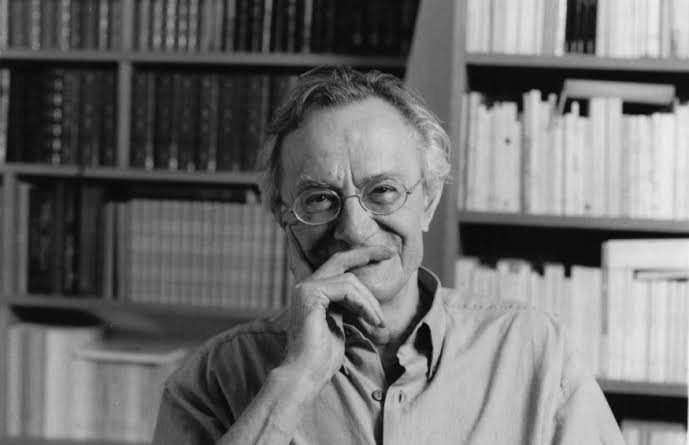
In the ever-evolving landscape of philosophy, few thinkers have left as indelible a mark on contemporary thought as Jean-François Lyotard. A towering figure in 20th-century intellectual history, Lyotard’s work continues to resonate deeply in discussions about knowledge, education, and society—especially as we navigate the complexities of a postmodern world.
Who Was Jean-François Lyotard?
Born in Versailles in 1924, Lyotard was a French philosopher whose ideas bridged phenomenology, Marxism, and poststructuralism. His academic journey began with studies under Maurice Merleau-Ponty, but his intellectual trajectory soon expanded into radical political activism and philosophical innovation. By the time he published The Postmodern Condition: A Report on Knowledge in 1979 (translated into English in 1984), Lyotard had cemented his place as one of the foremost voices in what would become known as the “postmodern debate.”
Lyotard’s life was marked by both intellectual rigor and political engagement. From teaching philosophy in secondary schools to participating in revolutionary movements like Socialisme ou Barbarie, his career reflected a commitment to questioning established systems of power and knowledge. Later, as a professor at institutions such as the University of Paris VIII and universities across the globe, Lyotard shaped generations of thinkers who grappled with the challenges of modernity and its discontents.
The Postmodern Condition: A Radical Reimagining of Knowledge
At the heart of Lyotard’s philosophy lies his concept of the “postmodern condition.” In The Postmodern Condition, he famously defined postmodernity as an “incredulity toward metanarratives”—a skepticism toward the grand narratives that have traditionally legitimized Western culture, science, and education. These metanarratives include Enlightenment ideals of progress, truth, and emancipation, which claim to offer universal solutions while often masking structures of domination.
Instead of clinging to these overarching stories, Lyotard advocated for petits récits—little narratives that resist closure and totality. These fragmented tales celebrate multiplicity, difference, and the unknowable, offering a way to embrace the complexity of human experience without reducing it to simplistic formulas. For Lyotard, this shift wasn’t merely theoretical; it carried profound implications for how we understand knowledge, education, and even ethics.
Education in the Age of Performativity
One of Lyotard’s most enduring critiques centers on the commercialization of education. He argued that in postindustrial societies, knowledge has become commodified—a tool valued not for its intrinsic worth but for its exchange value. This transformation is driven by what he called the “performativity principle,” where efficiency and operational utility take precedence over deeper questions of truth, beauty, or justice.
Under the logic of performativity, education becomes instrumentalized—a means to enhance societal productivity rather than foster critical thinking or creativity. Educators are evaluated based on their ability to transmit skills efficiently, and students are trained to serve economic demands rather than cultivate intellectual curiosity. As Lyotard warned, this approach risks eroding the very essence of education as a space for exploration and dissent.
Instead of legitimating education through performativity, Lyotard proposed an alternative vision rooted in paralogy. Paralogy celebrates instability, dissensus, and innovation, encouraging us to seek new questions and possibilities rather than settle for consensus. In this framework, education becomes a dynamic process of invention and reinvention, guided by imagination and ethical responsibility.
Beyond Modernity: Toward a Postmodern Ethics
Lyotard’s rejection of metanarratives doesn’t imply nihilism or relativism. On the contrary, his work underscores the importance of bearing witness to difference and resisting totalizing systems of thought. In The Differend (1988), he introduced the concept of the “differend,” describing situations where conflicting perspectives cannot be resolved through universal principles without doing violence to one side. This insight challenges us to remain vigilant against the ways power operates within discourse and to honor the irreducible diversity of human experiences.
For Lyotard, embracing the postmodern condition means recognizing that there is no single, definitive answer to the question of how we should live or what constitutes legitimate knowledge. Instead, it invites us to engage in ongoing dialogue, to celebrate the ill-defined and unpresentable, and to remain open to the unexpected.
Why Lyotard Matters Today
Decades after his death in 1998, Lyotard’s ideas feel more relevant than ever. In an era dominated by neoliberal policies, technological acceleration, and the commodification of information, his critique of performativity offers a powerful lens through which to examine the priorities of modern educational institutions. As governments and corporations increasingly treat education as a driver of economic growth, Lyotard reminds us of the dangers of reducing knowledge to a mere instrument of production.
Moreover, his emphasis on plurality and paralogy speaks directly to our current moment, characterized by polarization, misinformation, and calls for greater inclusivity. By championing little narratives and celebrating difference, Lyotard provides a roadmap for navigating the tensions between unity and diversity, stability and change.
Conclusion: A Call to Embrace the Unknowable
Jean-François Lyotard’s legacy challenges us to rethink the foundations of knowledge and education in a rapidly changing world. His insistence on resisting grand narratives and embracing the complexity of human experience invites us to reimagine what it means to learn, teach, and create. In doing so, he reminds us that the pursuit of knowledge is not about finding final answers but about remaining curious, courageous, and committed to exploring the unknown.
As we face the uncertainties of the 21st century, Lyotard’s voice continues to inspire those who dare to question the status quo and dream of new possibilities. Perhaps that is the true gift of the postmodern condition: the freedom to imagine a future that defies easy categorization and celebrates the richness of our shared humanity.
About the Author
