
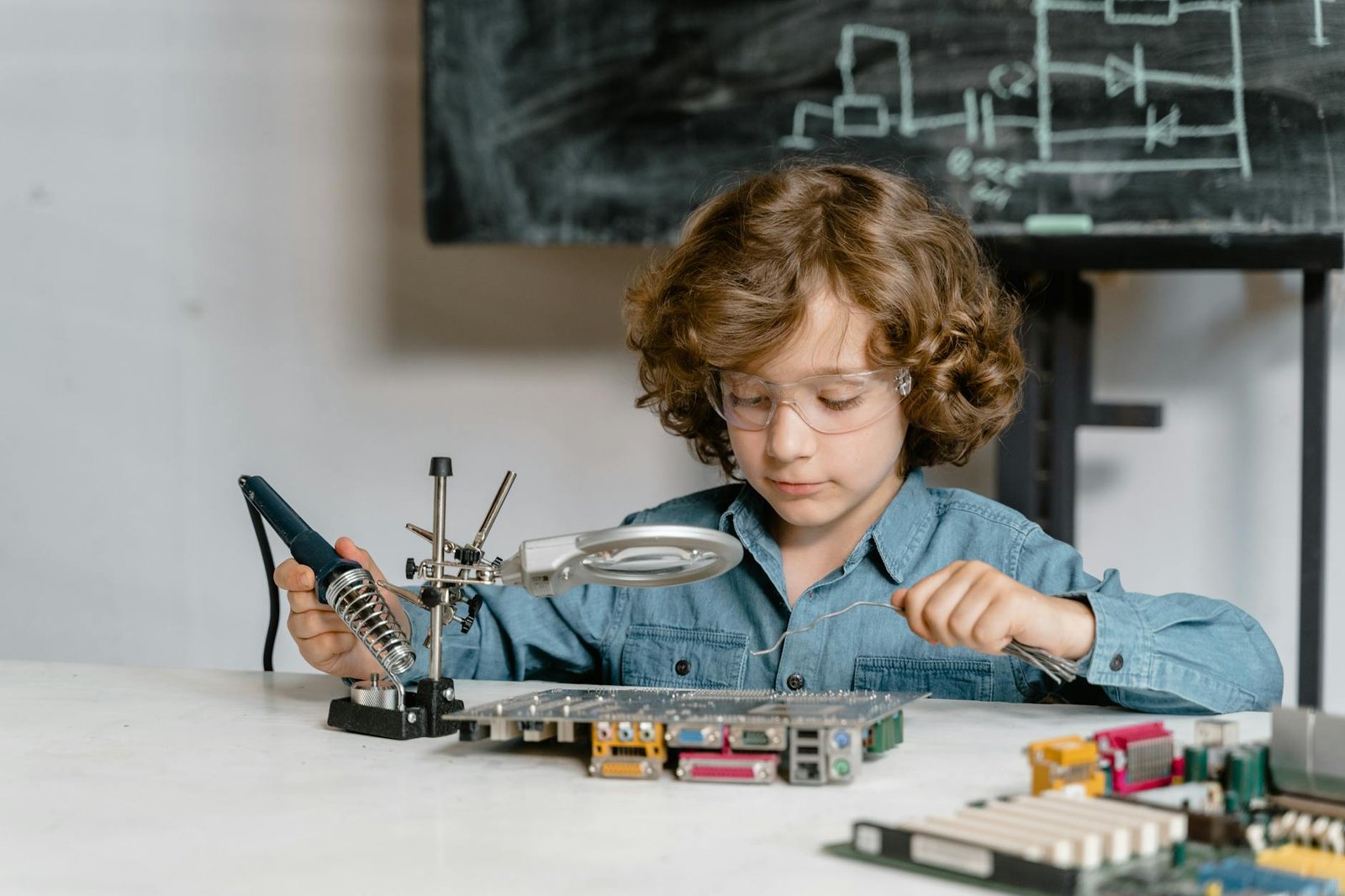
In a world that thrives on innovation, the traditional “sit-and-listen” model of education is being reimagined. Enter Maker Learning, a transformative educational approach that emphasizes hands-on, creative problem-solving. At its core, maker learning is about empowering learners to build, tinker, and create, blending the physical and digital worlds into dynamic learning experiences.
What is Maker Learning?
Maker learning stems from the “Maker Movement,” which celebrates DIY culture, innovation, and technology-driven craftsmanship. In an educational context, it involves:
- Project-Based Learning (PBL): Students tackle real-world problems by designing and creating tangible solutions.
- Interdisciplinary Approaches: Combining STEM (Science, Technology, Engineering, Math) with arts and humanities to foster holistic thinking.
- Open-Ended Exploration: Encouraging learners to experiment, fail, and iterate in a safe environment.
From building simple circuits to programming robots or crafting sustainable solutions, maker learning nurtures a mindset where creativity meets technical acumen.
Why Maker Learning Matters
- Develops Critical 21st-Century Skills Maker learning promotes critical thinking, collaboration, and communication—skills essential for success in today’s interconnected world. It also cultivates a growth mindset by showing students that failure is just a stepping stone to success.
- Bridges the Gap Between Theory and Practice While traditional education often emphasizes theoretical knowledge, maker learning enables students to apply concepts in tangible ways. For instance, building a solar-powered car integrates physics, engineering, and environmental science.
- Fosters Inclusivity and Equity By providing access to tools and technologies, maker learning democratizes education. Makerspaces—equipped with 3D printers, laser cutters, and coding platforms—become hubs of creativity for all students, regardless of socioeconomic background.
- Inspires Lifelong Learning Maker learning instills curiosity and self-directed learning. Students are not just consumers of knowledge; they become creators, innovators, and problem-solvers.
How to Implement Maker Learning
1. Create a Makerspace Design a dedicated area where students can experiment with tools and materials. Start small—a corner with basic craft supplies and coding kits can evolve into a full-fledged lab over time.
2. Foster a Maker Mindset Encourage experimentation and resilience. Let students know that “failure” is an essential part of the process.
3. Integrate with Curriculum Align maker projects with curricular goals. For example, a history lesson could include building scale models of ancient structures, blending history with engineering.
4. Partner with the Community Collaborate with local businesses, libraries, and universities to provide resources, mentorship, and expertise.
5. Leverage Technology Incorporate digital tools like coding platforms, 3D design software, and virtual reality to expand the scope of projects.
Real-World Applications
Maker learning isn’t just for classrooms. It’s shaping industries and communities. Entrepreneurs use maker principles to prototype products. Urban planners design smart cities using maker technologies. Even healthcare professionals create low-cost medical devices through this approach.
Conclusion
Maker learning is more than a teaching method; it’s a philosophy that champions creativity, collaboration, and innovation. By embracing this approach, educators can prepare students to thrive in an ever-changing world, equipping them not just with knowledge, but with the tools to shape the future.
Are you ready to empower the makers of tomorrow?
About the Author
