
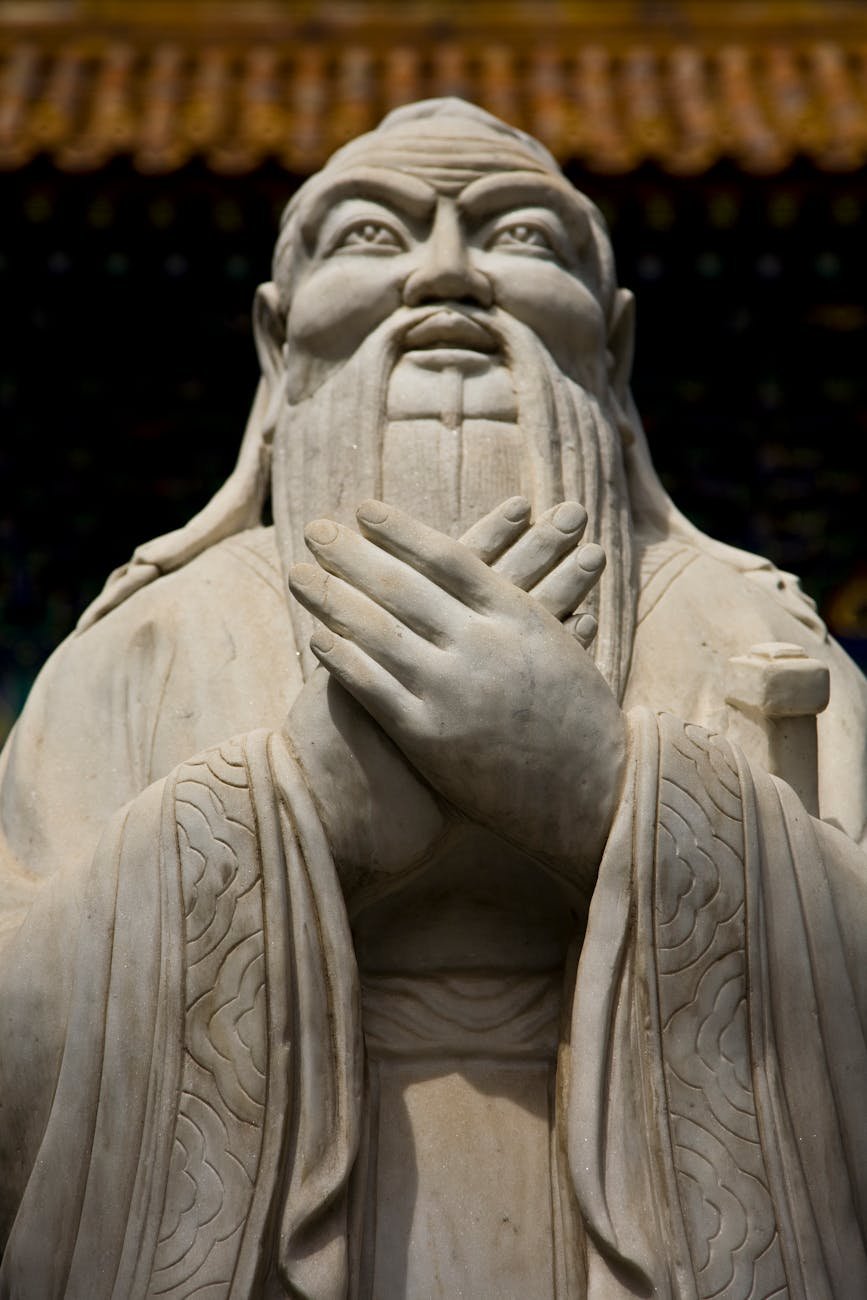
Photo by Charl Durand on <a href="https://www.pexels.com/photo/concrete-statue-of-confucius-6486229/" rel="nofollow">Pexels.com</a>
Confucius (551–479 BCE), the Chinese philosopher and educator, offered profound insights into teaching and education that remain relevant today. Here are some key lessons from his philosophy:
1. Education for All
- Key Idea: Confucius emphasized the importance of education for everyone, regardless of social status. He believed that learning was a path to personal and societal improvement.
- Relevance: This aligns with modern principles of inclusive education and equal opportunity.
“In education, there should be no class distinctions.” – The Analects
2. Learning by Doing
- Key Idea: Confucius valued active participation in learning, encouraging students to apply knowledge in real-life contexts and engage in critical thinking.
- Relevance: This approach parallels modern experiential learning and project-based education methods.
“I hear and I forget. I see and I remember. I do and I understand.”
3. Moral and Ethical Development
- Key Idea: Education is not just about acquiring knowledge but also about cultivating virtues such as honesty, respect, and empathy.
- Relevance: Education systems today increasingly recognize the importance of social-emotional learning and character education.
“The superior man seeks self-improvement; the petty man seeks comfort.”
4. Tailoring Teaching to Individuals
- Key Idea: Confucius advocated for adapting teaching methods to the needs and abilities of individual learners.
- Relevance: This aligns with differentiated instruction and personalized learning in contemporary education.
“If you try to lead the people with laws and regulate them with punishments, they will avoid the punishments but have no sense of shame. Lead them by virtue and teach them by the rules of propriety, and they will have a sense of shame and moreover will become good.”
5. Continuous Learning and Reflection
- Key Idea: Confucius emphasized the importance of lifelong learning and self-reflection for teachers and students alike.
- Relevance: This underscores the modern emphasis on growth mindsets and professional development for educators.
“When I walk along with two others, they may serve me as my teachers. I will select their good qualities and follow them, their bad qualities and avoid them.”
6. Role of the Teacher
- Key Idea: Teachers are more than knowledge transmitters; they are role models and guides who inspire students through their character and actions.
- Relevance: Today, the teacher’s role as a mentor and facilitator remains crucial in fostering curiosity and ethical reasoning.
“A good teacher is someone who can nurture the love of learning and lead students to find their way.”
7. Learning as a Collaborative Process
- Key Idea: Confucius encouraged open dialogue and questioning as a way to deepen understanding.
- Relevance: Modern education values student-centered learning and inquiry-based approaches.
“Real knowledge is to know the extent of one’s ignorance.”
8. Building a Harmonious Society
- Key Idea: The ultimate goal of education is to contribute to societal harmony and good governance by fostering virtuous and capable individuals.
- Relevance: Education today is viewed as a cornerstone of sustainable development and social cohesion.
“The strength of a nation derives from the integrity of the home.”
Confucius’ insights remind us that education is about nurturing the whole person—intellectually, morally, and socially. His emphasis on ethics, lifelong learning, and adaptability provides timeless principles for shaping education systems and teaching practices.
About the Author
