
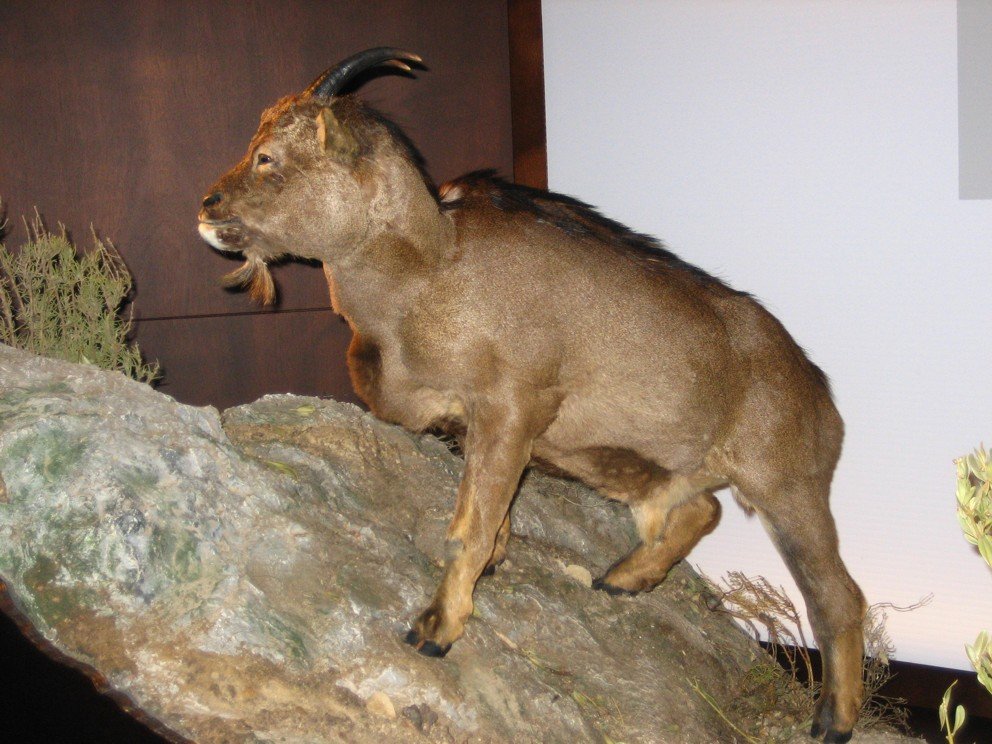
Evolution teaches us many lessons about the consequences of comfort and complacency. The story of the Balearic Islands cave goat (Myotragus balearicus) serves as a cautionary tale about what can happen when an organism, or even a species, grows too accustomed to a stable environment without anticipating future changes. From a learning and evolutionary adaptiveness perspective, this story highlights how even the most successful systems can fail when they stop adapting to new and unforeseen challenges. But it also sheds light on how human learning systems—especially those focused on flexibility and adaptability—might avoid a similar fate.
The Evolution of the Balearic Islands Cave Goat: A Lesson in Complacency
The Balearic Islands cave goat, a species native to the isolated islands of Mallorca and Menorca, enjoyed a relatively carefree existence for many generations. For thousands of years, the cave goats lived in an environment without significant predators. This allowed them to adapt in ways that might seem counterintuitive to survival strategies elsewhere. Over time, their physical and behavioral traits evolved in response to this environment.
One of the most remarkable changes was in the positioning of their eyes. Unlike most prey species that have eyes positioned on the sides of their heads for a broad field of view, the Balearic Islands cave goat’s eyes shifted to the front of their heads. This gave them better depth perception, an adaptation more commonly seen in predators, and was advantageous in the absence of significant threats. However, this trait, which was once an asset, became a vulnerability when the environment changed.
The arrival of new stressors—humans, predators, and other environmental factors—created conditions the cave goats had never faced. Their bodies and behaviors had adapted to an environment of relative stability and safety. The sudden introduction of new challenges was too much for the species, and they went extinct within a relatively short period. The adaptive traits they had developed in a world with no threats became liabilities when the system shifted, and they were no longer equipped to cope with the new pressures.
Drawing Parallels to Human Learning Systems
The story of the Balearic Islands cave goat is more than just a tale of extinction; it’s a powerful metaphor for human learning and adaptiveness. As humans, we often seek stability and predictability, desiring systems that offer comfort and a sense of security. However, much like the cave goat, our ability to thrive in the long term is not guaranteed if we become too comfortable in our ways.
Human learning, especially in a world of rapid change, needs to embrace adaptability. We have developed complex cognitive systems that allow us to learn, unlearn, and relearn. However, these systems can become rigid or inefficient if we become too comfortable with a single way of thinking or a stable set of conditions. The concept of “learning in complexity” is central to this adaptive approach. When we confront new challenges, whether technological, social, or environmental, we need to be able to quickly adjust our strategies and solutions. Just as the cave goat’s eye positioning was a strength in one context and a weakness in another, human learning systems must be flexible enough to recalibrate in response to shifting demands.
Adaptive Learning in a Complex World
From an evolutionary standpoint, the ability to continuously adapt is the hallmark of long-term survival. However, this adaptability must be proactive, not reactive. The Balearic Islands cave goat was not able to anticipate or respond to the changes in its environment because it had evolved in isolation without the pressure to remain flexible. For humans, this means that we must foster environments where learning can happen continuously—where we do not simply wait for a problem to appear, but are always ready to adjust our methods, beliefs, and behaviors as we gather new information.
In human systems, the same principles apply. The traditional model of education, for example, often focuses on achieving fixed outcomes rather than fostering the ability to adapt and learn in the face of new challenges. To thrive in complexity, we need to prioritize skills such as critical thinking, problem-solving, and the capacity to integrate diverse perspectives. These are the tools that allow us to evolve and remain resilient, much as species in nature must do when new challenges arise.
The Importance of “Discomfort” in Learning
In the context of human learning, “discomfort” is often a signal that growth is occurring. Just as the Balearic Islands cave goat did not anticipate the arrival of predators, humans often face new challenges that we must be prepared for. The process of unlearning old habits and strategies is uncomfortable, but it is necessary for continued growth.
By embracing discomfort, uncertainty, and the need for change, we create learning environments that allow us to thrive in the face of the unknown. Human systems must foster the ability to shift perspectives, challenge assumptions, and explore new possibilities. This is the essence of adaptive learning: the ability to remain fluid, flexible, and ready to evolve as circumstances change.
Conclusion
The extinction of the Balearic Islands cave goat serves as a powerful reminder that comfort, while appealing, can be a dangerous place to rest on our laurels. For both organisms and human societies, the key to long-term survival and success lies not in maintaining the status quo, but in developing the capacity for continuous adaptation. By embracing the lessons of evolutionary adaptiveness and fostering learning systems that are dynamic, we can ensure that we are not caught unprepared when the environment shifts, just as the cave goats were.
In our world of rapid change, it is not enough to simply learn once and settle in. True learning and growth require the ability to constantly adjust, relearn, and evolve. Just like the Balearic Islands cave goat, we must never get too comfortable.
About the Author
